Introduction
The Black-bibbed Cicadabird, scientifically known as Edolisoma mindanense, is an intriguing member of the Campephagidae family, which includes cuckoo-shrikes and minivets. This bird species is an integral part of the avian biodiversity across the Philippines, contributing to the ecological balance in its native habitats. This article delves into the unique characteristics, behaviors, and conservation status of the Black-bibbed Cicadabird, offering insights into its role within its ecosystem and the challenges it faces.
Taxonomy and Classification
The Black-bibbed Cicadabird belongs to the order Passeriformes and family Campephagidae. Within the genus Edolisoma, this species is closely related to other cicadabirds, sharing common traits yet possessing unique features. The specific epithet, mindanense, is derived from Mindanao, the second-largest island in the Philippines, indicating its geographical association.
Physical Characteristics
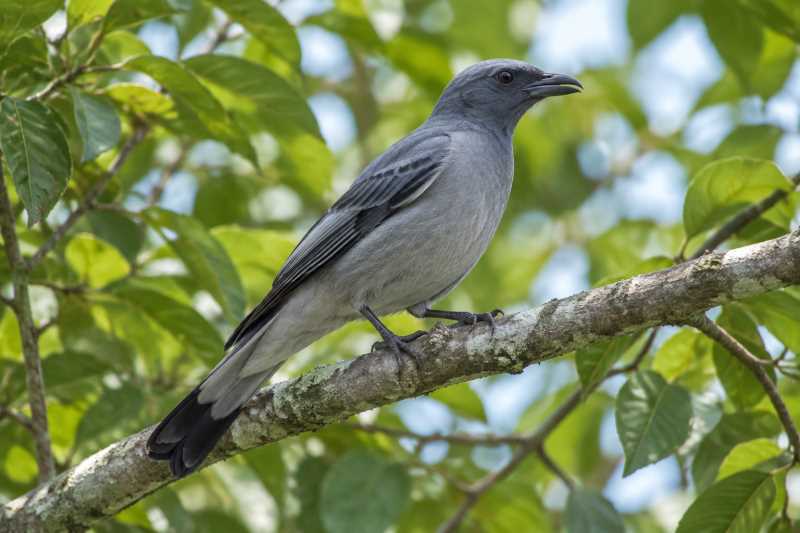
The Black-bibbed Cicadabird is known for its distinctive plumage, characterized by a striking black ‘bib’ or throat patch, which contrasts against its generally gray body. Males typically exhibit a darker, more pronounced black coloring, while females may have a slightly lighter appearance with subtle brownish tints. This sexual dimorphism is not only a visual cue for identification but also plays a role in mating behaviors.
The bird measures approximately 24-28 cm in length, with a wingspan ranging from 30 to 35 cm. Its robust build and strong legs are well-adapted for its arboreal lifestyle, allowing it to forage efficiently among the tree canopies.
Distribution and Habitat
Edolisoma mindanense is primarily endemic to the Philippines, with its population concentrated in the islands of Mindanao, Leyte, Samar, and Bohol. It thrives in various habitats, including primary and secondary lowland forests, montane forests, and occasionally in coastal mangroves. The bird’s adaptability to different habitats underscores its ecological versatility, yet it remains susceptible to habitat destruction.
Behavior and Ecology
The Black-bibbed Cicadabird exhibits a range of behaviors that highlight its adaptability and survival strategies. It is primarily insectivorous, feeding on a diet consisting of cicadas, beetles, caterpillars, and other small insects. Occasionally, it may supplement its diet with fruits and seeds, showcasing its opportunistic feeding habits.
This bird is often observed foraging in the mid to upper canopy levels, utilizing its keen eyesight and agile flight to capture prey. It is known for its melodious and repetitive song, which plays a crucial role in territory establishment and mate attraction.
Breeding and Reproduction
The breeding season of the Black-bibbed Cicadabird typically coincides with the onset of the rainy season, when food resources are abundant. During this period, males engage in elaborate displays to attract females, showcasing their plumage and vocal prowess.
Nests are constructed high in the canopy, often in the fork of a tree branch, using twigs, leaves, and other plant materials. The female typically lays two to three eggs, which are incubated for about two weeks. Both parents are involved in feeding and caring for the chicks until they fledge, ensuring high survival rates.
Conservation Status
The Black-bibbed Cicadabird is currently classified as Least Concern by the International Union for Conservation of Nature (IUCN), owing to its relatively stable population across its range. However, habitat destruction due to logging, agricultural expansion, and urban development poses significant threats to its long-term survival.
Conservation efforts are crucial to preserving the habitats of Edolisoma mindanense. Protecting large tracts of forest, promoting sustainable land-use practices, and raising awareness about the species are essential strategies to ensure its continued existence.
Cultural Significance
In the Philippines, birds like the Black-bibbed Cicadabird hold cultural significance and are often featured in local folklore and traditional stories. Their presence is seen as an indicator of a healthy forest ecosystem, making them a symbol of environmental stewardship.
Research and Study
Ongoing research on Edolisoma mindanense provides valuable insights into its ecology, behavior, and responses to environmental changes. Studies focusing on its vocalizations, migratory patterns, and genetic diversity are essential for developing effective conservation strategies.
Conclusion
The Black-bibbed Cicadabird is a remarkable species that embodies the rich avian biodiversity of the Philippines. Understanding its role within its ecosystem and the challenges it faces is crucial for its preservation. Through concerted conservation efforts and continued research, we can ensure that this vibrant bird continues to thrive in its natural habitat, maintaining the ecological balance and cultural heritage of the region.
References
- BirdLife International. (2023). Edolisoma mindanense. The IUCN Red List of Threatened Species 2023.
- Kennedy, R. S., Gonzales, P. C., Dickinson, E. C., Miranda, H. C., & Fisher, T. H. (2000). A Guide to the Birds of the Philippines. Oxford University Press.
- Collar, N. J., & Robson, C. (2007). Handbook of the Birds of the World Alive. Lynx Edicions.
Related posts