The Rusty-backed Antwren: A Hidden Gem of the Understory
The Rusty-backed Antwren, scientifically known as Formicivora rufa, is a small but captivating bird species that thrives in the dense understory of South America’s tropical forests. With its subtle yet striking appearance, this bird is a prime example of the rich biodiversity that characterizes the Neotropics. This article delves into the life and ecology of the Rusty-backed Antwren, exploring its habitat, behavior, and conservation status.
Habitat and Distribution
The Rusty-backed Antwren is predominantly found in the dense, humid forests of South America, specifically within the countries of Brazil, Bolivia, and Paraguay. Its preferred habitats include subtropical or tropical dry forests and moist lowland forests, where it can navigate through the thick vegetation with ease. This bird is also known to inhabit secondary growth forests, showcasing its adaptability to environmental changes and human-induced habitat alterations.
The distribution of the Rusty-backed Antwren is somewhat patchy, largely due to its preference for specific forest types and its sensitivity to habitat fragmentation. However, within its preferred habitats, it is often considered locally common. The bird’s range map reveals a concentration in the central and eastern parts of Brazil, extending into northern Bolivia and parts of Paraguay.
Physical Description
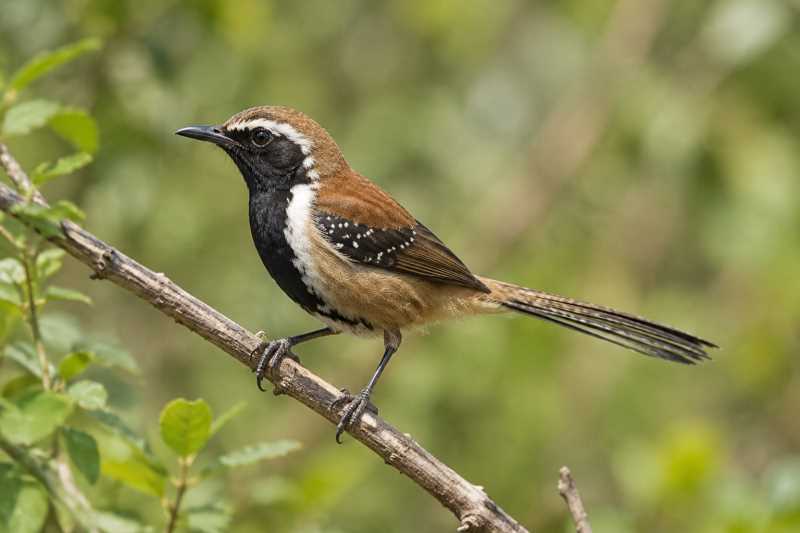
The Rusty-backed Antwren is a diminutive bird, measuring approximately 12 centimeters in length and weighing around 10 grams. Its plumage is a harmonious blend of earthy tones, with rusty-brown upperparts that give the bird its common name. The underparts are a lighter, buffy color, providing a subtle contrast to the darker wings and tail. The males and females are similarly colored, though the female may exhibit slightly more muted hues.
One of the distinguishing features of the Rusty-backed Antwren is its long, slender tail, which it often flicks while foraging. Its delicate bill is perfectly adapted for gleaning insects from leaves and twigs, a testament to its specialized feeding habits.
Behavior and Diet
The Rusty-backed Antwren is an insectivorous bird, primarily feeding on small arthropods such as ants, spiders, and beetles. It forages actively in the lower strata of the forest, often seen hopping from branch to branch or fluttering between the dense foliage. Its foraging behavior is both agile and meticulous, enabling it to exploit a variety of insect prey that other birds might overlook.
This species is typically observed in pairs or small family groups, suggesting a degree of sociality, particularly during the breeding season. The Rusty-backed Antwren is known for its distinctive vocalizations, which include a series of high-pitched whistles and trills. These calls play a crucial role in communication between individuals, especially for maintaining pair bonds and territorial displays.
Breeding and Nesting
The breeding season of the Rusty-backed Antwren varies depending on the geographical location, but generally coincides with the onset of the rainy season, when food resources are abundant. The species constructs a delicate cup-shaped nest, often placed in the fork of a tree branch or among dense foliage, providing camouflage from predators.
Both parents participate in incubating the eggs and feeding the young, exhibiting a cooperative breeding strategy that enhances offspring survival. The chicks are altricial, hatching blind and featherless, requiring substantial parental care until they fledge.
Conservation Status
The Rusty-backed Antwren is currently classified as Least Concern by the International Union for Conservation of Nature (IUCN), largely due to its relatively wide distribution and presumed large population size. However, like many forest-dependent species, it faces threats from habitat destruction and fragmentation, primarily due to logging, agriculture, and urbanization.
Conservation efforts for the Rusty-backed Antwren focus on protecting its natural habitats through the establishment of protected areas and sustainable land management practices. Research into its ecology and population dynamics is also crucial for informing conservation strategies and ensuring the long-term survival of this species.
Conclusion
The Rusty-backed Antwren may not be the most conspicuous bird in the forest, but its presence is indicative of healthy, biodiverse ecosystems. Understanding and protecting this species requires a commitment to preserving the rich tapestry of life found in South America’s tropical forests. As we continue to explore the complexities of these ecosystems, the Rusty-backed Antwren stands as a symbol of the delicate balance between nature and human activity.
By fostering a greater appreciation for such species, we can inspire conservation action that benefits both the Rusty-backed Antwren and the myriad other species that share its habitat. In doing so, we contribute to the preservation of our planet’s invaluable natural heritage.
Related posts