Plum-faced Lorikeet: A Jewel of the New Guinea Highlands
The Plum-faced Lorikeet (Oreopsittacus arfaki) is a vibrant and captivating parrot species endemic to the highlands of New Guinea. Recognizable by its striking plumage and distinctive facial markings, this bird is a symbol of the rich biodiversity found in its mountainous habitat. Despite its colorful appearance, the Plum-faced Lorikeet remains relatively understudied, making it a fascinating subject for ornithologists and bird enthusiasts alike.
Taxonomy and Classification
The Plum-faced Lorikeet belongs to the family Psittaculidae, which comprises various species of parrots found primarily in the Australasian region. The genus Oreopsittacus is monotypic, containing only the Plum-faced Lorikeet. This species is closely related to other lorikeets but is unique in its solitary genus. First described by the Italian naturalist Tommaso Salvadori in 1875, the scientific name Oreopsittacus arfaki pays homage to the Arfak Mountains, a region in New Guinea where the bird is commonly found.
Physical Description
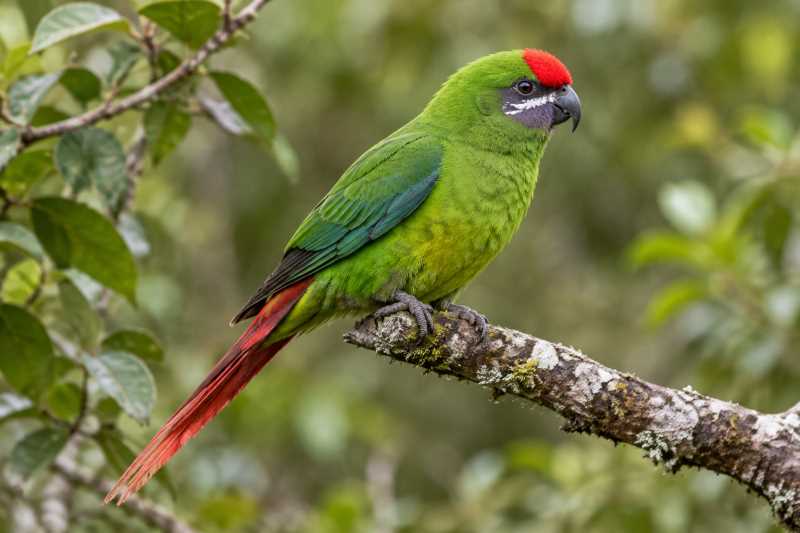
The Plum-faced Lorikeet is a small parrot, measuring approximately 15 centimeters (about 6 inches) in length, making it one of the smaller members of the lorikeet family. It is easily identifiable by its vivid plum-colored face, which contrasts sharply with the bright green of its body. The bird’s crown and nape display a vibrant orange hue, while its underparts are a lighter green. Its wings are adorned with blue and violet feathers, providing a dazzling display of colors in flight. The Lorikeet’s bill is small and curved, perfectly adapted for its diet, and its eyes are encircled by a ring of bare white skin, adding to its distinctive facial appearance.
Habitat and Distribution
The Plum-faced Lorikeet is native to the montane forests of New Guinea, with its range extending from the Arfak Mountains in the west to the Owen Stanley Range in the east. These birds thrive at elevations between 1,500 and 3,500 meters (approximately 4,900 to 11,500 feet), where they inhabit cloud forests and subalpine environments. The dense foliage and abundant flowering plants in these regions provide ideal conditions for the lorikeets, offering both food and shelter. Although they are primarily found in high-altitude areas, they can occasionally be seen at lower elevations, especially when foraging.
Behavior and Ecology
Plum-faced Lorikeets are social creatures, often observed in small flocks or family groups. They exhibit a high degree of agility, skillfully navigating the forest canopy in search of food. Their diet consists mainly of nectar and pollen, which they extract from flowers using their specialized brush-tipped tongues. In addition to nectar, they also consume fruits, seeds, and occasionally insects, providing a balanced diet that supports their active lifestyle.
Breeding behaviors of the Plum-faced Lorikeet remain largely undocumented, but it is believed that they nest in tree cavities, similar to other lorikeet species. Breeding pairs are thought to be monogamous, sharing responsibilities for incubating eggs and feeding chicks. The species’ vocalizations are described as high-pitched and melodic, facilitating communication among flock members in the dense forest environment.
Conservation Status and Threats
Currently, the Plum-faced Lorikeet is classified as a species of Least Concern by the International Union for Conservation of Nature (IUCN). Despite this seemingly secure status, the bird’s population is believed to be declining due to habitat loss and fragmentation. Deforestation for agriculture and logging poses significant threats to the highland forests of New Guinea, reducing available habitat for the lorikeets and other endemic wildlife.
Conservation efforts are crucial to preserving the delicate ecosystems of New Guinea’s highlands. Protecting large tracts of forest and promoting sustainable land-use practices are essential to ensuring the survival of the Plum-faced Lorikeet and countless other species that rely on these habitats. Additionally, further research is needed to better understand the ecology and behavior of this intriguing bird, providing valuable insights that can inform conservation strategies.
Conclusion
The Plum-faced Lorikeet is a testament to the incredible biodiversity of New Guinea’s highlands. Its vibrant colors and unique adaptations make it a fascinating subject for study, while its presence highlights the importance of preserving the region’s natural habitats. As with many lesser-known species, raising awareness about the Plum-faced Lorikeet and the challenges it faces is essential to securing its future. Through concerted conservation efforts and continued research, we can ensure that this jewel of the highlands continues to grace the forests of New Guinea for generations to come.
Related posts