Introduction
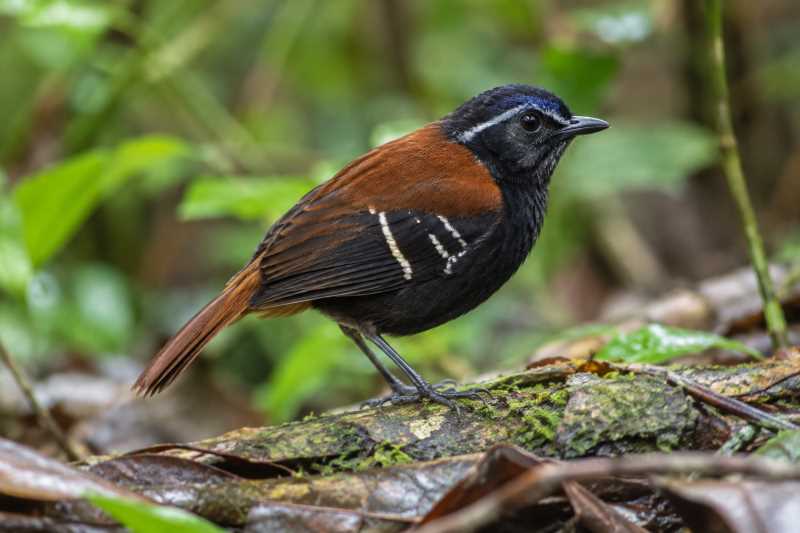
The Cordillera Azul Antbird, scientifically known as Myrmoderus eowilsoni, is a captivating avian species that has recently garnered significant attention from ornithologists and bird enthusiasts alike. Discovered in the remote and biodiverse regions of the Peruvian Andes, this bird has become a symbol of the hidden natural treasures that still await discovery in our planet’s most secluded habitats. This article delves into the fascinating world of the Cordillera Azul Antbird, exploring its habitat, behavior, conservation status, and the implications of its discovery on biodiversity conservation.
Taxonomy and Discovery
The Cordillera Azul Antbird belongs to the family Thamnophilidae, a diverse group of insectivorous birds predominantly found in the Neotropics. The species was first described in 2018 by a team of researchers led by ornithologist Dr. Isler. Named in honor of renowned biologist E.O. Wilson, the species epithet ‘eowilsoni’ pays homage to Wilson’s contributions to biodiversity and conservation science.
The discovery of the Cordillera Azul Antbird was a significant event in ornithology, highlighting the rich and largely unexplored avian diversity of the Andes. Prior to its formal description, the bird was known only to local communities, who had long observed its distinctive behaviors and calls. The formal identification of this species underscores the importance of integrating local ecological knowledge with scientific research.
Habitat and Distribution
The Cordillera Azul Antbird is endemic to the Cordillera Azul mountain range in Peru, a region known for its unique ecological characteristics and high levels of endemism. This area, characterized by its montane forests and diverse microhabitats, provides an ideal environment for the antbird. The elevation range of 1,200 to 2,400 meters is particularly significant, as it supports a distinct assemblage of flora and fauna.
The bird’s habitat is primarily composed of dense understory vegetation, which offers ample foraging opportunities and protection from predators. The Cordillera Azul National Park, which encompasses a significant portion of this range, plays a crucial role in preserving the antbird’s habitat. Despite its protected status, the park faces threats from illegal logging and agricultural encroachment, which could impact the antbird’s population.
Physical Characteristics
The Cordillera Azul Antbird is a medium-sized bird, measuring approximately 15 to 17 centimeters in length. It exhibits sexual dimorphism, with males typically displaying more vibrant plumage than females. The male’s plumage is characterized by a striking combination of black and white patterns, while females have more subdued brown and grey tones, providing effective camouflage in the forest understory.
Both sexes have a distinctive white throat patch and a robust bill, adapted for their insectivorous diet. The bird’s vocalizations are also noteworthy, consisting of a series of clear, melodious whistles that serve as a means of communication and territory establishment.
Behavior and Ecology
The Cordillera Azul Antbird is predominantly insectivorous, feeding on a variety of arthropods found within the leaf litter and undergrowth. Its foraging behavior is methodical, often involving short flights and ground movements to disturb prey. The antbird plays a vital role in the forest ecosystem, contributing to insect population control and serving as prey for higher trophic level predators.
Socially, the Cordillera Azul Antbird is known for its monogamous breeding pairs and territorial nature. Breeding pairs often engage in duet singing, a behavior thought to strengthen pair bonds and coordinate nesting activities. Nests are typically constructed from twigs and leaves, securely hidden within dense vegetation to deter predators.
Conservation Status and Challenges
As a recently discovered species, the Cordillera Azul Antbird’s conservation status remains under assessment. However, the limited distribution and specific habitat requirements of this bird suggest that it may be vulnerable to environmental changes and human activities. The primary threats to its survival include habitat loss due to deforestation and climate change, which could alter the delicate ecological balance of the Cordillera Azul region.
Conservation efforts are crucial to ensure the long-term survival of the Cordillera Azul Antbird. Initiatives to protect and restore its habitat, combined with community engagement and sustainable land-use practices, are essential components of an effective conservation strategy. Furthermore, ongoing research and monitoring are needed to better understand the species’ ecology and adaptability to changing environmental conditions.
The Role of Protected Areas
The establishment of the Cordillera Azul National Park represents a significant step towards preserving the unique biodiversity of this region. The park, spanning over 13,500 square kilometers, acts as a sanctuary for the Cordillera Azul Antbird and numerous other endemic species. Effective management of the park involves balancing conservation goals with the needs of local communities, who rely on the forest for their livelihoods.
Collaborative conservation approaches that integrate scientific research with traditional ecological knowledge are vital for the success of the park’s management. By involving local stakeholders in conservation planning and decision-making processes, the long-term sustainability of both the ecosystem and the communities can be achieved.
Implications for Biodiversity Conservation
The discovery of the Cordillera Azul Antbird highlights the importance of continued exploration and study of remote habitats. Each new species discovered adds to our understanding of biodiversity and the complex interrelationships within ecosystems. Protecting these newly discovered species is critical not only for their intrinsic value but also for the ecological services they provide.
This bird’s story also underscores the need for comprehensive conservation policies that address the root causes of habitat loss and environmental degradation. By prioritizing sustainable development and promoting conservation awareness, we can work towards a future where biodiversity thrives alongside human progress.
Conclusion
The Cordillera Azul Antbird serves as a reminder of the wonders that nature holds and the responsibility we bear to protect them. As research continues to unravel the mysteries of this enigmatic bird, it is imperative that we take action to conserve its habitat and ensure its survival. Through collaborative efforts and a commitment to preserving biodiversity, we can safeguard the remarkable legacy of the Cordillera Azul Antbird for generations to come.
Related posts