Klages’s Antwren: A Jewel of the Amazon Rainforest
Introduction
The Amazon rainforest, often referred to as the lungs of the Earth, is home to an astonishing diversity of life forms. Among its myriad avian inhabitants, Klages’s Antwren (Myrmotherula klagesi) stands out as a particularly intriguing species. This small bird, with its striking plumage and unique ecological niche, is a testament to the complexity and beauty of tropical ecosystems.
Taxonomy and Description
Klages’s Antwren is a member of the family Thamnophilidae, which comprises over 230 species known collectively as antbirds. The species was first described in 1927 by ornithologist Carl Eduard Hellmayr. Named in honor of the German ornithologist Theodor Klages, this bird is a prime example of the rich biodiversity found within the Amazon.
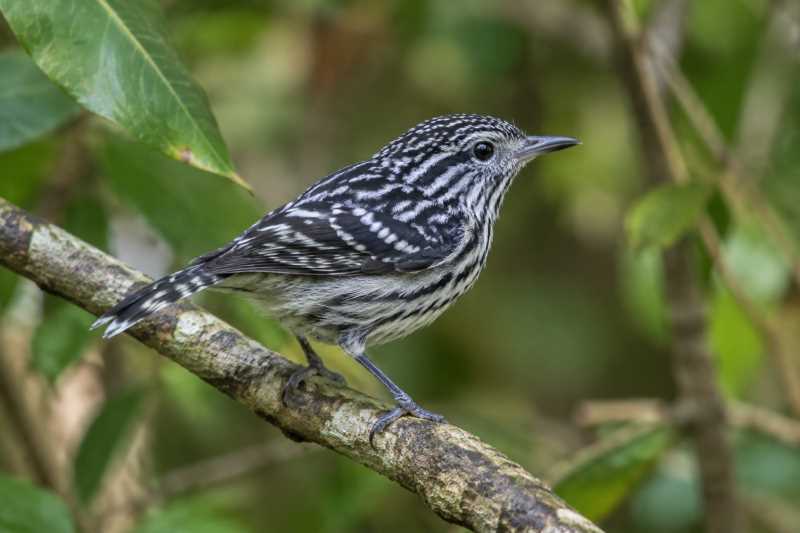
Physically, Klages’s Antwren is a small bird, measuring approximately 10–12 cm in length. It is characterized by its distinct black and white patterning. Males typically display a more pronounced contrast in their plumage, with stark black and white stripes, while females tend to have a slightly duller appearance, often with brownish tones integrated into their plumage.
Habitat and Distribution
Klages’s Antwren is endemic to the Amazon Basin, with its range extending across parts of Brazil, Venezuela, and Colombia. It thrives in the dense undergrowth of lowland tropical forests, often in areas near water bodies. The bird’s habitat preference for thick, humid forest understories makes it a challenge to spot, as it often remains hidden among the foliage.
Despite its elusive nature, this antwren is relatively widespread within its range. However, like many other species in the Amazon, it faces potential threats from habitat destruction and deforestation. The expansion of agriculture and logging activities pose significant challenges to the preservation of its natural habitat.
Behavior and Ecology
Klages’s Antwren primarily feeds on insects, making it a crucial participant in the ecosystem as a predator of small arthropods. It frequently joins mixed-species foraging flocks, a common strategy among tropical birds that increases feeding efficiency and reduces predation risk. These flocks often consist of various species that occupy different ecological niches, allowing them to exploit a wider range of food resources.
A notable aspect of Klages’s Antwren’s behavior is its vocalization. The species is known for its distinctive calls, which serve multiple purposes, including attracting mates and defending territory. These vocalizations, often described as a series of high-pitched notes, are a key tool for ornithologists and birdwatchers attempting to locate and identify the species in its dense habitat.
Reproduction and Lifespan
The breeding behavior of Klages’s Antwren is typical of many antbirds. They build cup-shaped nests in the undergrowth, where the female lays a clutch of two to three eggs. Both parents participate in incubating the eggs and feeding the chicks once they hatch. This biparental care is essential for the survival of the offspring in the challenging rainforest environment.
The lifespan of Klages’s Antwren in the wild is not extensively documented, but it is believed to be similar to other small tropical birds, with individuals potentially living up to 10 years under optimal conditions.
Conservation Status
Currently, Klages’s Antwren is classified as a species of Least Concern by the International Union for Conservation of Nature (IUCN). However, this status does not imply that the species is free from threats. The ongoing deforestation in the Amazon basin, driven by agricultural expansion, logging, and mining, constitutes a significant risk to its habitat.
Conservation efforts aimed at preserving the Amazon rainforest are crucial for the continued survival of Klages’s Antwren and countless other species. Initiatives that promote sustainable land use, reforestation, and the protection of critical habitats are vital for mitigating the impacts of human activities on this delicate ecosystem.
Conclusion
Klages’s Antwren is a remarkable bird that exemplifies the rich biodiversity of the Amazon rainforest. Its unique adaptations and role within the ecosystem highlight the intricate connections that sustain life in tropical environments. As we continue to grapple with the challenges of habitat destruction and climate change, preserving the habitats of species like Klages’s Antwren becomes increasingly important.
By raising awareness and supporting conservation efforts, we can help ensure that future generations will have the opportunity to experience the wonders of the Amazon and its avian jewels, such as the Klages’s Antwren.
References
- Hellmayr, C. E. (1927). "On the birds collected by Theodor Klages in the Amazon Basin."
- International Union for Conservation of Nature (IUCN). "Myrmotherula klagesi: Klages’s Antwren."
- Various studies on Amazonian biodiversity and conservation efforts.
Related posts