The White-rumped Falcon: A Lesser-Known Avian Predator
The White-rumped Falcon (Neohierax insignis) is a captivating yet little-known bird of prey that roams the skies of Southeast Asia. Despite its diminutive size, this falcon is a superb hunter, displaying a unique set of behaviors and adaptations that make it a fascinating subject for ornithologists and bird enthusiasts alike.
Taxonomy and Classification
The White-rumped Falcon belongs to the family Falconidae, which encompasses a diverse group of birds known for their exceptional hunting skills. It is the sole representative of the genus Neohierax. This bird was previously grouped with the genus Polihierax, showcasing its distinctive evolutionary path within the falcon family.
Physical Description
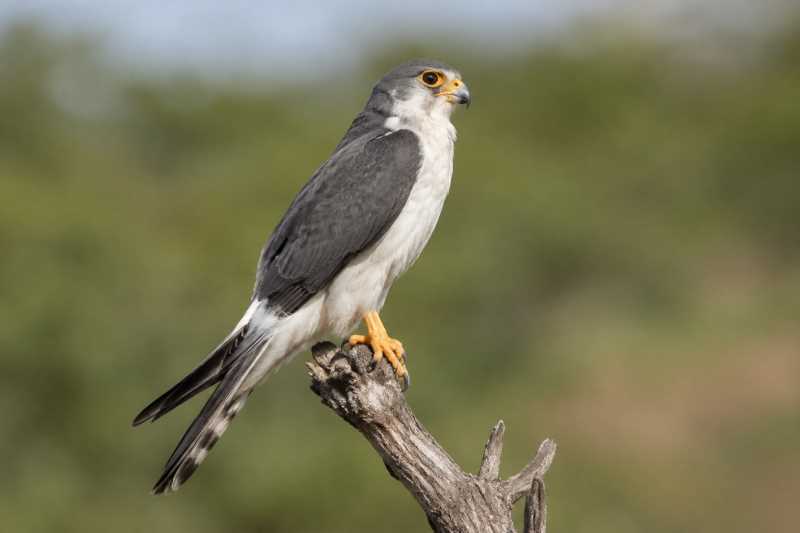
As its name suggests, the White-rumped Falcon is easily identifiable by its striking white rump. It measures approximately 28 to 30 centimeters in length, making it one of the smaller members of the falcon family. Despite its size, the bird possesses a powerful build, with broad wings and a short tail, enabling agile flight.
The adult male White-rumped Falcon displays a slate-gray plumage with a contrasting white head and underparts. Females, on the other hand, tend to have more brownish tones, providing an effective camouflage against the forest backdrop. Both sexes exhibit bright yellow legs and a sharp, hooked beak, characteristic of predatory birds.
Distribution and Habitat
The White-rumped Falcon is native to Southeast Asia, with populations found in Myanmar, Thailand, Laos, Cambodia, and Vietnam. It primarily inhabits open deciduous forests, woodlands, and sometimes even plantations, demonstrating a degree of adaptability to human-altered landscapes.
These falcons are generally sedentary, but some local movements may occur in response to food availability and environmental conditions. They are typically found at elevations ranging from lowlands up to 1200 meters, although sightings at higher altitudes are not uncommon.
Behavior and Ecology
White-rumped Falcons are solitary hunters, relying on their keen eyesight and swift flight to capture prey. Their diet mainly consists of insects, small mammals, and birds, which they skillfully snatch in mid-air or on the ground. This falcon exhibits a sit-and-wait hunting strategy, often perching quietly before launching a surprise attack on unsuspecting prey.
These birds are known for their remarkable agility, capable of executing rapid maneuvers to navigate through dense forest canopies. Their broad wings and short tails aid in quick changes of direction, making them adept hunters in complex environments.
Reproduction and Lifespan
The breeding season for the White-rumped Falcon typically coincides with the onset of the rainy season, when food resources are abundant. During courtship, males perform aerial displays, showcasing their flying prowess to attract a mate.
These falcons are monogamous, forming pair bonds that last for several breeding seasons. They nest in tree cavities, often utilizing abandoned woodpecker holes or natural crevices. The female lays a clutch of 2 to 4 eggs, which she incubates for approximately 28 to 30 days. Both parents share the responsibility of feeding and protecting the chicks until they fledge at around 35 to 40 days old.
Conservation Status
The White-rumped Falcon is currently classified as Near Threatened on the IUCN Red List. Its populations are declining due to habitat loss, primarily driven by deforestation and agricultural expansion. Additionally, illegal trapping and trade pose significant threats to this species.
Conservation efforts are crucial to ensuring the survival of the White-rumped Falcon. Preserving natural habitats, implementing sustainable land-use practices, and raising public awareness are vital steps in safeguarding this remarkable bird.
Conclusion
The White-rumped Falcon is a testament to the rich biodiversity of Southeast Asia, embodying the intricate balance of nature. Its specialized hunting skills, adaptability, and unique ecological role make it an invaluable component of its ecosystem.
Understanding and protecting this species is not only essential for its survival but also for maintaining the overall health of the habitats it inhabits. As stewards of the natural world, it is our responsibility to ensure that the White-rumped Falcon continues to grace the skies for generations to come.
Related posts