
Understanding the Western Fire-eye (Pyriglena maura): A Detailed Exploration
Introduction
The Western Fire-eye (Pyriglena maura) is a captivating bird species belonging to the family Thamnophilidae, which is widely known for its distinctive antbird relatives. This remarkable bird is primarily distributed in the Neotropical regions, particularly in the lowland forests of South America. The Western Fire-eye has intrigued ornithologists and bird enthusiasts alike, not only for its striking appearance but also for its unique behaviors and ecological significance. This article delves into the characteristics, habitat, behavior, and conservation status of the Western Fire-eye, offering a comprehensive understanding of this fascinating avian species.
Taxonomy and Description
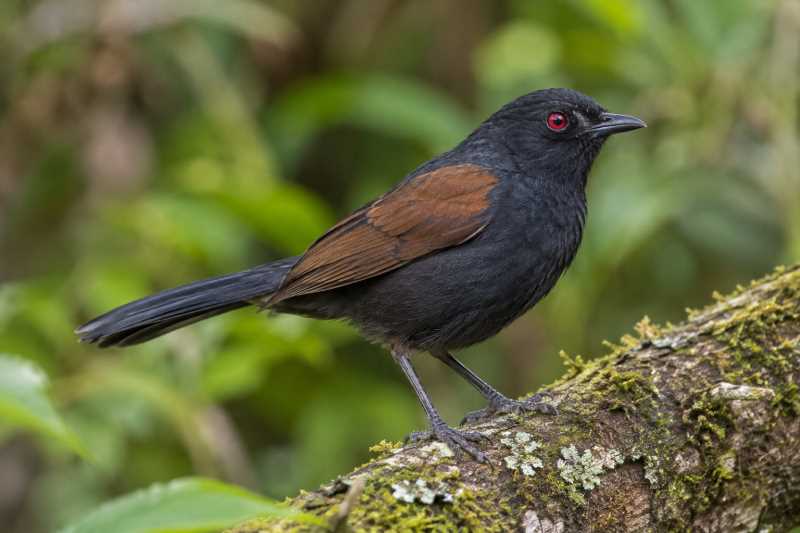
The Western Fire-eye, scientifically known as Pyriglena maura, was first described in the 19th century. It belongs to the order Passeriformes and is part of the family Thamnophilidae, which encompasses a diverse group of antbirds. The Western Fire-eye is distinguished by its striking sexual dimorphism, where males and females exhibit different plumage coloration. Males generally display a glossy black plumage with a contrasting fiery red eye, which gives the species its common name. Females, on the other hand, tend to be more subdued in coloration, typically featuring dark brown plumage with a slightly less vivid eye color.
Measuring approximately 17 to 18 centimeters in length, the Western Fire-eye is relatively small, yet its vibrant eye and agile movements make it a conspicuous presence in its habitat. The bird’s sturdy bill and strong legs are adapted to its insectivorous diet, allowing it to forage effectively in its environment.
Habitat and Distribution
The Western Fire-eye is predominantly found in the tropical and subtropical lowland forests of western South America, with its range extending from southwestern Colombia through Ecuador and into northwestern Peru. This bird thrives in dense understory vegetation, often in humid and semi-deciduous forests, where it can find ample food sources and suitable nesting sites.
The species’ preference for lowland forests makes it vulnerable to habitat destruction, as these areas are often subject to deforestation and land conversion for agriculture and human settlement. However, the Western Fire-eye has shown some adaptability, occasionally inhabiting secondary growth forests and forest edges, which have become increasingly common due to human activities.
Feeding and Behavior
As an insectivorous bird, the Western Fire-eye primarily feeds on a variety of arthropods, including ants, beetles, spiders, and caterpillars. It employs a foraging strategy known as "sallying," where it perches silently before swiftly darting to capture prey in mid-air or on foliage. This active hunting method is complemented by a "gleaning" technique, where the bird picks insects from leaves and branches.
The Western Fire-eye is known for its territorial behavior, often defending its feeding grounds vigorously against intruders. Males, in particular, are more vocal and can be heard producing a series of sharp, metallic calls that serve both to establish territory and attract mates.
Reproduction and Life Cycle
Breeding in the Western Fire-eye typically occurs during the rainy season, when food resources are abundant. The species is monogamous, with pairs often forming long-term bonds. Courtship involves vocalizations and displays by the male, who performs a series of calls and wing fluttering to attract a mate.
Nests are usually constructed low in shrubs or small trees, composed of leaves, twigs, and other plant materials. The female lays a clutch of two to three eggs, which are incubated by both parents. The incubation period lasts about 14 to 16 days, after which the chicks hatch and are cared for by both parents. Fledging occurs approximately two weeks post-hatching, but the young birds may remain with their parents for some time before becoming fully independent.
Conservation Status and Threats
The Western Fire-eye is currently classified as a species of "Least Concern" by the International Union for Conservation of Nature (IUCN). However, habitat loss due to deforestation and agricultural expansion poses a significant threat to its population. The fragmentation of lowland forests limits the availability of suitable habitats and food resources, which can impact breeding success and survival rates.
Conservation efforts for the Western Fire-eye primarily focus on preserving its natural habitat. Initiatives to protect existing forests and reforest degraded areas are crucial in ensuring the long-term survival of this species. Additionally, raising awareness about the ecological importance of preserving biodiversity in tropical forests can foster greater support for conservation measures.
Conclusion
The Western Fire-eye is a remarkable bird species that adds to the rich biodiversity of South America’s tropical forests. Its striking appearance, unique behaviors, and ecological role as an insectivore contribute to the intricate balance of its ecosystem. While currently not endangered, the Western Fire-eye faces challenges from habitat loss and environmental changes. Continued conservation efforts are essential to protect this species and the vibrant ecosystems it inhabits. Understanding and appreciating the Western Fire-eye can inspire greater commitment to preserving the natural world for future generations.
References
- Zimmer, K. J., & Isler, M. L. (2003). Family Thamnophilidae (Typical Antbirds). In J. del Hoyo, A. Elliott, & D. A. Christie (Eds.), Handbook of the Birds of the World (Vol. 8, pp. 448-681). Lynx Edicions.
- BirdLife International. (2021). Pyriglena maura. The IUCN Red List of Threatened Species 2021.
- Ridgely, R. S., & Tudor, G. (1994). The Birds of South America: The Suboscine Passerines. University of Texas Press.
This article provides a thorough overview of the Western Fire-eye, offering insights into its ecology, behavior, and conservation, serving as a valuable resource for both enthusiasts and researchers alike.
Related posts


