The Scaled Pigeon: A Jewel of the Tropical Canopy
The Scaled Pigeon, scientifically known as Patagioenas speciosa, is a captivating avian species that graces the lush canopies of Central and South America. With its striking appearance and unique behavior, this bird offers a fascinating glimpse into the biodiversity of tropical ecosystems. This article delves into the characteristics, habitat, behavior, and conservation status of the Scaled Pigeon, highlighting its ecological significance and the challenges it faces in the modern world.
Distinctive Characteristics
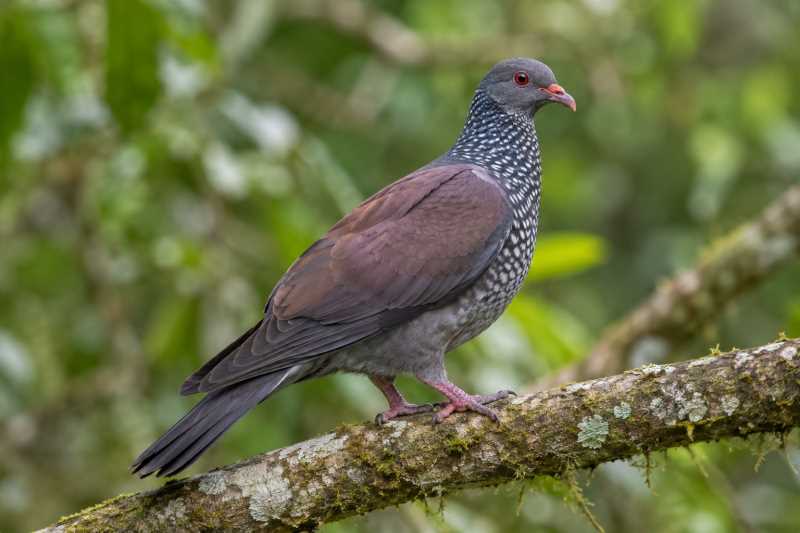
The Scaled Pigeon is aptly named for its distinctive plumage, characterized by iridescent scales that shimmer in shades of purple, green, and bronze. These scales cover its neck and upper body, providing a remarkable display when caught in sunlight. The bird’s overall coloration is a blend of chestnut and gray, with a lighter underbelly. Its wings are broad and rounded, which aid in maneuvering through dense foliage. Adult Scaled Pigeons typically measure about 33-37 cm in length and weigh between 220-270 grams, making them medium-sized among pigeon species.
A notable feature of the Scaled Pigeon is its bare, bluish skin around the eyes, which contrasts sharply with its dark head. This distinctive eye ring, combined with its stout bill and strong legs, makes the Scaled Pigeon a resilient inhabitant of its forested environment.
Habitat and Distribution
The Scaled Pigeon is native to the Neotropical regions, with a range that extends from southern Mexico through Central America and into South America, reaching as far south as Brazil and Bolivia. This species primarily inhabits humid lowland and montane forests, thriving in both primary and secondary growth forests. It is also found in plantations and occasionally in urban areas where suitable tree cover is present.
This bird prefers the upper canopy layers, where it can forage for its primary diet of fruits and berries. Its presence is often more readily detected by its distinctive cooing calls, which resonate through the dense foliage.
Behavioral Patterns
Scaled Pigeons are generally shy and elusive, making them challenging to observe in their natural habitat. They are non-migratory and tend to be sedentary, although some local movements may occur in response to food availability. These birds are often seen in pairs or small groups, especially during the breeding season.
Breeding typically occurs from March to September, with nests constructed from twigs and placed high in trees. The female usually lays a single white egg, which both parents incubate for about 15-18 days. After hatching, the chick is fed regurgitated food by both adults and fledges approximately 20 days later.
The Scaled Pigeon’s diet consists mainly of fruits, berries, and seeds, which it forages in the canopy. This diet not only sustains the bird but also plays a crucial role in seed dispersal, contributing to forest regeneration and biodiversity.
Conservation Status and Threats
Currently, the Scaled Pigeon is classified as Least Concern by the International Union for Conservation of Nature (IUCN). Despite this relatively secure status, the species faces several threats that could impact its population in the future.
Habitat loss due to deforestation for agriculture, logging, and urban expansion is the primary threat to the Scaled Pigeon. As forests are fragmented and degraded, the availability of food resources and nesting sites diminishes, leading to population declines. Additionally, hunting for sport and the pet trade pose localized threats in certain regions.
Conservation efforts for the Scaled Pigeon focus on habitat preservation and the establishment of protected areas. Initiatives aimed at promoting sustainable land use and forest restoration are vital for ensuring the long-term survival of this species.
Conclusion
The Scaled Pigeon is a remarkable bird that embodies the beauty and complexity of tropical ecosystems. Its striking appearance, coupled with its role in forest ecology, makes it a valuable species for both scientific study and conservation. As we continue to explore and understand the intricacies of our planet’s biodiversity, the Scaled Pigeon serves as a reminder of the delicate balance that sustains life in the tropics. Protecting this species and its habitat is essential not only for its survival but for the health and resilience of the ecosystems it inhabits.
By fostering awareness and supporting conservation efforts, we can help ensure that future generations have the opportunity to appreciate the Scaled Pigeon and the vibrant ecosystems it calls home.
Related posts