The Black-eared Fairy: An Exquisite Jewel of the Neotropics
The Black-eared Fairy (Heliothryx auritus) is a dazzling species of hummingbird that captivates birdwatchers and ornithologists alike with its striking appearance and dynamic behavior. Native to the lush tropical regions of Central and South America, this exquisite bird is a symbol of the vibrant biodiversity found within these ecosystems.
Habitat and Distribution
The Black-eared Fairy inhabits a range of environments, from lowland tropical forests to subtropical regions. It is primarily found in countries such as Brazil, Colombia, Ecuador, and Peru. These birds prefer the understory and edges of forests, where they can easily access their primary food sources and avoid predators. The abundance of flowering plants in these regions provides the nectar that is crucial for their survival.
Physical Characteristics
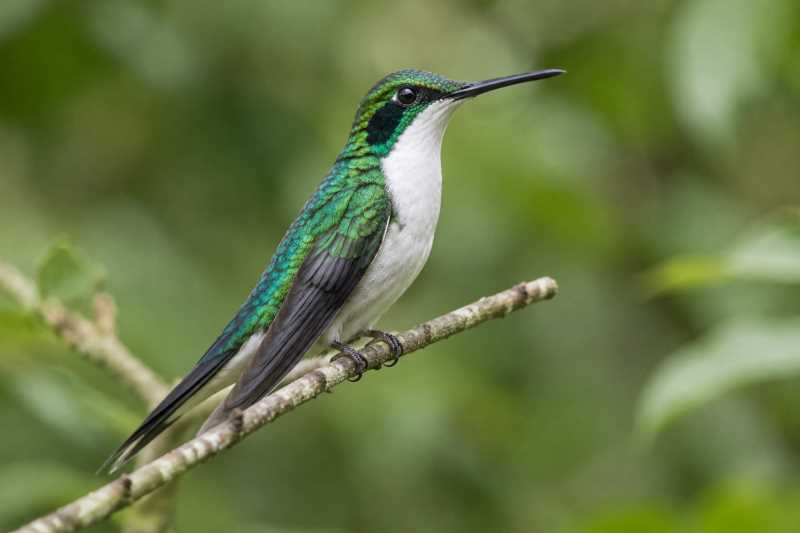
One of the most striking features of the Black-eared Fairy is its brilliant plumage. The bird boasts a predominantly white body, with a stunning iridescent green crown and back that shimmer in the sunlight. Its name is derived from the distinctive black markings behind its eyes, resembling ears. This unique marking provides a stark and beautiful contrast to its otherwise bright coloration.
The Black-eared Fairy is relatively small, even by hummingbird standards, measuring approximately 9 to 12 centimeters in length. Its wings are long and narrow, adapted perfectly for swift and agile flight. The tail is forked, aiding in maneuverability as it darts between flowers and branches.
Feeding Habits
As with many hummingbirds, the Black-eared Fairy primarily feeds on nectar. Its long, slender bill is perfectly adapted to accessing the deep, tubular flowers that other birds cannot reach. In addition to nectar, the Black-eared Fairy also consumes small insects and spiders, which provide essential proteins and nutrients.
The bird’s feeding behavior is characterized by rapid wing beats, allowing it to hover in place as it feeds. This hovering ability is supported by a highly specialized flight muscle structure, which enables the bird to maintain stability and control while feeding.
Breeding and Reproduction
The breeding season of the Black-eared Fairy varies depending on its geographical location but generally coincides with periods of high flower abundance. During courtship, males perform intricate aerial displays to attract females, showcasing their agility and vibrant plumage.
Once a pair is formed, the female is responsible for building the nest, typically placing it on a thin branch or leaf to avoid predators. The nest is a small cup-like structure made from plant fibers, moss, and spider silk, providing a secure environment for the eggs.
The female usually lays two tiny white eggs, which she incubates for about two weeks. After hatching, the chicks are fed a diet of regurgitated insects and nectar by the female. The young birds fledge approximately three weeks after hatching, but they remain dependent on their mother for food and protection for a short period thereafter.
Conservation Status
Currently, the Black-eared Fairy is not classified as endangered, and it is considered to have a stable population across its range. However, like many species that inhabit tropical forests, it faces threats from habitat loss and fragmentation due to deforestation and land conversion for agriculture.
Conservation efforts aimed at preserving tropical forest habitats are crucial for maintaining the population of the Black-eared Fairy and countless other species that share its environment. Protecting these habitats not only benefits the wildlife but also supports the ecological balance and biodiversity of the region.
Fascination and Research
The Black-eared Fairy continues to be a subject of fascination for researchers who study its behavior, ecology, and role within its ecosystem. Understanding the intricate relationships between these birds and their environment offers insights into the broader implications of environmental changes and the importance of conservation.
Birdwatchers and nature enthusiasts are drawn to the Black-eared Fairy, not just for its beauty but also for its role as an indicator of ecosystem health. The presence of these birds in a region often signifies a rich and biodiverse habitat, making them an important focus for ecological studies.
In conclusion, the Black-eared Fairy is a remarkable example of nature’s artistry and adaptability. Its vibrant appearance, specialized feeding habits, and reproductive strategies highlight the complexity and beauty of the natural world. As we continue to explore and understand the dynamics of tropical ecosystems, the Black-eared Fairy stands as a testament to the wonders of evolution and the urgent need to preserve the environments that sustain such incredible diversity.
Related posts