The Elusive Forbes-Watson’s Swift: A Hidden Gem of the Avian World
In the vast tapestry of Earth’s avian wonders, few birds captivate ornithologists and bird enthusiasts alike as much as Forbes-Watson’s Swift (Apus berliozi). Named after the British ornithologist, Major Forbes-Watson, who first identified these birds in the early 1970s, this species encapsulates the allure of the unknown, primarily because of its elusive nature and limited range.
Discovering a Mystery
Forbes-Watson’s Swift was first described scientifically in 1978, following observations off the coast of the Arabian Peninsula. These swifts are primarily found in the Socotra Archipelago in Yemen, a region famed for its unique biodiversity. Despite their relatively recent discovery, these birds have quickly become a subject of intrigue due to their restricted habitat and elusive behavior.
Physical Characteristics
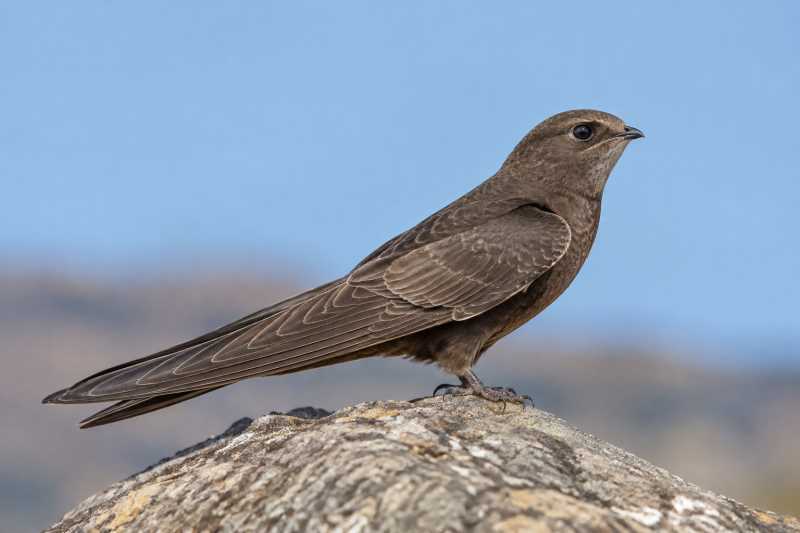
Forbes-Watson’s Swift is a medium-sized bird with a wingspan ranging from 42 to 45 centimeters. Its plumage is predominantly black with a distinctive white throat patch, setting it apart from other swift species. Their slender, streamlined bodies and long, pointed wings are perfectly adapted for their aerial lifestyle, allowing them to maneuver effortlessly through the skies.
Behavioral Traits
True to the nature of swifts, Forbes-Watson’s Swift spends most of its life on the wing, feeding, mating, and even sleeping while airborne. Their diet primarily consists of airborne insects, which they catch with their wide, gaping mouths. These birds are masterful fliers, capable of swift, agile movements that help them evade predators and navigate their complex habitats.
Habitat and Range
The Socotra Archipelago, where Forbes-Watson’s Swift is predominantly found, is a UNESCO World Heritage site recognized for its rich and unique flora and fauna. The arid climate, coupled with the rugged terrain, creates a suitable environment for these swifts. However, their range is limited, and sightings outside this region are rare, making them a compelling subject for ornithological study.
Conservation Status
Currently, Forbes-Watson’s Swift is listed as ‘Data Deficient’ by the International Union for Conservation of Nature (IUCN), reflecting the need for more comprehensive data on their populations and ecology. The limited knowledge stems from their inaccessible habitats and the challenges of studying a species that spends the majority of its life in flight. Conservationists stress the importance of protecting the Socotra Archipelago, not only for the swifts but for its myriad of endemic species.
Challenges and Conservation Efforts
Human activities, such as habitat destruction and climate change, pose significant threats to this fragile ecosystem. Conservation efforts are focused on habitat preservation and minimizing human impact. The remote nature of the Socotra Archipelago provides some buffer against human encroachment, but continuous monitoring and conservation initiatives are crucial.
Collaborative efforts between international conservation bodies and local authorities are underway to establish sustainable practices that benefit both humans and wildlife. Education and awareness programs are also vital in garnering support for conservation initiatives.
The Importance of Swifts in Ecosystems
Swifts, including Forbes-Watson’s Swift, play a crucial role in maintaining ecological balance. As insectivores, they help control insect populations, which can be beneficial for agriculture and human health. Their presence indicates a healthy, functioning ecosystem, making them important bioindicators.
Final Thoughts
The enigmatic Forbes-Watson’s Swift represents the beauty and mystery of our planet’s biodiversity. While much remains to be learned about this elusive bird, ongoing research and conservation efforts offer hope for its future. The swift’s story underscores the importance of protecting our natural world and the delicate balance that sustains it.
In a world where species are disappearing at an alarming rate, the study and preservation of such unique creatures are more critical than ever. Forbes-Watson’s Swift, with its graceful flight and mysterious ways, serves as a poignant reminder of nature’s wonders and the enduring need for conservation.
As we continue to explore and understand the natural world, species like Forbes-Watson’s Swift inspire awe and a sense of responsibility to safeguard the planet’s biodiversity for future generations.
Related posts