Blyth’s Frogmouth: A Glimpse Into the Enigmatic Avian World
In the dense, humid forests of Southeast Asia, an elusive bird lurks among the shadows, its presence often undetected by the casual observer. This bird is none other than Blyth’s Frogmouth (Batrachostomus affinis), a member of the intriguing Podargidae family. Named after Edward Blyth, a 19th-century British zoologist, this species captivates ornithologists and bird enthusiasts alike with its unique appearance and behavior.
Taxonomy and Distribution
Blyth’s Frogmouth is primarily found in the tropical and subtropical forests of Southeast Asia, with its range extending across parts of Thailand, Malaysia, and Indonesia. The species inhabits lowland and montane forests, favoring dense vegetation that provides ample cover and feeding grounds. Despite its broad range, the frogmouth’s secretive nature and excellent camouflage make it a challenging subject for study.
Belonging to the order Caprimulgiformes, Blyth’s Frogmouth shares familial ties with nightjars and other frogmouths. It is closely related to other species within the genus Batrachostomus, each exhibiting subtle variations in plumage and morphology that reflect their distinct ecological niches.
Morphological Characteristics
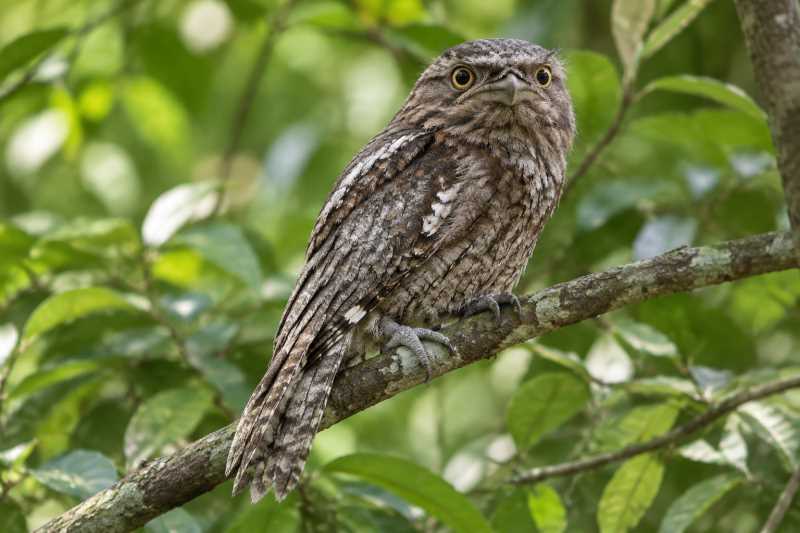
Blyth’s Frogmouth is characterized by its distinctive appearance, which is perfectly adapted for a life of stealth and nocturnal hunting. The bird measures approximately 24-26 cm in length, with a wingspan that complements its body size. Its plumage is a mottled blend of browns, blacks, and grays, allowing it to blend seamlessly into the forest environment.
The frogmouth’s most notable feature is its broad, flat bill, which resembles a frog’s mouth—hence the name. This unique adaptation aids in capturing insects and other small prey during nighttime foraging. Additionally, the bird’s large, forward-facing eyes are specially adapted for low-light conditions, enhancing its nocturnal vision.
Behavioral Traits
Blyth’s Frogmouth is predominantly nocturnal, spending the daylight hours perched motionless on branches. Its cryptic plumage and stillness make it nearly invisible to predators and observers alike. At night, the frogmouth becomes an active hunter, using its acute senses to detect and capture insects.
One of the most fascinating aspects of Blyth’s Frogmouth is its vocalization. The bird produces a series of soft, low-pitched coos and whistles, which can be heard throughout the forest. These calls serve as communication between mates and as territorial signals to other frogmouths.
Reproductive Habits
The breeding season for Blyth’s Frogmouth typically coincides with the onset of the rainy season, a time when food resources are abundant. During this period, pairs engage in courtship displays, which include vocal duets and synchronized movements that strengthen pair bonds.
Nests are often constructed on horizontal branches, utilizing a combination of natural materials like leaves and twigs. The female typically lays a single egg, which both parents incubate. This shared responsibility extends to feeding and protecting the chick until it fledges.
Conservation Status and Challenges
Blyth’s Frogmouth is currently listed as "Least Concern" by the International Union for Conservation of Nature (IUCN), largely due to its widespread distribution and stable population trends. However, like many forest-dwelling species, it faces potential threats from habitat loss and fragmentation due to deforestation and land conversion for agriculture.
Efforts to preserve Southeast Asia’s forest ecosystems are crucial for the continued survival of Blyth’s Frogmouth and other endemic species. Conservation strategies that focus on sustainable land management and protected area designation can help mitigate the impact of human activities on these vital habitats.
Conclusion
Blyth’s Frogmouth is a testament to the incredible diversity and adaptability of avian life. Its unique characteristics and behaviors offer valuable insights into the complex ecological dynamics of Southeast Asian forests. As we continue to explore and understand these enigmatic creatures, we are reminded of the importance of preserving the natural world for future generations.
For bird enthusiasts and researchers alike, Blyth’s Frogmouth represents an enduring symbol of nature’s wonder and resilience. Through ongoing conservation efforts and increased awareness, we can ensure that this remarkable species continues to thrive in its native habitats for years to come.
Related posts