Unearthing the Mysteries of the Grey Nightjar: A Paragon of Nocturnal Adaptation
The Grey Nightjar, scientifically known as Caprimulgus jotaka, is a captivating avian species that has intrigued ornithologists and bird enthusiasts alike. This nocturnal bird is part of the family Caprimulgidae, a group celebrated for their remarkable adaptations to a life shrouded in the twilight hours. Found across a vast range of eastern Asia, including Japan, Korea, and parts of China, the Grey Nightjar is a remarkable example of nature’s evolutionary ingenuity.
Habitat and Distribution
The Grey Nightjar thrives in a variety of habitats, from deciduous and coniferous forests to open grasslands and agricultural fields. This adaptability in habitat selection is key to its widespread distribution across the temperate and subtropical regions of Asia. During the breeding season, these birds are particularly fond of forested areas where they can nest on the ground amidst leaf litter, relying on their cryptic plumage to evade predators.
Their migratory patterns are equally fascinating. As winter approaches, the Grey Nightjar embarks on a southward journey to warmer climes, traveling as far south as the Philippines and the northern reaches of the Indonesian archipelago. This seasonal migration not only helps them escape the harsh winter conditions but also ensures a steady supply of their primary diet: insects.
Physical Characteristics and Behavior
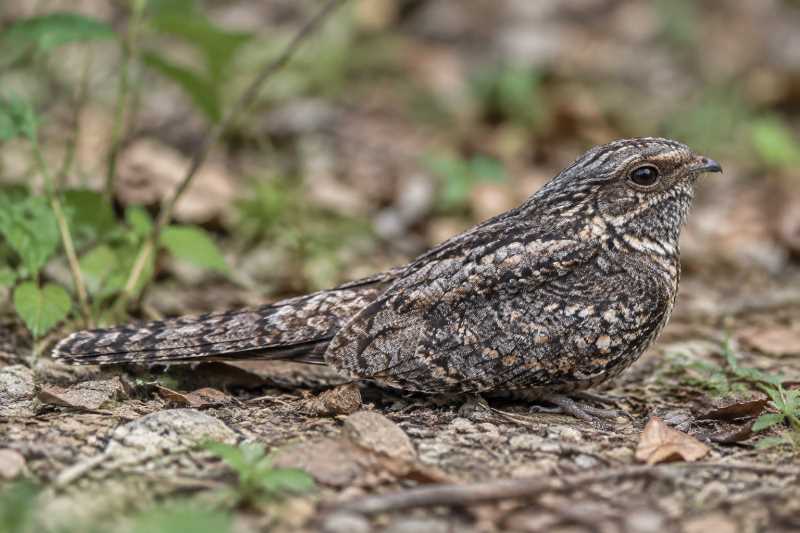
The Grey Nightjar is a medium-sized bird, typically measuring between 24 to 27 centimeters in length with a wingspan that can reach up to 60 centimeters. Its plumage is a masterpiece of camouflage, mottled with shades of grey, brown, and black, allowing it to blend seamlessly into its surroundings during the day when it rests.
One of the most distinctive features of the Grey Nightjar is its large eyes, adapted for enhanced night vision, which are crucial for its crepuscular and nocturnal lifestyle. Their wide, gaping mouths are perfectly designed for catching insects mid-flight, aided by the presence of specialized bristles that help funnel prey into their mouths.
At dusk, the Grey Nightjar becomes a flurry of activity, taking to the skies in pursuit of moths, beetles, and other night-flying insects. Their flight is characterized by a silent, graceful pattern, allowing them to hunt with stealth.
Vocalizations
The Grey Nightjar is also known for its distinctive vocalizations, which are often heard at dusk and dawn. Their calls are a series of repetitive, melodious notes, serving both as a means of communication and territorial declaration. During the breeding season, males use their calls to attract females and ward off rival males, contributing to their reproductive success.
Conservation Status
Currently, the Grey Nightjar is classified as "Least Concern" by the International Union for Conservation of Nature (IUCN). However, like many species, it faces threats from habitat destruction and climate change. Deforestation and the conversion of land for agriculture pose significant risks to their breeding and feeding grounds.
Conservation efforts are crucial in ensuring that the Grey Nightjar continues to thrive across its range. Protecting their natural habitats and mitigating the impacts of climate change will be vital in preserving this species for future generations.
Cultural Significance
In various cultures across Asia, the Grey Nightjar holds a special place in folklore and mythology. Often regarded as a harbinger of change due to its nocturnal habits and eerie calls, it has inspired countless stories and legends. Its elusive nature and cryptic appearance have only added to its mystique, making it a symbol of the mysteries of the night.
In conclusion, the Grey Nightjar is not just a marvel of evolutionary adaptation but also a testament to the rich tapestry of biodiversity that our planet hosts. Protecting such species is not only about preserving nature’s wonders but also about safeguarding the cultural heritage and ecological balance that they represent.
Related posts