Southern Crested Guineafowl (Guttera edouardi): A Fascinating Glimpse into Africa’s Avian Diversity
The Southern Crested Guineafowl, scientifically known as Guttera edouardi, is a captivating bird species that occupies a unique niche within Africa’s rich ecosystem. Known for its striking appearance and intriguing behaviors, this bird has become a subject of interest for ornithologists and bird enthusiasts alike. In this article, we will explore the various aspects of the Southern Crested Guineafowl, from its habitat and behavior to its role in the ecosystem and conservation status.
Habitat and Distribution
The Southern Crested Guineafowl primarily inhabits the tropical and subtropical regions of southeastern Africa. Its range extends across several countries, including Mozambique, Zimbabwe, Zambia, and parts of Tanzania. These birds favor dense forests, woodlands, and savanna regions, where they can find ample food and shelter. The preference for such habitats highlights their adaptability to different environmental conditions, making them a resilient species in the face of habitat changes.
The species is often found in areas with thick undergrowth and ample water sources. This preference ensures they have access to their primary diet of seeds, fruits, and small invertebrates. The combination of dense vegetation and water availability is crucial for their survival, providing both food resources and protection from predators.
Physical Characteristics
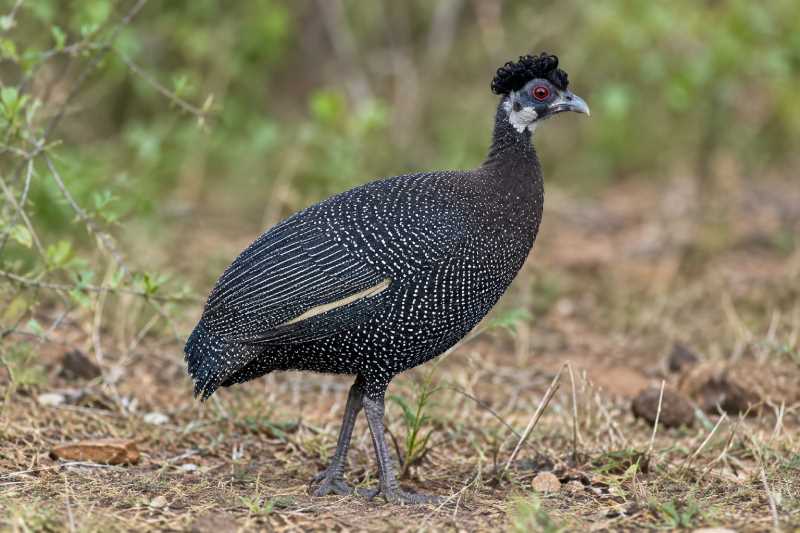
The Southern Crested Guineafowl is easily recognizable by its distinctive appearance. It boasts a striking black plumage adorned with white spots, creating a beautiful contrast that makes it stand out in its natural surroundings. One of its most notable features is the crest of curly black feathers on its head, which gives it a regal appearance and contributes to its common name.
Adults typically measure around 50 to 70 centimeters in length and can weigh between 1.3 to 1.5 kilograms. Their robust build is complemented by strong legs, which are well-adapted for walking and scratching the ground in search of food. Their wings, while not suited for long flights, are effective for short bursts of speed when escaping predators.
Behavior and Social Structure
Southern Crested Guineafowls are social birds, often found in small flocks ranging from 5 to 20 members. These groups are usually composed of family members, emphasizing their strong social bonds. The birds communicate through a variety of vocalizations, including calls that alert the group to potential danger.
Their daily activities revolve around foraging and socializing. During the day, they can be seen searching for food, using their strong legs to scratch the ground and uncover insects, seeds, and small fruits. By dusk, they retreat to the safety of trees or dense vegetation, where they roost for the night.
Breeding season varies depending on geographical location, but typically occurs during the rainy season when food is abundant. The species practices a monogamous breeding system, with both parents sharing responsibilities in incubating eggs and caring for the young. This strong parental involvement ensures higher survival rates for their offspring.
Role in the Ecosystem
As omnivores, Southern Crested Guineafowls play a crucial role in maintaining the ecological balance within their habitats. By consuming a variety of seeds and fruits, they aid in seed dispersal, contributing to plant propagation. Additionally, their insectivorous diet helps control insect populations, providing a natural pest management service.
Their presence also supports the food web, as they serve as prey for larger predators such as birds of prey, snakes, and mammals. This interconnectedness highlights their importance in maintaining the health and diversity of their ecosystems.
Conservation Status and Challenges
According to the International Union for Conservation of Nature (IUCN), the Southern Crested Guineafowl is currently classified as a species of Least Concern. Despite this favorable status, the species faces several threats that could impact its population in the future. Habitat loss due to deforestation and agricultural expansion poses significant challenges, as these activities reduce the available space and resources for the guineafowls.
Additionally, hunting for food and the pet trade also threaten their numbers. While not currently at risk of extinction, ongoing conservation efforts are vital to ensure their long-term survival. Protecting their habitats and implementing sustainable land-use practices are key strategies in preserving the Southern Crested Guineafowl and the ecosystems they inhabit.
Conclusion
The Southern Crested Guineafowl is a remarkable bird species that embodies the beauty and complexity of Africa’s wildlife. Its striking appearance, social behavior, and ecological importance make it a valuable component of the regions it inhabits. As we continue to learn more about these birds and their roles in the environment, it becomes increasingly clear that protecting them is essential for preserving the natural heritage of Africa.
By addressing the challenges they face and fostering a deeper understanding of their ecological significance, we can ensure that future generations will continue to marvel at the Southern Crested Guineafowl and the vibrant ecosystems they help sustain.
Related posts