The Oriental Turtle Dove: A Comprehensive Overview
Introduction
The Oriental Turtle Dove, scientifically known as Streptopelia orientalis, is a captivating bird species that belongs to the Columbidae family. This bird is renowned for its striking appearance and distinctive call. Found across Asia, the Oriental Turtle Dove has adapted well to various habitats, from dense forests to urban environments. This article delves into the distinguishing features, habitat, behavior, and conservation status of this remarkable bird.
Physical Characteristics
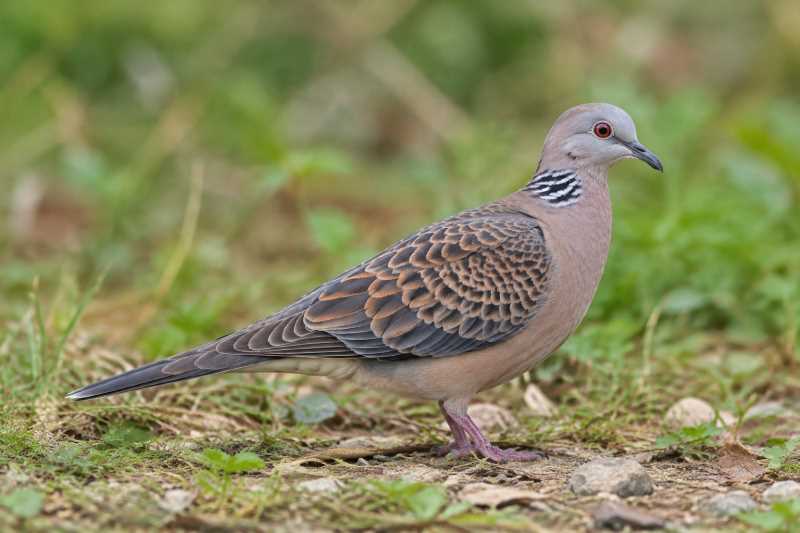
The Oriental Turtle Dove is a medium-sized bird, measuring approximately 28 to 33 cm in length with a wingspan ranging from 45 to 55 cm. Its plumage is a rich blend of browns and grays, with a striking pinkish hue on the breast and a distinctive black-and-white barred pattern on its neck, which is a hallmark of the species. The dove’s eyes are a deep red, and it possesses a robust, slightly hooked bill that is well-suited for its diet. The tail is long and rounded, with white-tipped feathers that are visible in flight.
Distribution and Habitat
The Oriental Turtle Dove is predominantly found in Asia, with its range extending from the Indian subcontinent through Southeast Asia and into parts of East Asia, including China, Korea, and Japan. It is a highly adaptable species, thriving in a variety of environments such as woodlands, agricultural areas, and even urban locales. The bird’s preference for diverse habitats is a testament to its resilience and adaptability.
Behavior and Diet
Oriental Turtle Doves are known for their gentle and somewhat elusive nature. They are primarily ground foragers, feeding on a diet composed mainly of seeds, grains, and small invertebrates. The bird’s feeding habits play a crucial role in seed dispersal, contributing to ecosystem health and biodiversity.
These doves are often observed in pairs or small groups, especially during the breeding season. Their courtship displays are a sight to behold, featuring a series of cooing calls and aerial acrobatics. The male performs a distinctive flight pattern to attract a mate, displaying both visual and auditory cues to signal his suitability.
Breeding and Nesting
The breeding season of the Oriental Turtle Dove varies depending on its geographical location, but it typically occurs between April and September. These birds are monogamous, forming strong pair bonds that can last several breeding cycles. Nests are usually constructed in trees or shrubs, made from twigs and lined with softer materials.
A typical clutch consists of two eggs, which are incubated by both parents for about 14 to 16 days. After hatching, the chicks are cared for by both parents and fledge within three weeks. The collaborative parenting strategy ensures a high survival rate for the young doves.
Vocalization
One of the most notable features of the Oriental Turtle Dove is its melodious call, which is often described as a deep, resonant cooing. These vocalizations play a vital role in communication, particularly during the breeding season. The male’s call is crucial in establishing territory and attracting a mate, while both sexes use vocalizations to maintain pair bonds and coordinate parenting duties.
Conservation Status
Currently, the Oriental Turtle Dove is classified as a species of Least Concern by the International Union for Conservation of Nature (IUCN). Despite this seemingly secure status, the species faces several threats, including habitat loss, hunting, and climate change. Urbanization and agricultural expansion have led to the degradation of some of its natural habitats, while hunting for sport and trade poses additional risks.
Conservation efforts are underway to address these challenges, focusing on habitat preservation and sustainable land-use practices. Continued monitoring and research are essential to ensure the long-term survival of the Oriental Turtle Dove in the wild.
Conclusion
The Oriental Turtle Dove is a remarkable bird species that captivates birdwatchers and nature enthusiasts alike with its beauty and melodious calls. Its adaptability to diverse habitats and collaborative breeding strategies highlight its resilience in the face of environmental changes. While it currently enjoys a stable conservation status, ongoing efforts to mitigate threats and protect its natural habitats are crucial to preserving this species for future generations. As urbanization and climate change continue to impact the natural world, the Oriental Turtle Dove serves as a reminder of the delicate balance between human progress and wildlife conservation.
Related posts