The Great Curassow: An Avian Marvel of Central and South America
The Great Curassow (Crax rubra) stands as an impressive and enigmatic bird that roams the tropical forests of Central and South America. Known for its striking appearance and intriguing behaviors, this bird plays a vital role in the ecosystems it inhabits. In this article, we delve into the characteristics, habitat, behavior, and conservation status of the Great Curassow, shedding light on why this species is both fascinating and crucial for biodiversity.
Characteristics and Appearance
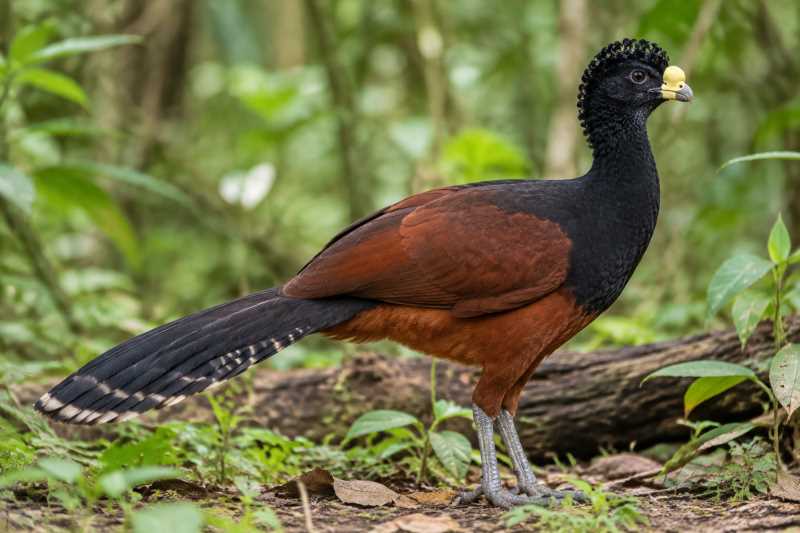
The Great Curassow is a large, ground-dwelling bird belonging to the Cracidae family. It exhibits sexual dimorphism, meaning males and females differ in appearance. Males are predominantly glossy black with a distinctive yellow knob on their bill, while females display a more diverse range of colors, often featuring a mix of brown, black, and white plumage, with striking patterns that vary among individuals. Weighing between 3.5 to 5.0 kg and measuring up to 1 meter in length, the Great Curassow is one of the largest members of the cracid family.
Habitat and Distribution
The natural habitat of the Great Curassow spans from eastern Mexico through Central America, reaching into Colombia and Ecuador in South America. They thrive in lowland tropical forests, preferring areas with dense understory and abundant fruiting trees. These birds are primarily found in protected areas such as national parks and reserves, which offer the undisturbed environment necessary for their survival.
Their preference for pristine habitats makes them highly susceptible to habitat destruction due to deforestation and agricultural expansion. As a result, their presence often indicates a healthy, undisturbed ecosystem.
Behavior and Diet
Great Curassows are primarily frugivorous, feeding on a diet rich in fruits, seeds, and occasionally small animals and insects. Their feeding habits play a pivotal role in seed dispersal, contributing to forest regeneration and biodiversity. By spreading seeds across vast areas, these birds facilitate the growth of various plant species, maintaining the intricate balance of their ecosystem.
These birds are social creatures, often seen in small family groups. Though predominantly ground-dwellers, they are capable of short flights, usually to escape predators or reach fruiting trees. The Great Curassow is known for its distinctive vocalizations, which include a range of calls from low-frequency booming to melodious whistles, used for communication and mating purposes.
Reproductive Behavior
The breeding season of the Great Curassow varies across its range but generally peaks during the rainy season when food is abundant. Males perform elaborate courtship displays, showcasing their vibrant plumage and producing deep booming calls to attract females. Once a pair bonds, they remain monogamous throughout the breeding season.
Females typically lay 2 to 3 eggs, which are incubated for about 30 days. Both parents are involved in raising the young, which are precocial at birth—meaning they are relatively mature and mobile from the moment they hatch. This family-oriented behavior ensures a higher survival rate for the offspring, contributing to the species’ continuity.
Conservation Status and Threats
The Great Curassow is classified as Vulnerable on the IUCN Red List. The primary threats to their survival are habitat loss due to deforestation, hunting, and the illegal pet trade. As forests are cleared for agriculture and development, the Great Curassow’s habitat shrinks, and their populations become increasingly fragmented.
Conservation efforts are in place to protect these birds, focusing on habitat preservation and restoration. Many countries within their range have established protected areas and national parks to safeguard crucial habitats. Additionally, efforts to curb hunting and raise awareness about the species are ongoing, aiming to reduce human-induced pressures.
The Importance of Conservation
Preserving the Great Curassow is vital not only for maintaining biodiversity but also for the health of tropical ecosystems. Their role as seed dispersers is crucial for forest sustainability, and their presence indicates a well-functioning ecosystem. Conservation initiatives must prioritize habitat protection, law enforcement against hunting, and community engagement to ensure the species’ survival.
In conclusion, the Great Curassow is a remarkable bird that embodies the beauty and complexity of tropical forests. Understanding and protecting this species is essential for conserving the rich biodiversity of Central and South America. By supporting conservation efforts and promoting sustainable practices, we can ensure that future generations will continue to marvel at the Great Curassow’s grandeur.
Conclusion
The Great Curassow’s unique characteristics, vital ecological role, and current conservation challenges highlight the need for continued efforts to protect this majestic species. As we work towards preserving their habitats and reducing threats, we contribute to a broader mission of sustaining the earth’s diverse ecosystems.
Related posts