The Enigmatic Bar-bellied Pitta: A Jewel of the Southeast Asian Forests
The Bar-bellied Pitta (Hydrornis elliotii) is a strikingly colorful bird that captures the hearts of birdwatchers and ornithologists alike. Found predominantly in the dense forests of Southeast Asia, this avian species is a member of the Pittidae family, known for their vibrant plumage and elusive nature. Despite their allure, pittas are often shrouded in mystery due to their secretive behavior and the challenging environments they inhabit.
Taxonomy and Nomenclature
The Bar-bellied Pitta belongs to the genus Hydrornis, which comprises several species of pittas distributed across Asia. The species was named in honor of the American ornithologist Daniel Giraud Elliot, recognizing his contributions to the study of bird species. Often confused with its close relatives due to similar physical characteristics, the Bar-bellied Pitta can be distinctly identified by its unique coloration and pattern.
Physical Description
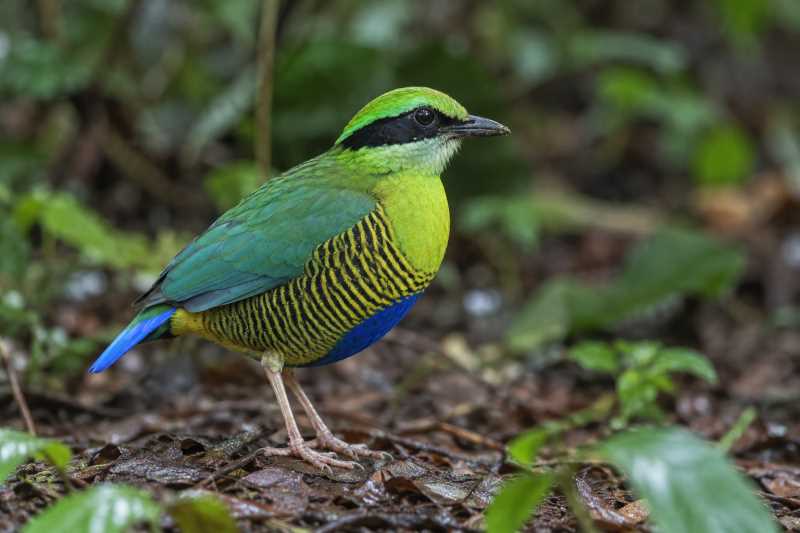
Recognized for its stunning appearance, the Bar-bellied Pitta is a medium-sized bird, measuring approximately 21–23 cm in length. The male, more vibrant than the female, exhibits a dazzling combination of colors: a bright emerald green back, a vivid blue crown, and distinctive bar-like markings on its belly, which give the bird its name. The underparts are a mix of yellow and white, adorned with horizontal black bars. Females, while similarly patterned, tend to have slightly duller hues compared to their male counterparts.
Habitat and Distribution
The Bar-bellied Pitta is predominantly found in the subtropical and tropical moist lowland forests of Southeast Asia, including countries like Vietnam, Laos, and Cambodia. These birds prefer dense undergrowth in evergreen and semi-evergreen forests, where they can forage for food and find shelter. They are also known to inhabit secondary forests and areas with thick bamboo groves, displaying a degree of adaptability to different forest types.
Behavior and Diet
Pittas are known for their secretive and solitary behavior, often making them a challenge to observe in their natural habitat. The Bar-bellied Pitta is no exception, spending much of its time on the forest floor, foraging for insects, small invertebrates, and occasionally fruits. Their diet primarily consists of earthworms, beetles, and other small arthropods, which they skillfully extract from the leaf litter using their strong, pointed bills.
These birds are not known for long flights, preferring to hop or make short, direct flights between perches. Their elusive nature is further enhanced by their excellent camouflage, allowing them to blend seamlessly into the forest underbrush.
Breeding and Reproduction
The Bar-bellied Pitta’s breeding season generally coincides with the rainy season, a time when food resources are abundant. Nesting typically occurs between May and August. The nests are often constructed on the ground, concealed by thick foliage or hidden among fallen leaves. They are dome-shaped structures made from twigs, leaves, and grass, providing safety and insulation for the eggs.
Clutch sizes usually range from two to five eggs, which are incubated by both parents. The incubation period lasts approximately 16 to 18 days, after which the chicks hatch. Both parents are involved in feeding and caring for the young until they are ready to fledge, which occurs about two weeks after hatching.
Conservation Status and Threats
The Bar-bellied Pitta is currently classified as Near Threatened by the International Union for Conservation of Nature (IUCN). The primary threat to this species is habitat destruction due to logging, agricultural expansion, and infrastructure development, which lead to fragmentation and degradation of their natural habitats. Additionally, the illegal pet trade poses a significant threat, as pittas are often captured for their striking appearance.
Conservation efforts are crucial to ensure the survival of the Bar-bellied Pitta. Protecting their natural habitats through the establishment of protected areas and sustainable forest management practices are essential strategies. Furthermore, raising awareness about the ecological role and plight of these birds can help garner support for conservation initiatives.
Conclusion
The Bar-bellied Pitta is a true gem of the Southeast Asian forests, a species that exemplifies the beauty and diversity of avian life. Its vibrant colors and secretive nature make it a prized sight for bird enthusiasts, while its ecological role as an insectivore highlights its importance in maintaining forest health. Ensuring the preservation of this remarkable bird calls for concerted conservation efforts and a commitment to protecting their natural habitats from the ever-encroaching threats of human activity.
Related posts