The Majestic Mountain Kingfisher: A Jewel of the Highlands
The Mountain Kingfisher (Syma megarhyncha) is a strikingly beautiful bird species that captures the imagination of ornithologists and bird enthusiasts alike. With its vibrant plumage and distinctive features, this kingfisher is a testament to the rich biodiversity found in its native habitats. This article delves into the fascinating world of the Mountain Kingfisher, exploring its characteristics, habitat, behavior, and conservation status.
Characteristics and Physical Description
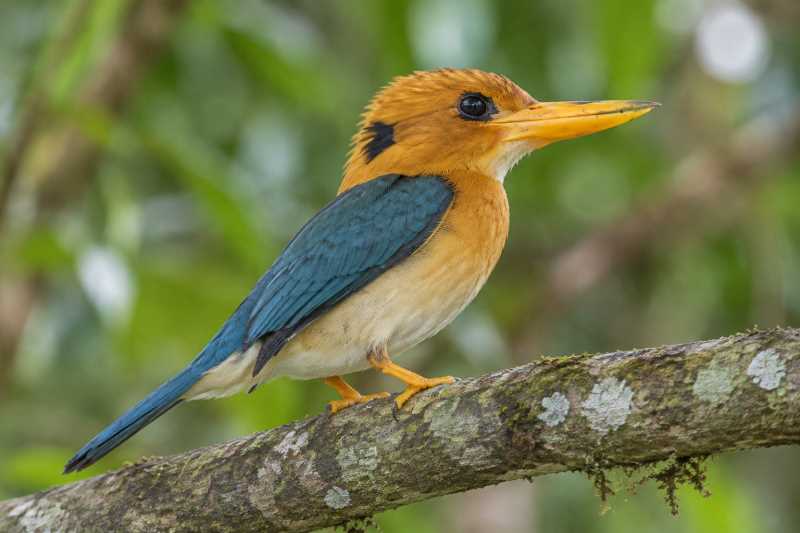
The Mountain Kingfisher is a medium-sized bird, measuring approximately 20 cm in length. Its most notable feature is its bright plumage, which is a brilliant combination of greens, blues, and yellows. The head and upperparts are predominantly green, with a vivid blue crown that adds a regal touch to its appearance. A distinguishing characteristic is its large, robust bill, which is yellow and slightly curved, adapted perfectly for its feeding habits.
Males and females are similar in appearance, though females may be slightly less vibrant in coloration. The underparts of the Mountain Kingfisher are a rich yellow, providing a stark contrast to the darker upperparts. Its eyes are dark brown, giving the bird an inquisitive and alert expression.
Habitat and Distribution
The Mountain Kingfisher is predominantly found in the highland regions of New Guinea. It inhabits montane forests, often at elevations ranging from 800 to 2,400 meters. These forests, characterized by dense vegetation and diverse flora, provide an ideal environment for the kingfisher. The bird prefers areas close to streams or rivers, where it can easily hunt for its prey.
The species is endemic to New Guinea, meaning it is not naturally found anywhere else in the world. This limited distribution makes the Mountain Kingfisher particularly vulnerable to habitat loss and other environmental threats.
Behavior and Diet
The Mountain Kingfisher is a solitary and elusive bird, often perching quietly in the forest canopy. Its behavior is primarily influenced by its need to hunt, as it feeds on a diverse diet that includes insects, small reptiles, and amphibians. The kingfisher uses its keen eyesight to spot prey from a perch before swooping down with precision to catch it.
Unlike some other kingfisher species, the Mountain Kingfisher does not rely heavily on aquatic habitats for feeding. Instead, it forages in the forest, using its powerful bill to capture and subdue its prey. This adaptability in feeding habits is one reason the Mountain Kingfisher thrives in its montane environment.
Reproduction and Lifespan
Breeding season for the Mountain Kingfisher occurs during the wet season, which typically spans from November to April. During this time, males engage in elaborate courtship displays to attract females, often involving a series of calls and aerial maneuvers.
After mating, the female lays a clutch of two to three eggs in a nest located in a tree cavity or a burrow in a riverbank. Both parents take part in incubating the eggs and feeding the chicks once they hatch. The chicks fledge after about 3-4 weeks, but they remain dependent on their parents for food until they are capable of hunting on their own.
The lifespan of a Mountain Kingfisher is not well-documented, but like many bird species, it is likely to live around 10 years in the wild under optimal conditions.
Conservation Status and Threats
The International Union for Conservation of Nature (IUCN) currently lists the Mountain Kingfisher as a species of Least Concern. However, this status does not mean that the bird is free from threats. Habitat destruction, particularly due to logging and agricultural expansion, poses a significant risk to the kingfisher’s environment.
Conservation efforts are crucial to ensure the long-term survival of the Mountain Kingfisher. Protecting the montane forests of New Guinea, implementing sustainable land-use practices, and raising awareness about the species are vital steps in preserving this unique bird.
Conclusion
The Mountain Kingfisher stands as a symbol of the ecological richness of New Guinea’s highlands. Its vibrant colors and unique behaviors make it a fascinating subject for study and admiration. While currently not endangered, proactive conservation measures are essential to safeguard its future. By understanding and protecting the Mountain Kingfisher, we contribute to the broader effort of conserving our planet’s invaluable biodiversity.
Related posts