The Niau Kingfisher: A Jewel of the French Polynesian Avifauna
The Niau Kingfisher (Todiramphus gertrudae), a striking bird species endemic to the Pacific island of Niau in French Polynesia, stands as a testament to nature’s ability to create unique and vibrant forms of life. Despite its vibrant plumage and intriguing natural history, the bird faces significant conservation challenges, making it a focal point for both scientists and environmentalists. This article delves into the Niau Kingfisher’s characteristics, habitat, ecological significance, and the conservation efforts necessary to protect this avian gem.
Description and Characteristics
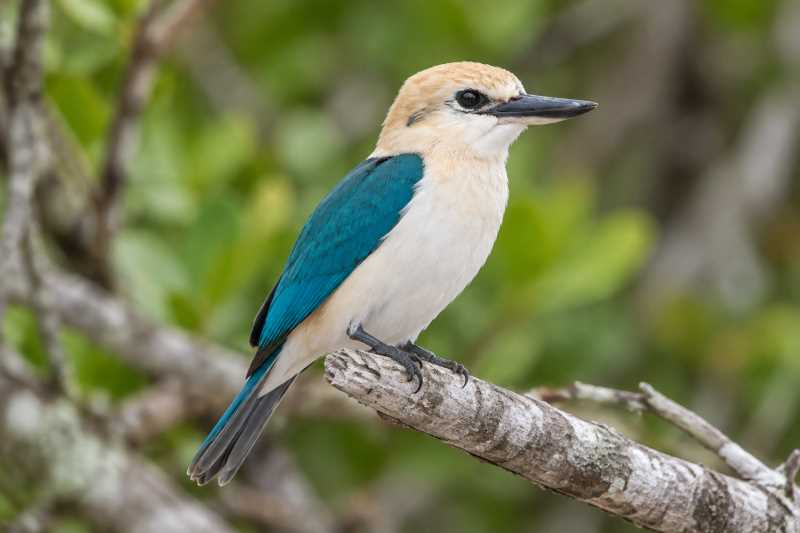
The Niau Kingfisher is a small bird, typically measuring around 20 centimeters in length. Its most striking feature is its vivid plumage – a captivating blend of turquoise and azure, with a contrasting white underbelly and a distinctive dark eye stripe. These colors not only make it a sight to behold but also play a role in its behavior and ecology, aiding in camouflage among the foliage of its natural habitat.
This species exhibits sexual dimorphism, with males generally brighter in coloration compared to females. The robust bill is another characteristic feature, adapted for its omnivorous diet that includes insects, small reptiles, and occasionally fruits. This dietary adaptability is crucial for its survival on the relatively resource-scarce island of Niau.
Habitat and Range
The Niau Kingfisher is exclusively found on the island of Niau, part of the Tuamotu Archipelago in French Polynesia. Niau is a raised coral atoll, providing a unique ecosystem where the kingfisher has adapted to thrive. The island’s dense forests and coconut plantations offer the primary habitat for this species. However, the limited range of the Niau Kingfisher, confined to a mere 53 square kilometers, makes it extremely vulnerable to environmental changes and habitat disturbances.
Ecological Role
As a predator of insects and small vertebrates, the Niau Kingfisher plays a vital role in maintaining the ecological balance within its habitat. By controlling insect populations, it helps prevent potential outbreaks that could affect the local flora and agriculture. Furthermore, as a part of the island’s avian community, it contributes to the biodiversity that is essential for the island’s ecological resilience.
Conservation Status and Threats
The International Union for Conservation of Nature (IUCN) currently lists the Niau Kingfisher as Critically Endangered. The primary threats to its survival include habitat loss due to human activities such as agriculture and coconut plantation expansion, as well as predation by introduced species like rats and cats. Additionally, climate change poses a long-term threat, potentially altering the island’s ecosystem in ways that could further endanger the kingfisher.
Efforts to conserve the Niau Kingfisher must address these threats through habitat protection and restoration, control of invasive species, and raising awareness among the local population. Conservationists are advocating for the establishment of protected areas on Niau and the implementation of sustainable land-use practices that consider both human and ecological needs.
Conservation Efforts and Future Directions
Conservation initiatives for the Niau Kingfisher are still in their nascent stages but are gaining momentum. Local and international organizations are collaborating to develop strategies that involve habitat restoration and the control of invasive species. Community engagement is a crucial component of these efforts, as local inhabitants play a key role in the successful implementation of conservation measures.
Research is also a vital part of the conservation strategy. Understanding the kingfisher’s breeding patterns, dietary needs, and habitat preferences will inform targeted actions that can enhance its chances of survival. Citizen science initiatives, where locals participate in monitoring and data collection, are being explored to gather real-time information about the species.
Education and awareness campaigns are equally important, aiming to cultivate a sense of pride and responsibility among the island’s residents regarding their unique natural heritage. By fostering a community-driven conservation ethic, the hope is to create a sustainable coexistence between the island’s human population and its native wildlife.
Conclusion
The Niau Kingfisher, with its striking appearance and limited range, embodies the fragility and beauty of island ecosystems. Its continued existence hinges on concerted conservation efforts that address both immediate threats and long-term ecological changes. By preserving this avian jewel, we not only protect a unique species but also uphold the ecological integrity of the island of Niau, ensuring that it remains a vibrant and biodiverse habitat for generations to come.
Related posts