The Enigmatic Rufous Fishing Owl: Guardian of African Waterways
The Rufous Fishing Owl (Scotopelia ussheri) is a fascinating yet elusive bird species, primarily inhabiting the dense forests and riverine ecosystems of West Africa. As a member of the Strigidae family, this medium-sized owl is one of three species in the genus Scotopelia, all known for their unique adaptations to aquatic environments. Despite its striking appearance and specialized lifestyle, the Rufous Fishing Owl remains one of the least studied and most mysterious owls in the world.
Appearance and Physical Characteristics
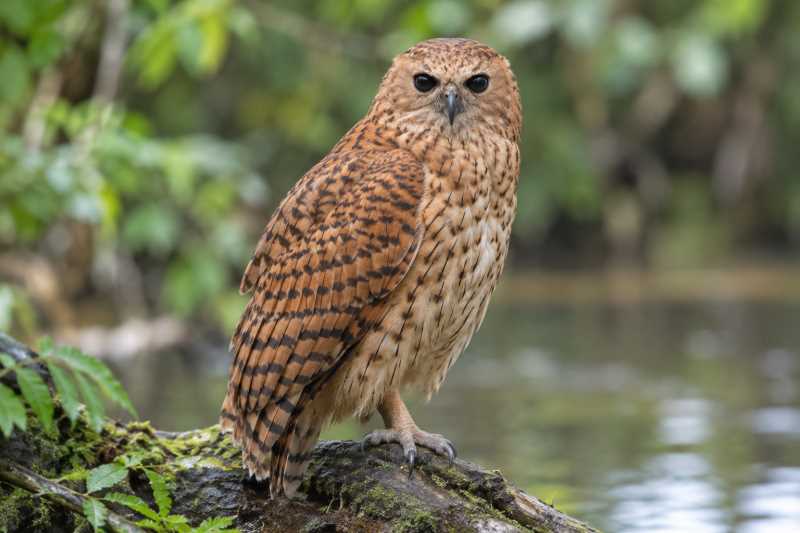
The Rufous Fishing Owl is distinguished by its rich rufous and chestnut plumage, which provides excellent camouflage against the backdrop of its forested habitat. Adult owls typically feature a pale buff facial disk and striking yellow eyes that contribute to their piercing gaze. The underparts are a lighter buff color with subtle streaks, while the upperparts showcase a more uniform rufous tone. Unlike many other owl species, the Rufous Fishing Owl lacks ear tufts, giving it a smoother, rounded head profile.
Measuring approximately 46 to 51 cm in length with a wingspan reaching up to 120 cm, the Rufous Fishing Owl is a formidable presence. Its strong, curved bill and powerful talons are perfectly suited for its piscivorous diet, primarily consisting of fish and freshwater crustaceans.
Habitat and Distribution
The Rufous Fishing Owl is endemic to the forested regions of West Africa, with its range extending from Sierra Leone through Liberia and into Ivory Coast and Ghana. Preferring dense, moist lowland forests, these owls are closely associated with waterways, such as rivers, streams, and swamps, where their food sources are abundant.
Unfortunately, due to habitat destruction and human encroachment, the Rufous Fishing Owl’s range has become increasingly fragmented. Large-scale deforestation for agriculture, logging, and human settlement poses significant threats to their natural habitat, leading to a decline in population numbers.
Behavior and Diet
As a nocturnal predator, the Rufous Fishing Owl is most active during the night, using its keen eyesight and acute hearing to locate prey. Unlike many owl species that primarily hunt small mammals, this owl has evolved to specialize in hunting aquatic prey. Its diet mainly comprises fish, but it also includes frogs, crabs, and occasionally small mammals or birds.
The Rufous Fishing Owl employs several hunting techniques, often perching silently on branches overhanging water bodies before swooping down to snatch prey with its sharp talons. Its flight is silent and deliberate, a trait common among owls that allows it to approach prey undetected.
Reproduction and Lifespan
Little is known about the breeding habits of the Rufous Fishing Owl due to its elusive nature and the challenging environments it inhabits. However, it is believed that they nest in tree cavities or on large branches close to water. Breeding is thought to occur during the dry season when water levels are lower, making fish more accessible.
Clutch size is presumed to be relatively small, with one to two eggs per breeding season. The incubation period and the fledging duration remain undocumented, highlighting the need for further research into the life cycle of this enigmatic owl.
Conservation Status
The Rufous Fishing Owl is currently classified as Vulnerable on the IUCN Red List, primarily due to habitat loss and fragmentation. Conservation efforts are crucial for protecting the remaining populations and their habitats. Initiatives such as establishing protected areas, promoting sustainable forestry practices, and raising awareness about the species are essential steps toward ensuring the owl’s survival.
Furthermore, collaborative research efforts are necessary to fill the knowledge gaps regarding its ecology and behavior. Such information would be invaluable for developing effective conservation strategies and fostering coexistence between human populations and these remarkable birds.
Conclusion
The Rufous Fishing Owl stands as a symbol of the rich biodiversity found within West Africa’s forests and waterways. Its specialized adaptations and unique ecological niche make it a species of significant interest to ornithologists and conservationists alike. As human activities continue to impact its habitat, the future of the Rufous Fishing Owl depends on concerted conservation efforts and a deeper understanding of its ecological needs. By protecting this enigmatic bird, we contribute to the preservation of the broader ecosystems that support countless other species, ensuring the biodiversity of West Africa remains intact for generations to come.
Related posts