The Brown Fish Owl: A Majestic Denizen of Riparian Habitats
The Brown Fish Owl (Ketupa zeylonensis), an awe-inspiring raptor, is a prominent member of the Strigidae family. Known for its distinct features and intriguing habits, this species is a captivating subject for ornithologists and birdwatchers alike. Found primarily across the Indian subcontinent and Southeast Asia, the Brown Fish Owl thrives in a variety of ecosystems, from dense forests to lush riverbanks.
Physical Characteristics
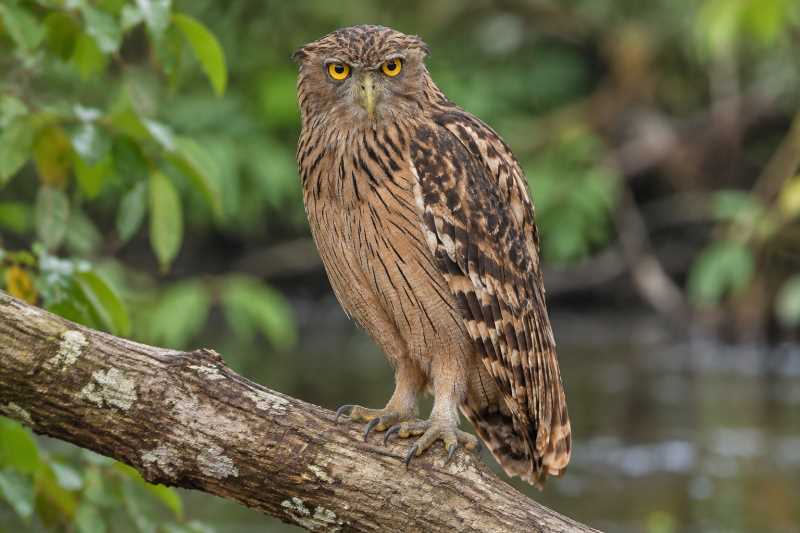
The Brown Fish Owl is a large, robust bird, boasting a formidable wingspan ranging from 125 to 150 centimeters. Its plumage is predominantly brown, with streaks of darker shades, allowing it to blend seamlessly into its wooded surroundings. One of its most striking features is its prominent ear tufts, which stand upright, giving it a distinctive silhouette. The bright yellow eyes of the Brown Fish Owl are not only captivating but also essential for its nocturnal lifestyle, providing acute vision in low-light conditions.
Habitat and Distribution
The Brown Fish Owl is predominantly found in the Indian subcontinent, extending its range into Southeast Asia, including Thailand, Laos, and Vietnam. This species favors habitats near water bodies, such as rivers, lakes, and swamps, where it can efficiently hunt for its primary diet of fish and amphibians. The presence of dense forest cover is crucial, offering ample roosting sites and protection from potential threats.
Behavioral Patterns
Primarily nocturnal, the Brown Fish Owl is most active during the twilight hours. It is a solitary predator, relying on its keen senses to locate prey. With a diet primarily consisting of fish, the owl is an adept hunter, utilizing its powerful talons to snatch prey from the water with remarkable precision. Additionally, it supplements its diet with small mammals, reptiles, and insects, showcasing its adaptability in various ecological niches.
The Brown Fish Owl is known for its distinctive hooting call, which serves as a means of communication between mates and a territorial warning to other owls. During the breeding season, which typically occurs between November and March, these calls become more frequent as pairs establish and defend their territories.
Reproductive Habits
Breeding for the Brown Fish Owl begins with courtship displays, often involving mutual hooting and synchronized flights. Once a pair bonds, they typically select a nesting site in the hollow of a tree or a rocky crevice near a water source. The female lays a clutch of 1 to 2 eggs, which she incubates for approximately 35 days. During this period, the male assumes the role of the provider, supplying the female with food.
After hatching, the fledglings are cared for by both parents, with the young owls leaving the nest after about 7 to 8 weeks. Despite reaching fledging age, the juveniles continue to rely on their parents for food and guidance until they are capable of independent survival.
Conservation Status and Threats
Currently, the Brown Fish Owl is classified as a species of "Least Concern" by the International Union for Conservation of Nature (IUCN). However, its populations face several threats that could impact their numbers if not addressed. Habitat destruction, primarily due to deforestation and the draining of wetlands, poses a significant risk to their survival. Additionally, pollution of water bodies can adversely affect the availability of prey, further challenging the owl’s ability to thrive.
Conservation efforts aimed at preserving wetland habitats and promoting sustainable forestry practices are crucial for ensuring the continued survival of the Brown Fish Owl. Public awareness and education about the ecological role of these raptors can also contribute to their protection, fostering a greater appreciation for their presence in our natural world.
Conclusion
The Brown Fish Owl is a remarkable species, embodying the beauty and intricacy of nature’s design. Its adaptations to a life intertwined with water habitats highlight the delicate balance that ecosystems maintain. As we continue to learn and understand more about this majestic owl, it becomes increasingly evident that protecting its habitat is paramount to safeguarding its future. Through concerted conservation efforts and a commitment to preserving biodiversity, we can ensure that the haunting calls of the Brown Fish Owl continue to echo through the forests and riverbanks of its native range.
In the realm of ornithology, the Brown Fish Owl stands as a testament to the resilience and adaptability of avian life. As we strive to coexist with these magnificent creatures, their survival becomes a shared responsibility, underscoring the importance of our role as stewards of the environment.
Related posts