Madagascar Owl: A Unique Denizen of the Island’s Forests
Madagascar, often celebrated for its endemic wildlife and unique ecosystems, is home to a diverse array of species found nowhere else on Earth. Among these remarkable creatures is the Madagascar Owl, scientifically known as Asio madagascariensis. This enigmatic bird of prey, with its mysterious habits and distinctive features, captures the fascination of ornithologists and nature enthusiasts alike.
Habitat and Distribution
The Madagascar Owl is endemic to the island of Madagascar, meaning it is found nowhere else in the world. Its preferred habitats are the island’s subtropical or tropical dry forests and moist lowland forests. These owls are adapted to life in dense forest environments, where they can often be found roosting during the day in the thick foliage. The forests provide ample cover and an abundance of prey, such as rodents and insects, which are crucial for their survival.
Physical Characteristics
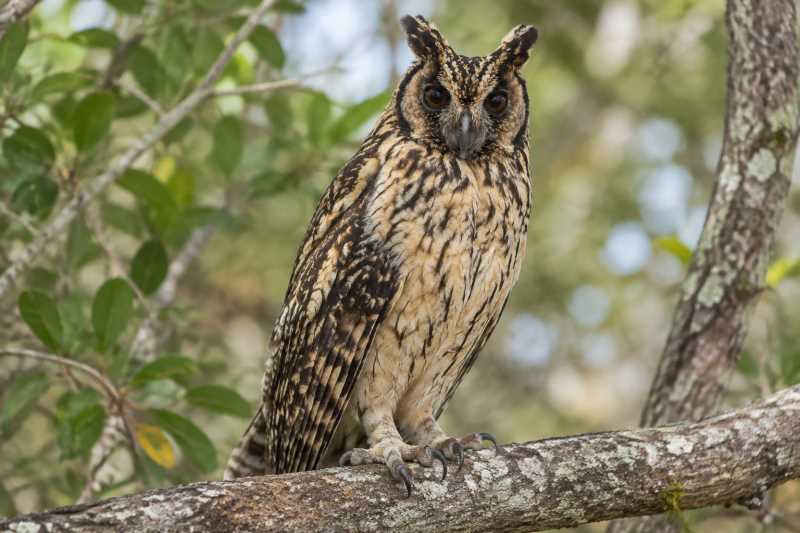
The Madagascar Owl is medium-sized, measuring approximately 40 to 45 centimeters in length, with a wingspan of around 100 to 120 centimeters. It has a robust body, with feathers that range from brown to reddish-brown, providing excellent camouflage against the forest floor and tree bark. One of the owl’s most distinctive features is its prominent ear tufts, which are not actually used for hearing but instead serve to enhance its appearance and may play a role in communication and display.
The owl’s facial disk, a characteristic feature of the Asio genus, is well-defined and aids in directing sound to its ears, giving it an acute sense of hearing. This adaptation is critical for hunting in low-light conditions, allowing the owl to detect the faintest rustle of prey in the underbrush.
Behavior and Diet
Primarily nocturnal, the Madagascar Owl emerges at dusk to hunt. Its diet predominantly consists of small mammals, particularly rodents, but it will also prey on insects and occasionally birds. The owl’s hunting technique is a combination of stealth and precision. It perches silently, waiting for the perfect moment to strike, and then swoops down with remarkable speed and accuracy.
During the day, these owls are often well-hidden among the trees, making them difficult to spot. Their cryptic plumage helps them blend seamlessly into their surroundings, providing protection from potential predators and disturbances.
Breeding and Lifecycle
The breeding season of the Madagascar Owl typically occurs during the island’s rainy season, from November to April. These owls are monogamous, and pairs often use the same nesting sites year after year. Nests are usually located in tree cavities, although they may also use abandoned nests of other birds.
Females lay a clutch of 2 to 3 eggs, which they incubate for about 30 to 35 days. During this time, the male is responsible for hunting and providing food for the female. Once the chicks hatch, both parents are involved in feeding and caring for the young, which fledge at around 4 to 5 weeks of age. The juvenile owls remain dependent on their parents for several more weeks as they learn to hunt and fend for themselves.
Conservation Status and Threats
The Madagascar Owl is currently classified as Near Threatened on the IUCN Red List. The primary threat to its survival is habitat loss due to deforestation, driven by agriculture, logging, and mining activities. As the forests of Madagascar continue to shrink, the owl’s habitat becomes increasingly fragmented, posing challenges for its survival.
Conservation efforts are crucial to preserving the remaining forest habitats on the island. Initiatives aimed at sustainable land use, reforestation, and the establishment of protected areas are vital for ensuring the survival of not only the Madagascar Owl but also the myriad of unique species that call Madagascar home.
Conclusion
The Madagascar Owl is a captivating symbol of the island’s rich biodiversity. Its survival hinges on the preservation of Madagascar’s unique ecosystems, highlighting the urgent need for conservation efforts. By protecting the forests and promoting sustainable practices, we can help secure a future for the Madagascar Owl and the countless other species that thrive in this extraordinary corner of the world.
Related posts