The Abyssinian Owl: A Mysterious Sentinel of the Ethiopian Highlands
The Abyssinian Owl, scientifically known as Asio abyssinicus, is a captivating yet elusive bird of prey native to the highlands of Ethiopia and Eritrea. This intriguing species belongs to the Strigidae family, which includes a variety of owls known for their distinctive appearance and nocturnal habits. The Abyssinian Owl, in particular, is recognized for its exceptional adaptations to the high-altitude environments of its native region, making it a subject of interest for ornithologists and birdwatchers alike.
Physical Characteristics
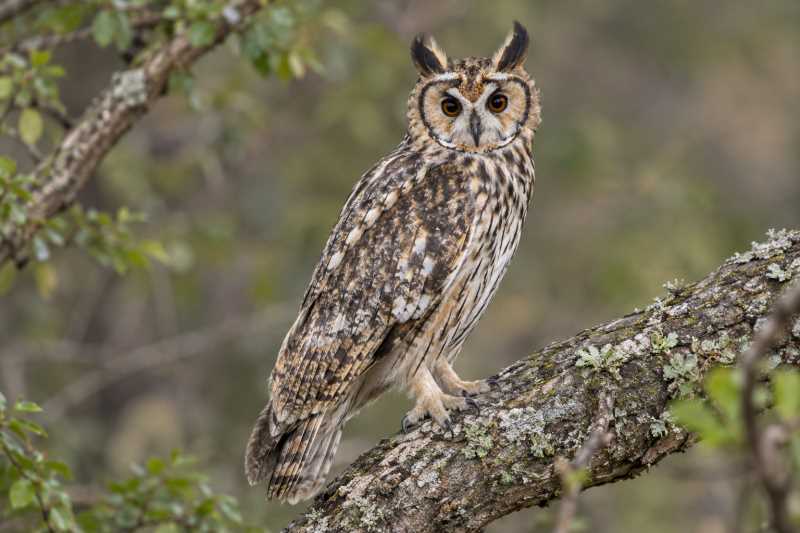
The Abyssinian Owl is a medium-sized owl, measuring approximately 40 to 45 centimeters in length, with a wingspan ranging from 90 to 100 centimeters. Its plumage is primarily brown, with intricate patterns of darker streaks and spots that provide excellent camouflage against the forest floor and tree bark. The facial disk is a notable feature, encircled by a contrasting lighter brown color that accentuates its bright yellow eyes. These eyes are not just striking but are also highly adapted for nocturnal vision, allowing the owl to hunt efficiently in low-light conditions.
Another remarkable feature of the Abyssinian Owl is its feathered ear tufts, which are not actually ears but rather tufts of feathers that can be raised or lowered. While their exact function is not fully understood, it is believed that they play a role in communication and camouflage, breaking up the owl’s outline against the branches and leaves.
Habitat and Distribution
The Abyssinian Owl is endemic to the highland regions of Ethiopia and Eritrea, where it inhabits montane forests, woodlands, and open moorlands at elevations ranging from 1,800 to 3,500 meters. These environments provide the ideal conditions for the owl’s survival, offering abundant prey and suitable nesting sites. The bird’s preference for high-altitude habitats makes it less susceptible to certain threats faced by other owl species that inhabit lower elevations.
Despite its relatively restricted range, the Abyssinian Owl is adapted to a variety of forest types, including both primary and secondary growth forests. This adaptability is crucial, particularly as human activities continue to alter natural landscapes. However, habitat loss due to deforestation and agricultural expansion remains a concern for the conservation of this species.
Diet and Hunting Behavior
The Abyssinian Owl is a carnivorous predator, primarily feeding on small mammals, birds, and insects. Its diet is largely opportunistic, varying with prey availability. The owl’s hunting strategy involves perching quietly on a tree branch or other vantage point, using its acute hearing and vision to detect the slightest movements of potential prey below.
Once a target is identified, the owl swoops down with silent precision, thanks to its specialized flight feathers that reduce turbulence and noise. This stealthy approach allows the Abyssinian Owl to catch its prey by surprise. The owl’s sharp talons and beak are perfectly adapted for capturing and subduing its prey, ensuring a successful hunt.
Reproduction and Lifespan
The breeding season for the Abyssinian Owl typically occurs during the dry season, when food is more abundant. The species is known for its monogamous pair bonds, with both the male and female participating in nesting and chick-rearing. The female usually lays two to three eggs in a nest constructed in a tree hollow or on a cliff ledge, providing protection from predators and the elements.
Incubation lasts approximately 30 days, during which the female remains on the nest while the male supplies food. Once hatched, the chicks are altricial, meaning they are born helpless and require extensive parental care. The young owls fledge after about 6 to 7 weeks but remain dependent on their parents for several months before becoming fully independent.
In the wild, the Abyssinian Owl can live for up to 15 years, with its lifespan largely dependent on environmental conditions and food availability. In captivity, they may live longer due to the absence of predators and consistent food supply.
Conservation Status
Currently, the Abyssinian Owl is listed as Least Concern by the International Union for Conservation of Nature (IUCN). However, this status does not mean the species is free from threats. Habitat destruction, climate change, and human disturbance are ongoing challenges that could impact its population in the future.
Conservation efforts are crucial to ensuring the survival of the Abyssinian Owl and other highland species. Protecting and restoring high-altitude forests, as well as conducting further research to better understand the owl’s ecology and behavior, are vital steps in preserving this remarkable bird for future generations.
In conclusion, the Abyssinian Owl is a testament to the incredible adaptability and resilience of wildlife in the face of environmental challenges. Its presence in the Ethiopian highlands serves as a reminder of the rich biodiversity that these ecosystems support and the importance of safeguarding them.
Related posts