The Enigmatic Rufous Owl: A Silent Sentinel of the Australian Night
The Rufous Owl (Ninox rufa), a captivating and elusive raptor, is a remarkable yet understudied species endemic to the lush forests and wooded savannas of northern Australia. Known for its distinctive russet plumage and piercing gaze, the Rufous Owl holds a special place in Australia’s rich avian biodiversity. This article delves into the intriguing characteristics, habitat, behavior, and conservation status of this nocturnal predator, shedding light on its critical role in the ecosystem and the challenges it faces.
Taxonomy and Physical Description
The Rufous Owl belongs to the Strigidae family, which includes true owls known for their round faces and unique hooting calls. Scientifically classified as Ninox rufa, it is one of the largest owl species in Australia, with adults measuring between 45 to 55 centimeters in length and boasting a wingspan that can exceed one meter.
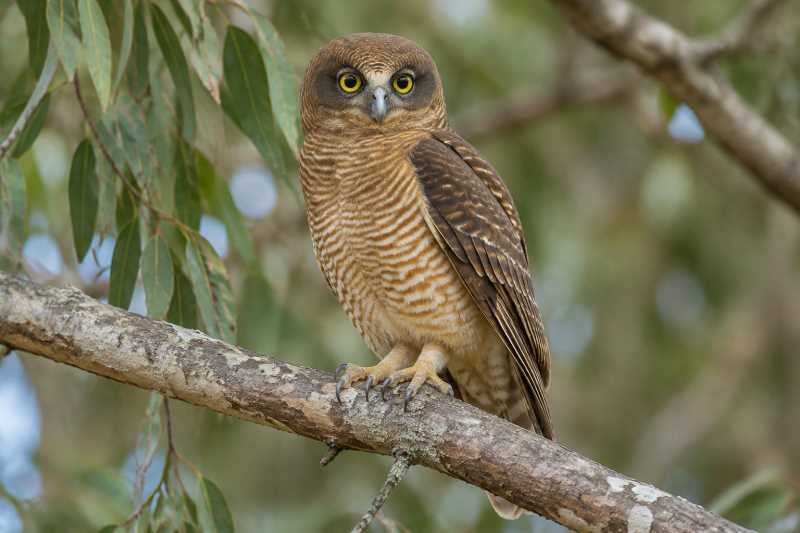
The most striking feature of the Rufous Owl is its rich, rufous-brown plumage, which provides excellent camouflage against the bark of trees in its natural habitat. Its underparts are paler with fine streaks, a characteristic that helps in identifying the species. The owl’s large, rounded head is adorned with forward-facing eyes that are bright yellow, providing excellent night vision essential for hunting in the dark. Unlike many owls, the Rufous Owl lacks ear tufts, giving it a smooth, rounded appearance.
Habitat and Distribution
Rufous Owls are primarily found in the tropical and subtropical forests of northern Australia, including regions of Queensland, Northern Territory, and Western Australia. They inhabit a variety of forest types, ranging from dense rainforest to open woodland, often preferring areas with tall trees that provide ample cover and nesting sites. The presence of water bodies, such as rivers and streams, is also a common feature of their habitats, supporting a diverse prey base.
These owls are known to be territorial, often residing in large, overlapping home ranges. They favor nesting in large tree hollows, which offer protection for their young from predators and harsh weather. The Rufous Owl’s preference for mature forest ecosystems highlights its role as an indicator species for healthy forest environments.
Diet and Hunting Behavior
As apex nocturnal predators, Rufous Owls play a crucial role in controlling the populations of various prey species, contributing to the ecological balance of their habitats. Their diet is diverse, consisting mainly of mammals, birds, and reptiles. Common prey includes fruit bats, possums, and large insects, although they are also known to hunt smaller birds and rodents.
The Rufous Owl employs a method of silent ambush, utilizing its excellent night vision and acute hearing to detect prey. Its flight is almost inaudible, thanks to specialized feather adaptations that reduce sound, allowing it to approach its quarry stealthily. Once within striking distance, the owl uses its powerful talons to capture and kill its prey swiftly.
Breeding and Lifespan
Rufous Owls are monogamous, forming long-term pair bonds with their mates. The breeding season typically occurs between May and October, coinciding with the dry season in northern Australia. During this time, pairs engage in elaborate courtship displays, characterized by mutual calling and aerial acrobatics.
The female lays one to two eggs in a well-protected tree hollow, which both parents diligently guard. The incubation period lasts about 35 days, during which the female primarily incubates the eggs while the male provides food. Once hatched, the chicks are dependent on their parents for feeding and protection until they fledge at around eight to ten weeks of age.
In the wild, Rufous Owls can live for up to 15 years, although their lifespan is often influenced by environmental factors and the availability of prey.
Conservation Status and Threats
Currently, the Rufous Owl is listed as Least Concern by the International Union for Conservation of Nature (IUCN), owing to its relatively stable population across its range. However, like many wildlife species, Rufous Owls face several anthropogenic threats that could impact their survival in the long term.
Habitat destruction due to logging, agriculture, and urban development poses the most significant threat to Rufous Owls, as it leads to the loss of nesting sites and prey availability. Additionally, climate change and altered fire regimes can further exacerbate habitat degradation, affecting the owl’s ability to thrive.
Conservation efforts aimed at protecting mature forests and promoting sustainable land use practices are vital to ensuring the continued survival of the Rufous Owl. Furthermore, public awareness and research initiatives are essential to understanding the ecology of this enigmatic species and implementing effective conservation strategies.
Conclusion
The Rufous Owl, with its majestic presence and vital ecological role, serves as a testament to the rich biodiversity of Australia’s northern landscapes. Protecting this species not only preserves an integral part of Australia’s natural heritage but also safeguards the delicate balance of the ecosystems they inhabit. By fostering a deeper understanding and appreciation of the Rufous Owl, we can contribute to the conservation of these silent sentinels of the night, ensuring their legacy for future generations.
References
- Debus, S. (2009). Rufous Owl (Ninox rufa). In Handbook of the Birds of the World Alive.
- Pavey, C. R., & Smyth, A. K. (1998). Effects of avian predation on the behavior of a nocturnal mammal, the sugar glider.
- BirdLife International. (2020). Ninox rufa. The IUCN Red List of Threatened Species 2020.
Related posts