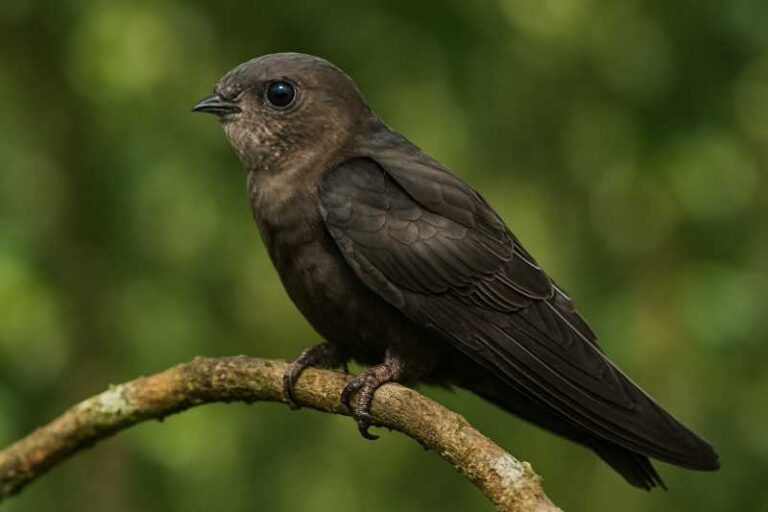
The Enigmatic Rubeho Akalat: A Jewel of Tanzanian Highlands
Nestled within the misty montane forests of Tanzania’s Rubeho Mountains, the Rubeho Akalat (Sheppardia aurantiithorax) stands as a beacon of biodiversity and an emblem of the region’s unique ecological tapestry. This elusive bird, first described in 1989, is a member of the Old World flycatcher family, Muscicapidae, and has captured the attention of ornithologists and conservationists alike due to its restricted habitat and distinct characteristics.
Taxonomy and Description
The Rubeho Akalat is a small, passerine bird, notable for its striking appearance and distinct vocalizations. Measuring approximately 12 to 14 centimeters in length, it boasts a vibrant orange throat patch—a feature that lends itself to its species name, ‘aurantiithorax,’ which translates to ‘orange throat.’ The rest of its plumage is primarily an olive-brown, allowing it to blend seamlessly with the forest understory.
Males and females exhibit similar coloration, although males are often slightly more vibrant. Their eyes are dark and beady, providing a sharp contrast to their lighter plumage. The Rubeho Akalat’s song is a series of melodious whistles and trills, often heard echoing through its forest habitat but rarely seen due to its shy nature.
Habitat and Distribution
The Rubeho Akalat is endemic to Tanzania, with its range limited to the Rubeho Mountains in the Eastern Arc Mountains—a biodiversity hotspot known for its high levels of endemism. These montane forests, situated at elevations between 1,200 and 2,200 meters, provide the cool, moist environment crucial for the survival of this species.
The bird’s habitat is characterized by dense undergrowth, thick leaf litter, and a canopy that allows dappled sunlight to filter through. This environment supports a diverse array of flora and fauna, making it a critical area for conservation efforts. However, the Rubeho Mountains are not immune to the pressures of deforestation and habitat degradation, which threaten the delicate balance of this ecosystem.
Behavior and Ecology
Rubeho Akalats are primarily insectivorous, foraging for insects and other small invertebrates within the leaf litter and low vegetation. They are known for their methodical foraging behavior, often seen hopping or flicking their wings as they search for prey. Despite their elusive nature, they play a vital role in the ecological dynamics of their habitat, aiding in insect population control and contributing to the health of the forest ecosystem.
Breeding behaviors of the Rubeho Akalat are not well-documented, largely due to the bird’s secretive habits. However, it is believed that they nest close to the ground, utilizing the dense underbrush to conceal their nests from predators. The breeding season is presumed to coincide with the rainy season, which provides an abundance of food resources.
Conservation Status
Currently, the International Union for Conservation of Nature (IUCN) categorizes the Rubeho Akalat as ‘Near Threatened.’ The primary threats to its survival include habitat loss due to agricultural expansion, logging, and human encroachment. As the forests of the Eastern Arc Mountains continue to face these pressures, the need for targeted conservation measures becomes increasingly urgent.
Efforts are underway to protect the unique biodiversity of the Rubeho Mountains, with organizations focusing on sustainable land management practices and community engagement. By raising awareness and promoting conservation-friendly practices, there is hope for preserving the Rubeho Akalat and its habitat for future generations.
Importance of Conservation
The Rubeho Akalat serves as a flagship species for the conservation of the Rubeho Mountains. Its presence is indicative of the overall health of the ecosystem, and its protection can have far-reaching benefits for other endemic species. The conservation of this bird also highlights the broader significance of protecting montane forest ecosystems, which are critical for carbon storage, water regulation, and biodiversity preservation.
In conclusion, the Rubeho Akalat is not just a bird; it is a symbol of Tanzania’s rich natural heritage and a testament to the intricate web of life that thrives in the Eastern Arc Mountains. Protecting this species requires a concerted effort from local communities, government bodies, and international conservation organizations. With continued research, awareness, and sustainable practices, the Rubeho Akalat can continue to enchant bird watchers and contribute to the ecological richness of its mountain home.
References
- BirdLife International. (2016). Sheppardia aurantiithorax. The IUCN Red List of Threatened Species 2016.
- Fjeldså, J., & Bowie, R. C. K. (2008). New perspectives on African biodiversity: The importance of the Eastern Arc Mountains for conservation. Proceedings of the National Academy of Sciences.
- National Audubon Society. (2021). Field Guide to Birds.
Related posts