The Enigmatic Schneider’s Pitta: A Jewel of the Indonesian Rainforest
Schneider’s Pitta (Hydrornis schneideri) is a captivating bird species that thrives in the dense montane forests of Sumatra, Indonesia. Known for its vibrant plumage and elusive nature, this bird has become a symbol of the rich biodiversity found in Southeast Asia. This article explores the unique characteristics, habitat, behavior, and conservation status of Schneider’s Pitta, providing an in-depth look at one of nature’s most intriguing avian species.
- Taxonomy and Physical Description
Schneider’s Pitta belongs to the Pittidae family, a group of passerine birds renowned for their striking colors and ground-dwelling habits. It was first described in 1900 by Ernst Hartert, who named it in honor of the German ornithologist, Georg Heinrich Schneider.
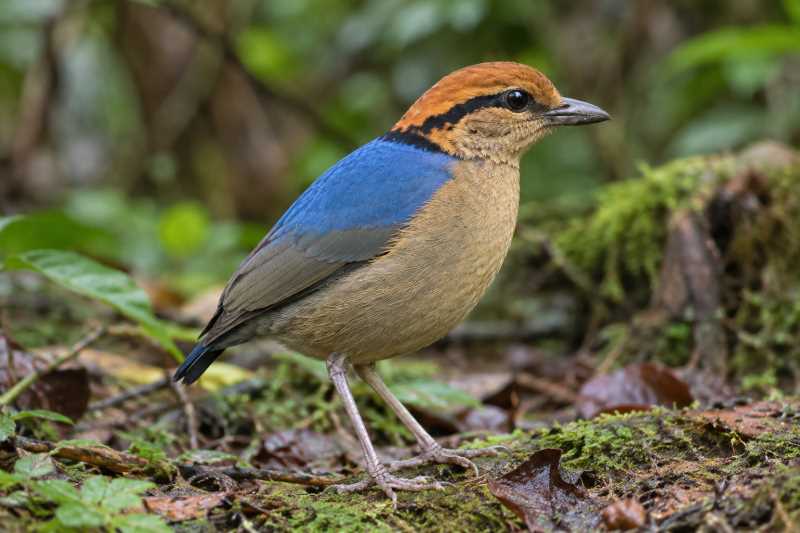
The bird is relatively small, measuring about 18 to 20 cm in length. Its most distinctive feature is its brilliant plumage, with a combination of iridescent blues, greens, and blacks. The male and female are similar in appearance, although the male typically exhibits slightly more intense coloration. The bird’s underparts are a contrasting chestnut-brown, while its eyes are encircled by a narrow blue ring, adding to its striking appearance.
- Habitat and Distribution
Schneider’s Pitta is endemic to the island of Sumatra, where it inhabits the montane rainforests at elevations typically ranging from 1,000 to 2,400 meters. These forests are characterized by their thick vegetation, high humidity, and rich biodiversity, providing an ideal environment for the bird’s ground-foraging lifestyle.
The bird’s preference for remote and rugged terrains has made it difficult to study, and much of its natural history remains shrouded in mystery. However, it is known to favor areas with dense undergrowth and abundant leaf litter, which offer ample opportunities to hunt for insects and other small invertebrates.
- Behavior and Diet
Schneider’s Pitta is a solitary and secretive bird, spending much of its time hidden among the forest floor debris. Its diet primarily consists of insects, worms, and other small invertebrates, which it skillfully extracts from the leaf litter using its strong bill.
The bird is most active during the early morning and late afternoon, when it can be heard emitting its distinctive two-note whistle. This call is crucial for communication between individuals, especially during the breeding season when pairs need to coordinate activities such as nest building and feeding.
- Reproduction and Lifecycle
Little is known about the breeding habits of Schneider’s Pitta due to its elusive nature. However, it is believed to nest on or near the ground, constructing a cup-shaped nest from twigs, leaves, and other forest debris. The female typically lays a clutch of two eggs, which both parents help to incubate.
Once the chicks hatch, they are dependent on their parents for food and protection. The juveniles fledge a few weeks after hatching but continue to rely on their parents for nourishment until they are capable of foraging independently.
- Conservation Status and Threats
The International Union for Conservation of Nature (IUCN) currently classifies Schneider’s Pitta as Vulnerable. The primary threat to the species is habitat loss, driven by deforestation for agriculture, logging, and human settlement. The bird’s limited range and specific habitat requirements make it particularly susceptible to environmental changes.
Conservation efforts are underway to protect the remaining montane forests of Sumatra, with several protected areas established to safeguard biodiversity. However, ongoing monitoring and research are essential to ensure the survival of Schneider’s Pitta and other endemic species.
- Conclusion
Schneider’s Pitta is a remarkable example of the rich and unique biodiversity found in the Indonesian archipelago. Its vibrant plumage and secretive habits have captivated bird enthusiasts and researchers alike, highlighting the importance of preserving the natural habitats that support such incredible wildlife. By understanding and addressing the challenges facing Schneider’s Pitta, conservationists can help ensure that future generations have the opportunity to experience the beauty and mystery of this extraordinary bird.
In conclusion, while Schneider’s Pitta remains a symbol of natural wonder, it also serves as a reminder of the urgent need for conservation efforts to protect our planet’s most vulnerable species. Through collaborative efforts between governments, NGOs, and local communities, there is hope for a sustainable future where such natural treasures continue to thrive.
Related posts