Introduction
In the lush, dense forests of Southeast Asia resides the Rusty-naped Pitta (Hydrornis oatesi), an avian species that embodies the intriguing beauty and enigmatic allure of the region’s wildlife. Known for its striking plumage and elusive nature, the Rusty-naped Pitta is a birdwatcher’s delight and an important species for the biodiversity of its habitat. This article delves into the characteristics, habitat, behavior, and conservation status of this fascinating bird, providing a comprehensive overview for enthusiasts and conservationists alike.
Physical Characteristics
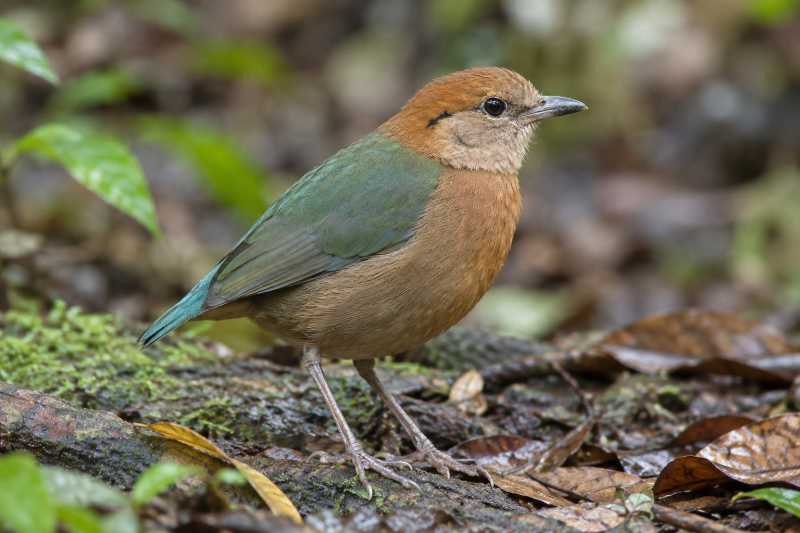
The Rusty-naped Pitta is a medium-sized bird, measuring approximately 20 to 23 centimeters in length. It possesses a robust build, with a rounded body and a short tail, traits typical of the pittas. The species is renowned for its vivid coloration, which serves as both a camouflage and a spectacle. The bird’s crown and nape are adorned with a rusty-brown hue, giving it its distinctive name. Its upperparts are a rich green, while the underparts vary from bright turquoise to a softer, more muted shade, depending on the individual. The wings are decorated with a blend of green and blue, further enhancing its striking appearance.
Habitat and Distribution
The Rusty-naped Pitta is distributed across several countries in Southeast Asia, including Thailand, Laos, Vietnam, Myanmar, and southern China. It thrives in subtropical or tropical moist lowland forests and montane forests, favoring areas with dense undergrowth where it can forage and nest. The bird’s preference for such habitats makes it an indicator species for the health of these forest ecosystems.
The species is typically found at elevations ranging from 300 to 2,500 meters, with a predilection for the cooler and more humid montane regions. The dense foliage in these areas provides ample cover and a rich supply of invertebrates, which form the bulk of the Rusty-naped Pitta’s diet.
Behavior and Diet
Rusty-naped Pittas are terrestrial in nature, spending much of their time on the forest floor in search of food. Their diet primarily consists of insects, earthworms, and other small invertebrates, which they forage by overturning leaf litter and probing the soil with their strong bills. Occasionally, they may also consume small reptiles or amphibians.
Despite their vibrant appearance, Rusty-naped Pittas are notoriously elusive. They are solitary and secretive, often remaining hidden in the dense undergrowth. Their calls, a series of clear, whistling notes, are more often heard than the birds are seen, serving as an auditory signature in their habitat.
Reproduction and Lifespan
The breeding season for the Rusty-naped Pitta varies slightly depending on its location, but it generally occurs between April and August. During this period, males are known to perform elaborate displays to attract females, showcasing their vivid plumage and agility.
Nests are typically constructed on the ground or in low bushes, composed of leaves, twigs, and other natural materials. The female lays a clutch of two to five eggs, which she incubates for about 17 to 19 days. Both parents participate in feeding the chicks, which fledge approximately 15 days after hatching.
Conservation Status
The Rusty-naped Pitta is currently listed as Near Threatened on the IUCN Red List. Habitat loss due to deforestation and human encroachment poses the greatest threat to its survival. As forests are cleared for agriculture, logging, and infrastructure development, the natural habitat of the Rusty-naped Pitta is fragmented and diminished.
Conservation efforts are crucial to protect the remaining populations and their habitats. These efforts include the establishment of protected areas, promoting sustainable land-use practices, and raising awareness about the importance of forest conservation.
Conclusion
The Rusty-naped Pitta is a remarkable species that not only fascinates birdwatchers and researchers but also plays an integral role in the ecosystem. Its presence is a testament to the rich biodiversity of Southeast Asia’s forests. Protecting this bird ensures the preservation of a habitat that supports countless other species. Through concerted conservation efforts, we can hope to see the Rusty-naped Pitta continue to thrive in its natural environment, delighting future generations with its beauty and mystery.
Related posts