Introduction
Cory’s Shearwater (Calonectris borealis) is a remarkable seabird that epitomizes the grace and resilience of marine avian species. With its long wings and distinctive flight patterns, this species is not only a marvel to observe but also plays a crucial role in the marine ecosystems it inhabits. This article delves into the fascinating world of Cory’s Shearwater, exploring its biology, behavior, and conservation status.
Taxonomy and Description
Cory’s Shearwater belongs to the family Procellariidae, which includes other shearwaters and petrels. The species was previously considered a subspecies of the Scopoli’s Shearwater (Calonectris diomedea) but has since been recognized as a distinct species. It is named after the American ornithologist Charles B. Cory.
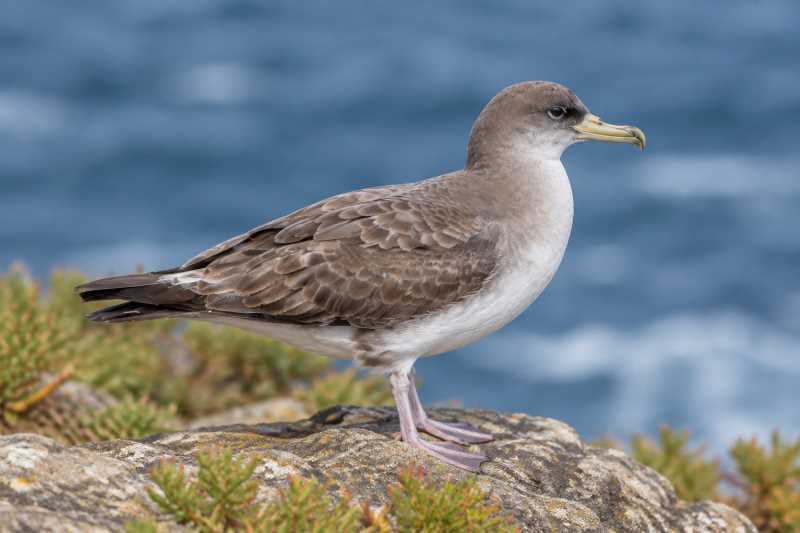
This seabird is characterized by its large size, with a length of 45–56 cm and a wingspan of 112–126 cm. Its plumage is predominantly grayish-brown above and white below, with a yellowish bill and dark eyes. The wings are long and pointed, adapted for dynamic soaring over the ocean.
Distribution and Habitat
Cory’s Shearwater is predominantly found in the North Atlantic Ocean, with breeding populations concentrated on islands in the Azores, Madeira, the Canary Islands, and the Berlengas Archipelago. During the non-breeding season, these birds undertake extensive migrations, traveling across the Atlantic to reach the waters off the eastern coast of South America and the western coast of Africa.
Their habitat preferences include open ocean and coastal waters, where they can be observed gliding effortlessly above the waves. They are seldom seen on land except during the breeding season.
Breeding and Behavior
Breeding colonies of Cory’s Shearwater are located on remote island cliffs and rocky slopes. The breeding season starts around late April to early May, with birds returning to the same nesting sites they used in previous years. They are known to be monogamous, forming long-term pair bonds.
Nests are typically situated in burrows, crevices, or under boulders to protect them from predators and harsh weather. The female lays a single egg, which both parents incubate for about 53 days. After hatching, both parents are involved in feeding the chick, which fledges after approximately 90 days.
Feeding Ecology
Cory’s Shearwater primarily feeds on fish, squid, and crustaceans, which they catch by plunge diving or surface seizing. They are known to follow fishing boats, taking advantage of discards. Their foraging habits are adapted to their pelagic lifestyle, allowing them to exploit food resources over vast oceanic distances.
Conservation Status
The IUCN Red List classifies Cory’s Shearwater as "Least Concern" due to its large population size and wide range. However, there are localized threats that could impact certain populations. These include habitat destruction, introduced predators such as rats and cats on breeding islands, and human disturbances.
Conservation efforts are in place to protect breeding habitats and control invasive species. Furthermore, initiatives to minimize bycatch in fisheries and reduce marine pollution contribute to the long-term survival of the species.
The Role of Cory’s Shearwater in Ecosystems
Cory’s Shearwater plays a vital role in marine ecosystems as both predator and prey. As predators, they help regulate the populations of their prey species, maintaining a balance within the food web. As prey, they provide sustenance for larger marine predators, such as sharks and large fish, and birds of prey.
Moreover, their guano contributes to nutrient cycling, enriching the breeding island ecosystems and supporting plant growth and other wildlife.
Conclusion
Cory’s Shearwater is a magnificent seabird that embodies the beauty and complexity of marine life. Understanding their biology, behavior, and ecological roles not only enhances our appreciation of these birds but also underscores the importance of conservation efforts to ensure their continued existence. Protecting Cory’s Shearwater and their habitats is integral to preserving the health and diversity of our oceans.
Future Research and Monitoring
Ongoing research and monitoring are essential to understanding the effects of climate change on Cory’s Shearwater, as changing ocean temperatures and food availability could impact their distribution and breeding success. Continued international collaboration will be vital to safeguard their future and maintain the biodiversity of marine ecosystems.
Related posts