The Makatea Fruit Dove: A Jewel of the Pacific
In the remote and enchanting islands of the Pacific, a small but vibrant bird flits through the canopy, offering glimpses of its vivid plumage. This bird, the Makatea Fruit Dove (Ptilinopus chalcurus), is a testament to the wonders of island biodiversity and the fragility of isolated ecosystems. Endemic to the coral atoll of Makatea in French Polynesia, this fruit dove symbolizes both the beauty and the vulnerability of its unique habitat.
A Distinctive Appearance
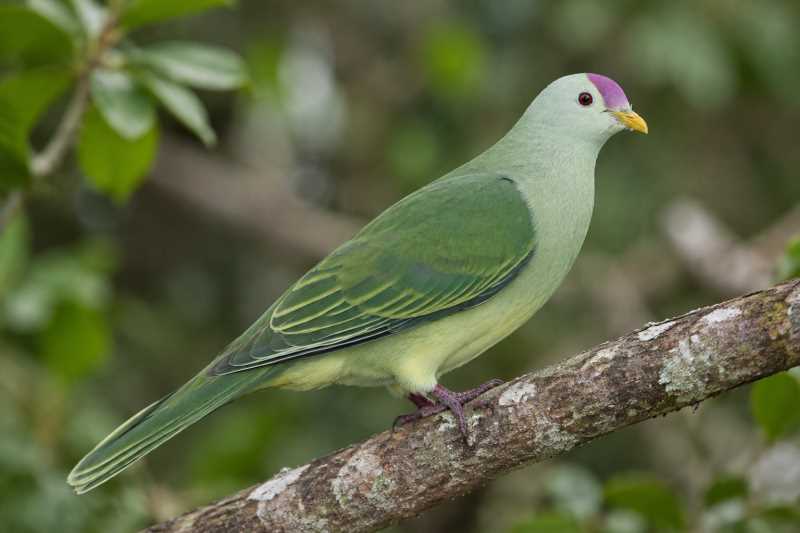
The Makatea Fruit Dove is a visual spectacle, characterized by its stunning coloration. Its plumage is predominantly green, which provides excellent camouflage amidst the lush foliage of its habitat. This green is accentuated by a striking blend of purple, yellow, and light blue hues on its crown and breast, rendering it one of the most beautiful members of the Columbidae family. The iridescent feathers shimmer in the sunlight, making the dove a moving mosaic of colors.
The species is relatively small, measuring about 21-23 centimeters in length. Its compact size and agile flight allow it to navigate the dense forest canopy with ease. The bird’s eyes are a deep red, adding a dramatic contrast to its vibrant plumage, while its beak is a shade of soft green, perfectly adapted for its frugivorous diet.
Habitat and Distribution
The island of Makatea, part of the Tuamotu Archipelago, is a raised coral atoll with a unique landscape that supports distinct flora and fauna. The Makatea Fruit Dove is limited to this island, which spans only about 24 square kilometers. The island’s limestone cliffs, dense forest, and scrubland provide ideal habitats for the dove, offering both food and shelter.
As an island endemic, the Makatea Fruit Dove’s distribution is extremely restricted, making it vulnerable to environmental changes and human activities. The bird’s habitat has been affected by historical phosphate mining, which altered the landscape and disrupted local ecosystems. Today, conservation efforts are crucial in preserving both the dove and its habitat.
Diet and Feeding Behavior
The Makatea Fruit Dove is primarily frugivorous, feeding on a variety of fruits and berries found in its forested home. This diet not only sustains the dove but also plays a vital role in the ecosystem. As the bird consumes fruit, it aids in seed dispersal, contributing to the regeneration and health of the forest. This mutualistic relationship underscores the interconnected nature of island ecosystems.
In addition to fruits, the dove may occasionally consume insects and small invertebrates, providing a source of protein. Its feeding behavior is typically solitary, though pairs and small groups may be observed foraging together, particularly during the breeding season.
Reproduction and Lifespan
The breeding behavior of the Makatea Fruit Dove is not extensively documented, but like many columbids, it is presumed to engage in courtship displays involving calls and visual signals. The species likely builds a simple nest of twigs and leaves, where the female lays one or two eggs. Both parents are thought to share responsibilities in incubating the eggs and caring for the hatchlings.
The lifespan of the Makatea Fruit Dove in the wild is not well established, but similar species in captivity have been known to live for over a decade. The survival of offspring depends heavily on the availability of food and the absence of predators, highlighting the importance of a stable and protected environment.
Conservation Status and Efforts
Due to its limited range and the specific threats it faces, the Makatea Fruit Dove is classified as Near Threatened on the IUCN Red List. The primary threats include habitat degradation from past mining activities and the potential introduction of invasive species, which can prey on eggs and compete for food resources.
Conservation efforts are focused on habitat restoration and protection, as well as monitoring populations to track changes over time. There is also an emphasis on community involvement and awareness, ensuring that local residents understand the importance of preserving this unique bird and its environment.
The Future of the Makatea Fruit Dove
The Makatea Fruit Dove serves as a poignant reminder of the delicate balance that exists within island ecosystems. Protecting this vibrant bird requires a concerted effort to maintain its habitat and mitigate potential threats. By fostering a sustainable relationship between human activity and natural preservation, we can ensure that the Makatea Fruit Dove continues to grace the forests of its island home for generations to come.
In conclusion, the Makatea Fruit Dove is not just a beautiful bird but a crucial component of its ecosystem. Its story is one of resilience and the ongoing struggle for survival in a world where ecological threats loom large. Through dedicated conservation efforts, we can hope to secure a future where the songs of the Makatea Fruit Dove continue to resonate across the island’s lush landscapes.
Related posts