The Enigmatic Ventriloquial Oriole: A Symphony of Nature
The Ventriloquial Oriole (Oriolus consobrinus), an avian wonder, captivates ornithologists and bird enthusiasts with its remarkable vocal prowess and striking appearance. This enigmatic species, part of the Oriolidae family, is often recognized for its unique ability to project its voice, creating auditory illusions that baffle even the most experienced birdwatchers. In this article, we delve into the fascinating world of the Ventriloquial Oriole, exploring its habitat, behavior, and the conservation efforts necessary to protect this intriguing bird.
Habitat and Distribution
The Ventriloquial Oriole is predominantly found in the lush, tropical forests of Southeast Asia, particularly in countries such as Malaysia, Thailand, and Indonesia. These dense, verdant landscapes provide an ideal environment for the Oriole, offering abundant food sources and ample nesting sites. The bird’s preference for high canopies allows it to remain elusive, often heard rather than seen. Despite its vibrant plumage, the Oriole’s tendency to stay hidden among the foliage makes it a challenging subject for birdwatchers.
Physical Characteristics
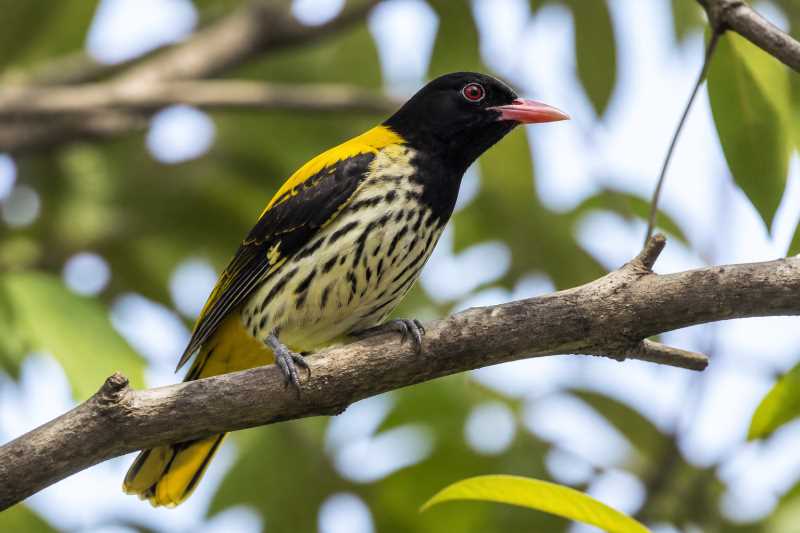
Oriolus consobrinus is a medium-sized bird, measuring approximately 23 to 25 centimeters in length. Its striking appearance is characterized by a vivid yellow body contrasted with a black head, wings, and tail. The Oriole’s bright red eyes are a distinctive feature, adding to its allure. Males and females are similar in appearance, though juveniles typically display duller colors until they mature.
The bird’s strong, slightly curved bill is adapted for foraging, allowing it to efficiently extract insects and fruits from tree branches. Its powerful wings enable swift, agile flight, essential for navigating the dense forest canopy.
Vocal Abilities
The Ventriloquial Oriole is perhaps best known for its extraordinary vocal abilities. The bird’s song is a complex arrangement of melodious whistles, trills, and mimicry, often incorporating the calls of other bird species. This ability to imitate and project sounds from various directions has earned the Oriole its "ventriloquial" moniker, as it can create the illusion of being in multiple places at once.
Researchers believe this vocal mimicry serves several purposes, including territory defense, mate attraction, and predator deception. By mimicking the calls of more aggressive species, the Oriole can deter potential threats and competitors. Additionally, its varied repertoire plays a crucial role in courtship, as males with more diverse vocalizations are often more successful in attracting mates.
Behavioral Traits
Ventriloquial Orioles are primarily solitary birds, though they may occasionally form small flocks during migration or in areas with abundant food resources. Their diet consists mainly of insects, fruits, and nectar, making them important pollinators and seed dispersers within their ecosystems.
During the breeding season, which typically occurs from April to June, males engage in elaborate courtship displays to attract females. These displays often involve intricate vocalizations combined with physical posturing and plumage displays. Once a pair bonds, they collaborate to build a nest, usually high in the treetops, using twigs and leaves woven together to create a secure structure.
The female lays two to three eggs, which both parents take turns incubating for approximately two weeks. After hatching, the chicks are cared for by both parents, who diligently provide food and protection until the young are ready to fledge.
Conservation Status and Efforts
Currently, the Ventriloquial Oriole is not classified as endangered; however, habitat destruction poses a significant threat to its population. The rapid deforestation occurring throughout Southeast Asia due to logging, agriculture, and urban expansion has led to the fragmentation of the Oriole’s natural habitat.
Conservation efforts are crucial to ensure the survival of this species. Protecting existing forest habitats and promoting reforestation initiatives are vital steps in preserving the Oriole’s environment. Additionally, raising awareness about the ecological importance of the Ventriloquial Oriole can help garner support for conservation programs.
Several organizations are actively working to protect the habitats of this and other vulnerable species. BirdLife International, for example, collaborates with local communities and governments to implement sustainable land-use practices and habitat restoration projects.
Conclusion
The Ventriloquial Oriole, with its captivating vocal abilities and vibrant plumage, is a testament to the wonders of avian adaptation and evolution. Understanding and protecting this unique species is not only crucial for maintaining biodiversity but also for preserving the intricate balance of the ecosystems it inhabits.
Through continued research and conservation efforts, we can ensure that future generations will have the opportunity to experience the enchanting songs of the Ventriloquial Oriole echoing through the forests of Southeast Asia.
Related posts