Unraveling the Splendor of the Green Iora (Aegithina viridissima)
The Green Iora, scientifically known as Aegithina viridissima, is a captivating bird species that adorns the lush forests of Southeast Asia. This bird is a member of the Aegithinidae family, which includes four species of ioras found predominantly in the Indian subcontinent and Southeast Asia. The Green Iora is a remarkable bird not only for its vibrant plumage but also for its unique behavioral characteristics and ecological significance. This article delves into the various aspects of the Green Iora, offering insights into its habitat, behavior, diet, and conservation status.
Taxonomy and Physical Characteristics
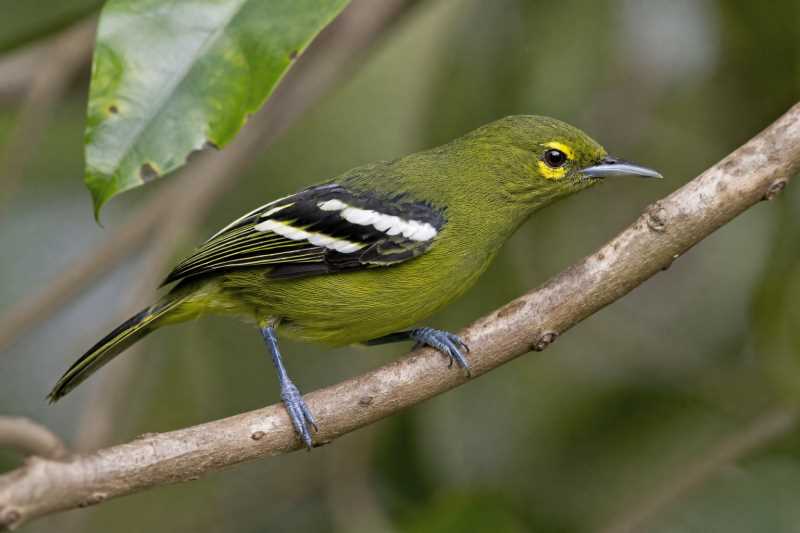
The Green Iora was first described by the British zoologist Edward Blyth in 1844. It belongs to the genus Aegithina, which also includes the Common Iora, Marshall’s Iora, and Great Iora. The Green Iora is distinguished by its vivid green plumage, which provides it with excellent camouflage against the foliage of its rainforest habitat.
Adult males are particularly striking with their bright green upperparts, black wings with white wing bars, and a yellowish underbelly. During the breeding season, the males exhibit even more pronounced colors and a distinctive black cap. Females, on the other hand, are somewhat duller, with a more olive-green hue and lack the black cap. Both sexes possess a slender build, an average length of about 15 centimeters, and a short tail, which further aids their agility in navigating dense forest canopies.
Habitat and Distribution
The Green Iora is primarily found in the lowland rainforests and mangroves of Southeast Asia, with its range extending across countries such as Thailand, Malaysia, Indonesia, and Singapore. These birds thrive in humid tropical environments, often residing at altitudes of up to 1000 meters. Their preference for dense, leafy habitats provides them with ample cover and abundant feeding opportunities.
These ioras are often observed in the mid to upper canopy layers, where they can deftly maneuver through branches in search of food. Their presence is most notable in primary forests, although they can also be found in secondary forests and well-vegetated gardens and parks in urban areas. Deforestation and habitat degradation, however, pose significant threats to their preferred environments.
Behavior and Social Structure
Green Ioras are social birds, often seen in pairs or small family groups. They are known for their active and acrobatic foraging behavior, frequently flitting through the foliage in search of insects and other small invertebrates. Their feeding strategy involves gleaning prey from leaves and branches, occasionally catching insects in mid-air with remarkable precision.
Communication among Green Ioras is facilitated by a variety of vocalizations. These include a series of melodious whistles and chirps, which serve both to maintain contact between pairs and to assert territorial boundaries. During the breeding season, males become particularly vocal, using their calls to attract females and deter rival males.
Diet and Feeding Habits
The diet of the Green Iora primarily consists of insects and other small arthropods. They are insectivorous birds, adept at hunting a variety of prey, including caterpillars, beetles, and spiders. Their foraging technique is characterized by agility and speed, allowing them to capture elusive prey in the dense canopy.
In addition to insects, the Green Iora occasionally supplements its diet with small fruits and berries, particularly during periods when insect availability is low. This opportunistic feeding behavior enhances their ability to adapt to varying environmental conditions and food resources.
Breeding and Reproduction
The breeding season for the Green Iora typically coincides with the onset of the rainy season, which varies depending on their geographic location. During this time, the males engage in elaborate courtship displays to attract females. These displays often involve intricate flight patterns and vocal performances.
Once a pair has formed, they work together to construct a small cup-shaped nest made of twigs, leaves, and other plant materials. The nest is usually situated on a horizontal branch, well-hidden among the foliage. The female typically lays two to three eggs, which are incubated by both parents for about two weeks.
After hatching, both parents share the responsibility of feeding and caring for the chicks. The young birds fledge within two to three weeks but remain dependent on their parents for food and protection for several more weeks. This cooperative breeding strategy is crucial for the survival of the chicks in the challenging forest environment.
Conservation Status and Threats
The Green Iora is currently classified as "Least Concern" by the International Union for Conservation of Nature (IUCN), primarily due to its relatively wide distribution and stable population trends. However, the species faces numerous threats that could impact its future survival.
Habitat loss, primarily due to deforestation for agriculture and urban development, is the most significant threat to the Green Iora. The destruction of lowland rainforests and mangroves reduces the availability of suitable habitats, forcing these birds into fragmented and degraded environments.
Additionally, the illegal pet trade poses a threat to some populations, as these birds are occasionally captured for sale as exotic pets. Conservation efforts, therefore, are focused on preserving natural habitats, enforcing legal protections, and raising public awareness about the importance of biodiversity.
Conclusion
The Green Iora is a testament to the rich biodiversity of Southeast Asia’s rainforests. Its vibrant plumage, acrobatic behavior, and melodious calls make it a captivating subject for birdwatchers and ornithologists alike. Despite facing challenges from habitat loss and other anthropogenic pressures, the Green Iora remains a resilient species, thriving in the verdant canopies of its forest home.
Continued conservation efforts are essential to ensure that future generations can marvel at the beauty and ecological importance of the Green Iora. By protecting their habitats and promoting sustainable practices, we can safeguard the future of this remarkable bird and the diverse ecosystems it inhabits.
Related posts