Dark-breasted Spinetail: An Intricate Weaver of South American Forests
The Dark-breasted Spinetail, scientifically known as Synallaxis albigularis, is a uniquely fascinating bird species belonging to the family Furnariidae. This avian family encompasses a diverse range of birds known for their elaborate nesting habits and adaptability to various habitats across Central and South America. The Dark-breasted Spinetail stands out not only for its distinctive plumage but also for its ecological significance and behavioral characteristics.
Taxonomy and Identification
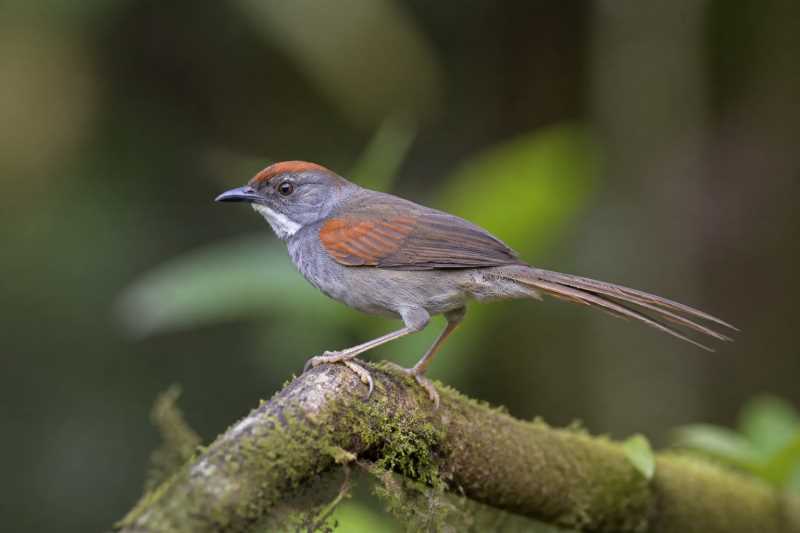
The Dark-breasted Spinetail was first described by the renowned British ornithologist John Gould in the mid-19th century. Its scientific name, Synallaxis albigularis, reflects its defining features: ‘albigularis’ translates to ‘white-throated,’ a nod to its striking white throat that contrasts sharply with its darker breast.
This small passerine bird measures approximately 15 to 17 centimeters in length. Its plumage is predominantly brown, with a contrasting dark breast band and a white throat patch. The tail feathers are characteristically long and pointed, aiding in its identification. Despite its modest size, the Dark-breasted Spinetail commands attention through its distinctive vocalizations and active foraging behavior.
Habitat and Distribution
The Dark-breasted Spinetail is predominantly found in the tropical and subtropical forests of South America. Its range extends from the lowland forests of the Amazon Basin in northern Brazil to the Andean foothills in Colombia, Ecuador, Peru, and Bolivia. The species thrives in a variety of forested environments, including primary and secondary forests, forest edges, and even plantations.
The bird’s adaptability to different forest types underscores its resilience in the face of habitat changes. However, it is most commonly associated with dense understory vegetation, where it can forage and nest with relative protection from predators.
Behavior and Ecology
Known for its energetic and inquisitive nature, the Dark-breasted Spinetail is an active forager. It primarily feeds on insects, spiders, and other small invertebrates, which it gleans from foliage and branches. The bird’s foraging technique is characterized by quick, deliberate movements, and it often joins mixed-species foraging flocks, which enhances its feeding efficiency and reduces predation risk.
One of the most captivating aspects of the Dark-breasted Spinetail is its nesting behavior. Like other members of the Furnariidae family, it constructs intricate, dome-shaped nests using twigs, leaves, and other plant materials. These nests are typically built in dense shrubbery or the lower canopy, providing both camouflage and structural support. The construction of these nests is a labor-intensive process that involves both members of a mated pair.
Vocalizations
The Dark-breasted Spinetail is not only visually distinct but also vocally prominent. Its song is a complex series of whistles and trills, often described as melodious yet assertive. Vocalizations play a crucial role in territory establishment and maintenance, mate attraction, and intra-species communication.
Each male’s song is unique, serving as an audible signature that helps in individual recognition among the species. The intricate vocal repertoire of the Dark-breasted Spinetail is a subject of interest for ornithologists studying avian communication and territoriality.
Conservation Status
Currently, the Dark-breasted Spinetail is classified as a species of Least Concern by the International Union for Conservation of Nature (IUCN). Despite facing some threats from habitat loss due to deforestation and agricultural expansion, the species’ broad range and adaptability have contributed to its stable population trends.
Conservation efforts in the region are vital to ensure the preservation of the diverse ecosystems that the Dark-breasted Spinetail inhabits. Protecting these habitats not only benefits the spinetail but also the myriad of other species that share its environment.
Conclusion
The Dark-breasted Spinetail is a remarkable representative of the rich biodiversity found in South America’s forests. Its distinctive appearance, complex vocalizations, and intricate nesting behavior make it a subject of enduring interest for bird enthusiasts and researchers alike. As we continue to explore and understand the natural world, the Dark-breasted Spinetail reminds us of the delicate balance that exists within these vibrant ecosystems and the importance of conserving them for future generations.
References
- BirdLife International. (2022). Species factsheet: Synallaxis albigularis. Retrieved from BirdLife International
- Ridgely, R. S., & Tudor, G. (2009). Field Guide to the Songbirds of South America: The Passerines. University of Texas Press.
- Schulenberg, T. S., Stotz, D. F., Lane, D. F., O’Neill, J. P., & Parker, T. A. (2010). Birds of Peru: Revised and Updated Edition. Princeton University Press.
Related posts