Dark Newtonia: The Elusive Songbird of Madagascar
Introduction
The island of Madagascar, renowned for its rich biodiversity and distinct ecosystems, is home to numerous unique species that captivate scientists and nature enthusiasts alike. Among its avian inhabitants, the Dark Newtonia (Newtonia amphichroa) stands out as a fascinating subject of study. This elusive songbird, endemic to Madagascar, offers insights into the island’s evolutionary processes and the ecological intricacies of its forest habitats.
Taxonomy and Description
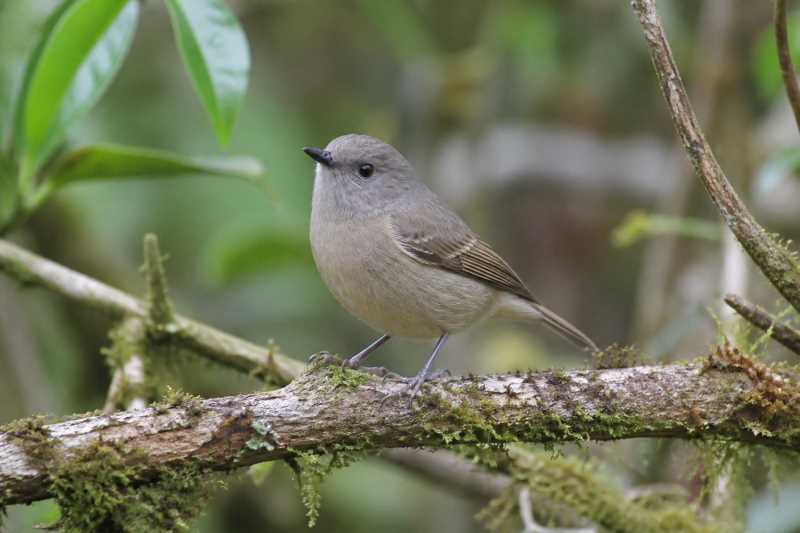
The Dark Newtonia belongs to the family Vangidae, a group of birds endemic to Madagascar. Within this family, the genus Newtonia comprises several species, with the Dark Newtonia being one of the less conspicuous members. First described in the late 19th century, the Dark Newtonia has a subtle plumage characterized by its predominantly grey-brown coloration, which seamlessly blends into the dense forest environments it inhabits.
Adult Dark Newtonias typically measure between 12 to 14 centimeters in length, with a wingspan that allows agile maneuvering through the understory. Their relatively muted appearance is offset by their distinctive vocalizations, which play a crucial role in communication and territorial defense.
Habitat and Distribution
The Dark Newtonia is predominantly found in the eastern rainforests of Madagascar, favoring lowland and montane forests that provide ample cover and food resources. These forests are rich in biodiversity and offer a complex ecosystem where the Dark Newtonia thrives. The bird’s range is somewhat restricted to this eastern corridor, making habitat preservation essential for its continued survival.
Madagascar’s forests are under significant threat from human activities such as logging, agriculture, and infrastructure development. Consequently, the conservation of the Dark Newtonia’s habitat is closely linked to broader efforts to preserve Madagascar’s unique biodiversity.
Behavior and Ecology
Dark Newtonias are insectivorous, primarily feeding on a variety of arthropods found in the forest understory. Their foraging behavior involves a combination of gleaning from foliage and probing into crevices to extract hidden prey. This feeding strategy underscores the bird’s role in controlling insect populations and maintaining ecological balance.
Socially, Dark Newtonias exhibit monogamous pairing, with pairs often seen foraging together. During the breeding season, which coincides with the rainy season, these birds engage in elaborate courtship displays. Their nests, typically cup-shaped and constructed from twigs and leaves, are carefully hidden in dense foliage to protect against predators.
Conservation Status
The International Union for Conservation of Nature (IUCN) categorizes the Dark Newtonia as a species of "Least Concern," reflecting its relatively stable population. However, this status does not imply that the species is free from threats. Habitat destruction remains a pressing issue, with deforestation rates in Madagascar among the highest in the world.
Conservation efforts aimed at preserving Madagascar’s forests are critical for the survival of the Dark Newtonia and countless other species. Initiatives such as protected area management, reforestation projects, and community-based conservation programs play an essential role in mitigating habitat loss.
Research and Observation
Ongoing research on the Dark Newtonia provides valuable insights into its ecological role and adaptability. Studies focusing on its vocalizations, breeding habits, and feeding ecology contribute to a broader understanding of Madagascar’s avian diversity. Birdwatchers and researchers who visit Madagascar often seek out the Dark Newtonia, adding to its growing profile among bird enthusiasts.
Technological advancements, such as bioacoustic monitoring and satellite tracking, offer new avenues for studying this species in its natural habitat. These tools enable researchers to gather data on population dynamics, movement patterns, and habitat usage, informing conservation strategies.
Conclusion
The Dark Newtonia is more than just a bird; it is a symbol of Madagascar’s unparalleled biodiversity and the intricate web of life that thrives on this island. Preserving its habitat ensures the survival of not only this species but also the myriad forms of life that share its forest home. As conservation efforts continue to evolve, the Dark Newtonia serves as a reminder of the delicate balance between nature and human activity, and the responsibility we hold in safeguarding our planet’s natural heritage.
For those who have the opportunity to observe the Dark Newtonia in its natural setting, it offers a glimpse into the rich tapestry of life that defines Madagascar, reminding us of the island’s ecological significance and the ongoing need for conservation.
Related posts