White-chested Titi (Cheracebus lugens): An In-depth Exploration
Introduction
The White-chested Titi, scientifically known as Cheracebus lugens, is a captivating primate species that belongs to the family Pitheciidae. These New World monkeys are primarily found in the dense tropical rainforests of South America. Their intriguing behavior, unique physical characteristics, and the challenges they face in the wild make them a subject of interest for conservationists and primatologists alike.
Despite their relatively small size, White-chested Titis play a significant role in their ecosystem. They are not just a symbol of the biodiversity of the Amazon but also an indicator of the health of their habitat. Understanding their ecology can provide insights into the broader environmental conditions of these critical regions.
This comprehensive article delves into the various aspects of the White-chested Titi’s life, including their physical description, habitat preferences, behavioral patterns, and conservation status. By the end of this piece, you’ll gain a deeper appreciation for these fascinating mammals and the importance of their conservation.
Physical Description
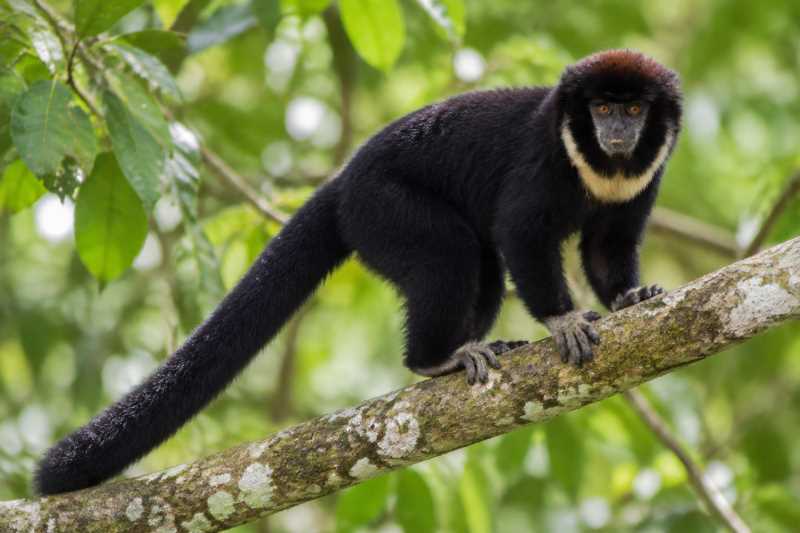
The White-chested Titi is a small to medium-sized primate, characterized by its striking coloration and compact build. Adult individuals typically have a head-body length of about 28 to 42 centimeters, with a tail that can measure between 35 to 55 centimeters, which is often longer than their body. They weigh approximately 1 to 1.5 kilograms, with males generally heavier than females.
Their most distinctive feature is the white fur on their chest, from which they derive their common name. This is contrasted by their predominantly dark brown or black fur covering the rest of their body. Their face is framed by a mane of longer hair, and they possess expressive eyes that exhibit a curious and alert demeanor.
The limbs of the White-chested Titi are slender yet muscular, adapted for their arboreal lifestyle. Their hands and feet are prehensile, allowing them to grasp branches and navigate the forest canopy with agility and precision.
Range and Habitat
The natural range of the White-chested Titi is confined to the Amazon Basin, primarily within the countries of Colombia, Venezuela, Brazil, and possibly parts of Ecuador and Peru. They are especially prevalent in regions where dense, humid rainforests flourish.
These primates are arboreal, spending most of their lives in the upper and middle layers of the forest canopy. They prefer habitats that offer a rich diversity of fruiting plants and trees, which are crucial for their diet. Their presence in these lush environments underscores their role as seed dispersers, facilitating forest regeneration and diversity.
White-chested Titis are territorial animals, generally occupying home ranges that they defend from intruders. These territories are marked by vocalizations and scent markings, which serve to establish boundaries and communicate with other groups.
Behavior and Diet
White-chested Titis are diurnal, meaning they are active during the day. Their daily activities revolve around foraging, socializing, and resting. They live in small, cohesive family groups usually consisting of an adult pair and their offspring. These family units are monogamous, with strong pair bonds that are maintained through grooming and mutual support.
The diet of the White-chested Titi is predominantly frugivorous, comprising a wide variety of fruits, seeds, and occasionally leaves and insects. Their foraging behavior is strategic, as they utilize their keen sense of smell and sight to locate ripe fruits. By consuming these fruits, they play an essential role in seed dispersal, contributing to the ecological balance of their habitat.
Social interactions within titi groups are characterized by vocal communications. They use a range of calls to convey information about food sources, territorial boundaries, and potential threats. These vocalizations are crucial for maintaining group cohesion and coordination.
Identification Tips
Identifying the White-chested Titi in the field requires attention to several key characteristics:
- Coloration: Look for the distinctive white chest fur contrasted against their darker body. This feature is the most reliable indicator.
- Size: Note their small to medium size, with a long tail that aids in balance while navigating the canopy.
- Behavior: Observe their social behavior; they are often seen in small family groups moving through the trees.
- Vocalizations: Listen for their unique calls, which are often used to communicate with group members and establish territorial boundaries.
- Habitat: They are typically found in dense, humid rainforest environments, often high in the canopy.
Conservation Status
The White-chested Titi is currently listed as Data Deficient by the International Union for Conservation of Nature (IUCN). This status highlights the need for more comprehensive studies to accurately assess their population trends and threats.
Threats
- Habitat Destruction: The primary threat to White-chested Titis is deforestation, driven by logging, agricultural expansion, and infrastructure development. These activities fragment their habitat, reducing their living space and access to resources.
- Hunting: While not as significant as habitat loss, hunting for bushmeat and the illegal pet trade poses a threat to their populations.
Protections
Conservation efforts for the White-chested Titi include:
- Protected Areas: Establishing and maintaining protected reserves within their natural range to safeguard critical habitats.
- Research and Monitoring: Encouraging more field studies to gather data on their population size, distribution, and ecological needs.
- Community Engagement: Involving local communities in conservation initiatives to promote sustainable land-use practices and reduce human-wildlife conflicts.
Frequently Asked Questions
What is the primary diet of the White-chested Titi?
White-chested Titis primarily consume fruits, seeds, and occasionally leaves and insects. Their frugivorous diet plays a significant role in seed dispersal within their habitats.
How do White-chested Titis communicate?
They communicate through a range of vocalizations used to coordinate group movements, establish territorial boundaries, and alert others to potential threats. These vocal interactions are crucial for maintaining social bonds within family groups.
What are the main threats to the White-chested Titi’s survival?
The most significant threats include habitat destruction due to deforestation and, to a lesser extent, hunting for bushmeat and the illegal pet trade. Conservation efforts focus on habitat protection and community engagement to mitigate these threats.
Where can White-chested Titis be found in the wild?
They are found in the Amazon Basin, particularly in the rainforest regions of Colombia, Venezuela, Brazil, and potentially parts of Ecuador and Peru, thriving in dense, humid forest environments.
How can one identify a White-chested Titi in the field?
Key identification cues include their white chest fur, small to medium size, long tail, social family group behavior, and distinct vocalizations. Observing them in their natural rainforest habitat is also a strong indicator.
Related posts