Spix’s Saddle-back Tamarin (Saguinus fuscicollis): An In-depth Look
Introduction
Spix’s Saddle-back Tamarin, scientifically known as Saguinus fuscicollis, is a small primate that captivates wildlife enthusiasts and researchers alike with its distinctive markings and fascinating social behavior. Endemic to the lush rainforests of the Amazon basin, this tamarin species plays a vital role in its ecosystem, serving as both predator and prey. The following article delves into the various aspects of Spix’s Saddle-back Tamarin, exploring its physical attributes, habitat preferences, behavioral patterns, and conservation status.
Physical Description
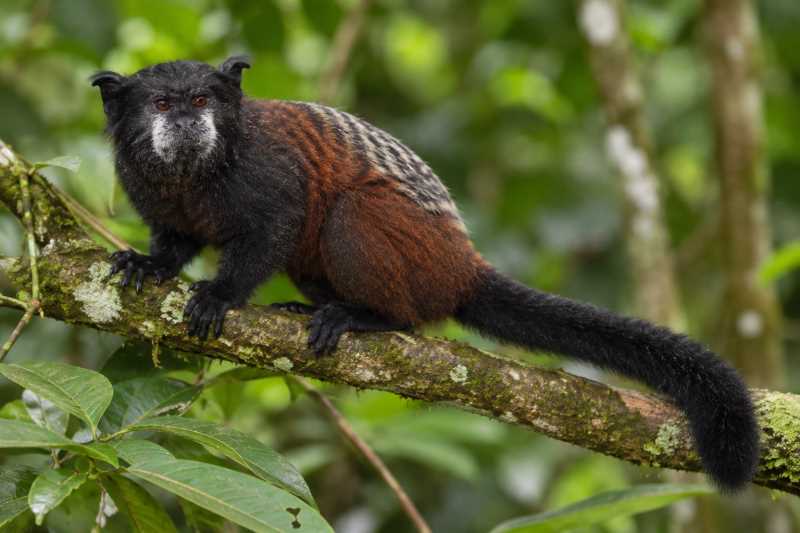
The Spix’s Saddle-back Tamarin is a petite primate, typically weighing between 350 to 500 grams and measuring approximately 23 to 28 centimeters in body length, excluding the tail. Its tail, often longer than its body, can reach up to 39 centimeters, aiding in balance and navigation through the dense forest canopy.
The tamarin’s fur is predominantly brown with a grizzled appearance, providing excellent camouflage against the forest backdrop. A distinctive feature of this species is the saddle-shaped patch of darker fur on its back, giving it its common name. This patch contrasts with the lighter fur on its sides and limbs. The face is often bare with a pale complexion, accentuated by inquisitive eyes and a small, flat nose.
Range and Habitat
Spix’s Saddle-back Tamarin primarily inhabits the western Amazon Basin, spanning across multiple South American countries such as Brazil, Peru, and Bolivia. Its preferred habitat includes primary and secondary tropical rainforests, where it resides in the middle to lower canopy layers. These tamarins thrive in environments with abundant fruiting trees and dense vegetation, which provide both sustenance and protection.
They are particularly adaptive, able to survive in fragmented forests and areas affected by human activities. However, their population density tends to be higher in pristine forest regions where ecological conditions are optimal.
Behavior and Diet
Spix’s Saddle-back Tamarins exhibit diurnal activity patterns, spending their daylight hours foraging, socializing, and grooming. They are highly social animals, typically living in groups of 4 to 15 individuals. These groups are often led by a dominant female, who is usually the only breeding female within the troop.
Their diet is omnivorous, consisting mainly of fruits, insects, small vertebrates, and plant exudates such as gum and sap. Their foraging behavior is strategic, often involving cooperative efforts within the group to maximize food intake and ensure safety from predators.
Identification Tips
When trying to identify Spix’s Saddle-back Tamarin in the field, look for the following cues:
- Size and Shape: Small-bodied with a long, slender tail.
- Coloration: Brown fur with a distinctive darker saddle on the back.
- Movement: Agile and quick, often seen leaping between branches.
- Vocalizations: Listen for high-pitched whistles and trills, which are commonly used for communication within the group.
Conservation Status
As of the latest assessments, Spix’s Saddle-back Tamarin is listed as Least Concern by the International Union for Conservation of Nature (IUCN). However, the species faces several threats that could impact its population in the future. Habitat loss due to deforestation, agricultural expansion, and infrastructure development are primary concerns.
Conservation efforts are in place to mitigate these threats, including protected areas and environmental education programs aimed at promoting sustainable land-use practices. Continued research and monitoring are essential to ensure the long-term survival of this charismatic species.
Frequently Asked Questions
What is the primary habitat of Spix’s Saddle-back Tamarin?
Spix’s Saddle-back Tamarins primarily inhabit tropical rainforests in the Amazon Basin, favoring areas with dense canopy cover and abundant fruiting trees.
How do Spix’s Saddle-back Tamarins communicate?
They communicate through a series of vocalizations such as whistles and trills, as well as visual signals and scent markings to convey information within their social groups.
Are Spix’s Saddle-back Tamarins endangered?
Currently, they are classified as Least Concern, but habitat destruction poses a potential threat to their population.
What are the main threats to Spix’s Saddle-back Tamarin?
The main threats include habitat loss due to deforestation, agricultural activities, and infrastructure development in their native regions.
How can I help in the conservation of Spix’s Saddle-back Tamarin?
Supporting conservation organizations, promoting sustainable land-use practices, and raising awareness about the species’ ecological role can contribute to their conservation.
Related posts