The Enchanting Red-naped Fruit Dove: A Jewel of the Indonesian Archipelago
The Red-naped Fruit Dove, scientifically known as Ptilinopus dohertyi, is a captivating avian species that commands admiration and attention from ornithologists and bird enthusiasts alike. This vibrantly colored bird is a testament to the beauty and diversity of Indonesia’s avifauna, and its presence is crucial to the ecosystems it inhabits. In this article, we delve into the characteristics, habitat, behavior, and conservation status of the Red-naped Fruit Dove, highlighting the importance of preserving this remarkable species.
Physical Characteristics
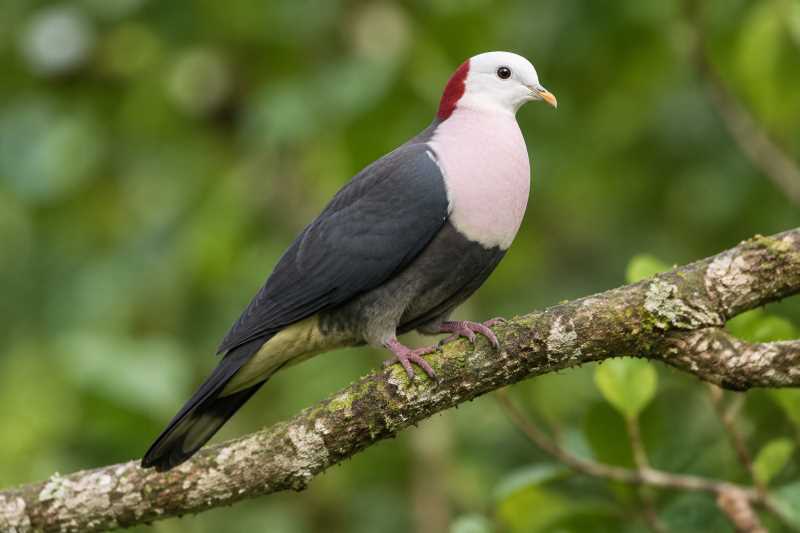
The Red-naped Fruit Dove is a visual delight, featuring a stunning array of colors that make it one of the most beautiful birds in the Indonesian archipelago. Measuring approximately 27 to 30 centimeters in length, this medium-sized dove boasts a striking appearance. Its plumage is predominantly green, providing excellent camouflage among the foliage of its forest habitat. However, the bird’s most distinctive feature is its bright red nape, which contrasts vividly with the surrounding green feathers. This red patch, coupled with a soft greyish head and a yellowish belly, makes the Red-naped Fruit Dove unmistakable.
The males and females of the species are similar in appearance, although females tend to be slightly duller in coloration. Juvenile birds, on the other hand, display a more subdued palette, lacking the vividness of the adults until they mature.
Habitat and Distribution
Endemic to the Lesser Sunda Islands of Indonesia, the Red-naped Fruit Dove is primarily found on the islands of Sumbawa, Flores, and Timor. It inhabits lowland and montane forests, favoring the dense canopy where it can forage for food and seek shelter from predators. The dove can be found at elevations ranging from sea level to about 1,200 meters, although it is most commonly observed in areas rich in fruit-bearing trees.
The forests of these islands provide an ideal environment for the Red-naped Fruit Dove, as they offer both abundant food sources and nesting sites. The bird’s diet consists mainly of fruits, with a preference for figs, berries, and other soft fruits. As a frugivore, it plays a crucial role in seed dispersal, contributing to the regeneration and diversity of the forest ecosystem.
Behavior and Breeding
The Red-naped Fruit Dove is a relatively solitary bird, often seen alone or in pairs rather than forming large flocks. Its flight is swift and direct, with short bursts of rapid wingbeats followed by glides. This agile movement allows it to navigate the dense forest canopy with ease.
Communication among these doves is achieved through soft cooing calls, which are more frequently heard during the breeding season. This period typically coincides with the peak of fruit abundance, ensuring ample food supply for raising young. The species builds simple nests made of twigs and leaves, usually placed in the fork of a tree branch. Females lay a single white egg, which both parents take turns incubating until it hatches.
Conservation Status
The Red-naped Fruit Dove is currently classified as Near Threatened on the IUCN Red List. The primary threat to the species is habitat loss due to deforestation, driven by logging, agriculture, and urban development. As the forests of the Lesser Sunda Islands continue to shrink, the dove’s natural habitat is increasingly fragmented, posing a significant challenge to its survival.
Conservation efforts are crucial to ensure the continued existence of the Red-naped Fruit Dove. Protecting the remaining forest areas and promoting reforestation initiatives are vital steps in preserving the bird’s habitat. Additionally, raising awareness and engaging local communities in conservation activities can foster a sense of stewardship and encourage sustainable land-use practices.
Conclusion
The Red-naped Fruit Dove is a remarkable species that embodies the rich biodiversity of the Indonesian archipelago. Its vibrant colors and ecological importance make it a symbol of the natural beauty that must be cherished and protected. By understanding the challenges it faces and taking concerted conservation actions, we can ensure that future generations will continue to marvel at the splendor of the Red-naped Fruit Dove. Protecting this avian gem is not just about preserving a single species; it is about safeguarding the intricate tapestry of life that sustains our planet.
Related posts