Miller’s Langur (Presbytis canicrus): A Comprehensive Guide
Introduction
Miller’s Langur, scientifically known as Presbytis canicrus, is a fascinating primate species belonging to the family Cercopithecidae. This elusive mammal is native to Southeast Asia, primarily found in the forests of Borneo. Despite its intriguing lifestyle and ecology, the species remains one of the least studied among langurs due to its limited range and the dense habitats it occupies. This article aims to provide a detailed exploration of Miller’s Langur, covering its physical description, habitat, behavior, and conservation status.
Physical Description
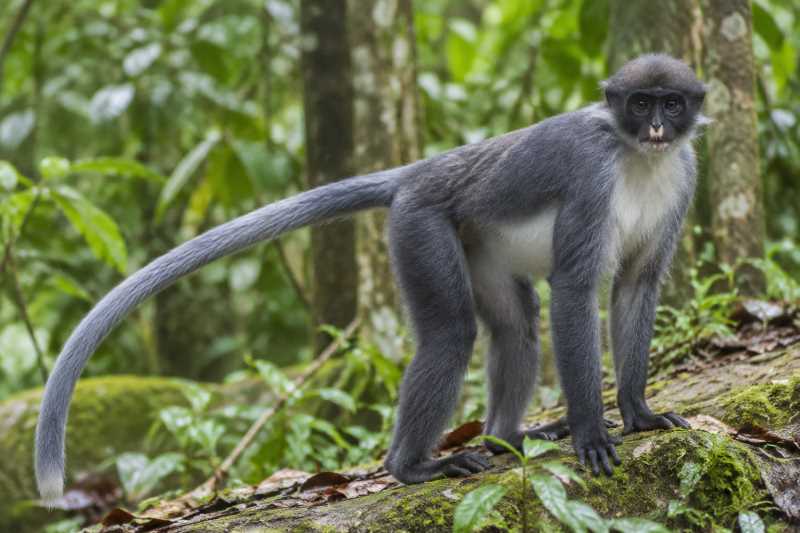
Miller’s Langur is a medium-sized primate characterized by its striking appearance. Adults typically weigh between 5 to 8 kilograms and measure around 40 to 60 centimeters in body length, with a tail that can extend up to 80 centimeters, aiding in balance and agility.
The langur’s coat is predominantly grayish-brown with a distinctive white underside, which provides camouflage against the forest canopy. Notably, its face is marked by a prominent white stripe running from the forehead to the nose, creating a mask-like appearance. This feature, combined with its expressive almond-shaped eyes, gives the langur a unique and captivating look.
Juveniles are born with a lighter coat, which darkens as they mature. The species displays sexual dimorphism, with males generally being larger and more robust than females.
Range and Habitat
Miller’s Langur is endemic to the island of Borneo, specifically within the regions of East Kalimantan in Indonesia. Their range is highly restricted, primarily occupying lowland and submontane rainforests. These forests are characterized by high biodiversity and complex vegetation structures, providing the langurs with ample food resources and shelter.
The species prefers dense canopy cover, where it spends most of its time foraging and resting. The elevation of their habitat typically ranges from sea level up to 1,200 meters, although they are most commonly found at elevations below 600 meters.
Behavior and Diet
Miller’s Langur exhibits typical colobine behavior, being highly arboreal and spending the majority of its life in the trees. It is a diurnal species, active during the day and resting at night.
Socially, Miller’s Langurs live in small groups consisting of a dominant male and several females with their offspring. Group sizes can vary but typically range from five to ten individuals. These groups maintain a home range, which they defend against neighboring groups.
The diet of Miller’s Langur primarily consists of leaves, fruits, and seeds, making them folivorous. They have a specialized digestive system with a multi-chambered stomach, allowing them to break down cellulose-rich plant material efficiently. Occasionally, they may also consume flowers and small insects to supplement their diet.
Identification Tips
Identifying Miller’s Langur in the field can be challenging due to their elusive nature and the dense habitats they occupy. However, several key features can aid in their recognition:
- Coloration: Look for the unique grayish-brown coat with a contrasting white underside.
- Facial Markings: The prominent white stripe on the face is a distinctive feature.
- Tail: Their long, bushy tail is often visible as they move swiftly through the trees.
- Behavior: Observe their arboreal lifestyle; they are rarely seen on the ground.
- Vocalizations: Listen for their characteristic calls, which are used for communication within groups.
Conservation Status
Miller’s Langur is currently classified as Critically Endangered on the IUCN Red List. The primary threats to their survival include habitat loss and fragmentation due to logging, agriculture, and palm oil plantations. These activities have significantly reduced their available habitat, leading to isolated populations.
In addition to habitat destruction, hunting poses a significant threat, as these langurs are occasionally targeted for bushmeat and the illegal pet trade.
Efforts to protect Miller’s Langur include legal protection in Indonesia and conservation initiatives aimed at preserving their natural habitats. Conservation organizations are working to establish protected areas and engage local communities in sustainable land-use practices.
Frequently Asked Questions
What is the natural habitat of Miller’s Langur?
Miller’s Langur is primarily found in the lowland and submontane rainforests of Borneo, particularly in East Kalimantan, Indonesia. They prefer dense canopy cover and are most commonly found at elevations below 600 meters.
How can I identify a Miller’s Langur in the wild?
To identify Miller’s Langur, look for its grayish-brown coat with a white underside, a prominent white facial stripe, and its long, bushy tail. They are arboreal and rarely descend to the ground.
Why is Miller’s Langur considered critically endangered?
The species is critically endangered due to habitat loss from logging and agriculture, as well as hunting pressures. Their limited range and fragmented populations exacerbate their vulnerability.
What does Miller’s Langur eat?
Miller’s Langur is primarily folivorous, consuming leaves, fruits, seeds, and occasionally flowers and small insects. They have a specialized digestive system to process their plant-based diet.
Are there any conservation efforts in place for Miller’s Langur?
Yes, conservation efforts include legal protections, habitat preservation initiatives, and community engagement programs aimed at sustainable land use to protect the remaining populations of Miller’s Langur.
Related posts