Introduction
The Chacoan Fat-tailed Opossum, scientifically known as Thylamys pusillus, is a fascinating marsupial native to South America. This small opossum species is a member of the Didelphidae family and is known for its distinctive tail, which serves as a fat storage organ. Despite its diminutive size, the Chacoan Fat-tailed Opossum plays a significant role in its ecosystem, contributing to seed dispersal and pest control. This article provides a comprehensive overview of the species, covering its physical characteristics, habitat, behavior, and conservation status.
Physical Description
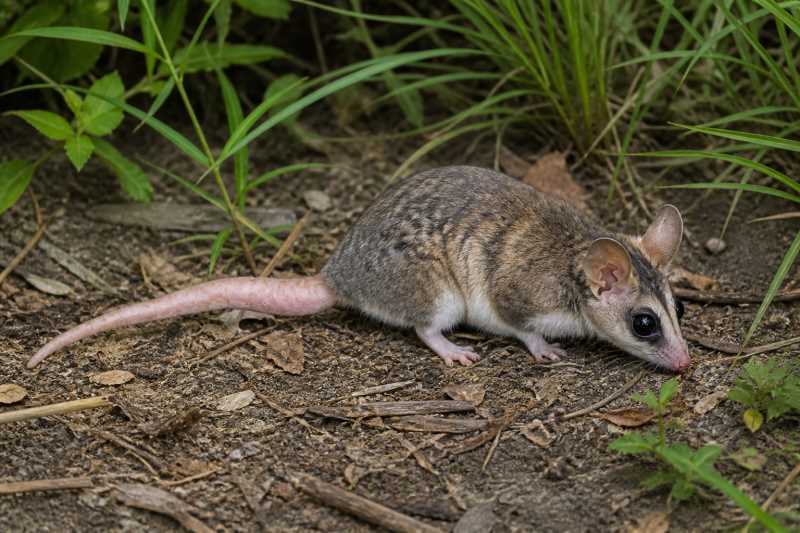
The Chacoan Fat-tailed Opossum is a small marsupial, typically measuring between 10 to 15 centimeters in body length, with a tail that can be as long or slightly longer than its body. The most distinctive feature of this opossum is its tail, which is used to store fat and appears noticeably thicker when well-nourished. This adaptation is crucial for surviving periods of food scarcity.
The opossum’s fur is generally a light grayish-brown on the dorsal side, blending into a lighter, almost white underbelly. Its face is marked by a sharp contrast between the dark rings around its large, black eyes, and its white cheeks, giving it a mask-like appearance. Its ears are thin, rounded, and relatively large compared to its head, aiding its acute hearing which is vital for nocturnal activity.
Range and Habitat
Thylamys pusillus is predominantly found in the Gran Chaco region, which spans parts of Bolivia, Paraguay, and Argentina. The Chaco is a vast, hot, and semi-arid lowland region characterized by thorny forests, savannas, and shrublands. This opossum species is adapted to live in dry environments and can be found in a variety of habitats within the Chaco, including dry forests and scrublands.
Due to their adaptability, Chacoan Fat-tailed Opossums can also inhabit areas modified by human activity, such as agricultural fields and grazing lands, as long as there are sufficient cover and food resources.
Behavior and Diet
The Chacoan Fat-tailed Opossum is primarily nocturnal, spending most of its active hours searching for food at night. It is an opportunistic feeder with a varied diet that includes insects, small vertebrates, fruits, and seeds. This diet not only fulfills its nutritional needs but also contributes to the ecological balance by controlling insect populations and dispersing seeds.
These opossums are solitary creatures, with individuals generally only coming together to mate. Nesting usually occurs in tree hollows or abandoned burrows, where they line their nests with leaves and grasses for insulation and comfort. During the dry season or periods of food scarcity, they may enter a state of torpor, reducing their metabolic rate to conserve energy.
Identification Tips (Field Recognition Cues)
Identifying the Chacoan Fat-tailed Opossum in the field can be challenging due to its nocturnal habits and small size. However, there are several key features to look for:
- Tail Shape: Look for the characteristic thickened tail which indicates fat storage, a unique feature among opossums.
- Facial Mask: The dark rings around the eyes and contrasting white cheeks are distinctive.
- Size and Color: Note the small size and the combination of grayish-brown dorsal fur with a white underbelly.
- Behavior: Observe nocturnal activity and a preference for ground-level foraging or in low vegetation.
Conservation Status (with Threats and Protections)
The Chacoan Fat-tailed Opossum is currently listed as "Least Concern" by the International Union for Conservation of Nature (IUCN), indicating that it is not considered at immediate risk of extinction. However, like many species in the Gran Chaco, it faces threats from habitat loss and fragmentation due to agricultural expansion, logging, and infrastructure development.
Conservation efforts are crucial to ensure the survival of this species and its habitat. Protected areas within the Chaco region help safeguard parts of its natural habitat. Additionally, sustainable land-use practices and efforts to reduce deforestation can mitigate some of the threats faced by these opossums.
Frequently Asked Questions
What do Chacoan Fat-tailed Opossums eat?
Chacoan Fat-tailed Opossums have a varied diet that includes insects, small vertebrates, fruits, and seeds. This diet helps them adapt to different environmental conditions and contributes to their role as seed dispersers and insect controllers.
How do Chacoan Fat-tailed Opossums store fat?
These opossums store fat in their tails, which thicken as the animal accumulates reserves. This adaptation is crucial for surviving periods of food scarcity, allowing the opossum to draw on these reserves when needed.
Where can I find Chacoan Fat-tailed Opossums in the wild?
The Chacoan Fat-tailed Opossum is native to the Gran Chaco region, which includes parts of Bolivia, Paraguay, and Argentina. They inhabit dry forests, shrublands, and areas modified by human activity, such as agricultural fields.
Are Chacoan Fat-tailed Opossums endangered?
Currently, Chacoan Fat-tailed Opossums are listed as "Least Concern" by the IUCN. However, they face threats from habitat loss due to agricultural expansion and deforestation.
How do Chacoan Fat-tailed Opossums adapt to their environment?
These opossums are adapted to dry environments, with features like their fat-storing tail and torpor during food scarcity helping them survive in the challenging conditions of the Gran Chaco.
Related posts