
Introduction
Agricola’s Opossum, scientifically known as Cryptonanus agricolai, is a unique marsupial species found in South America. This elusive creature is a member of the family Didelphidae, a diverse group of opossums that display a wide range of ecological adaptations. Despite its relatively recent discovery, Agricola’s Opossum has piqued the interest of mammalogists and conservationists due to its specialized habitat and distinct characteristics. This article delves into the various aspects of Agricola’s Opossum, from its physical description to its conservation status, providing an in-depth look at this fascinating species.
Physical Description
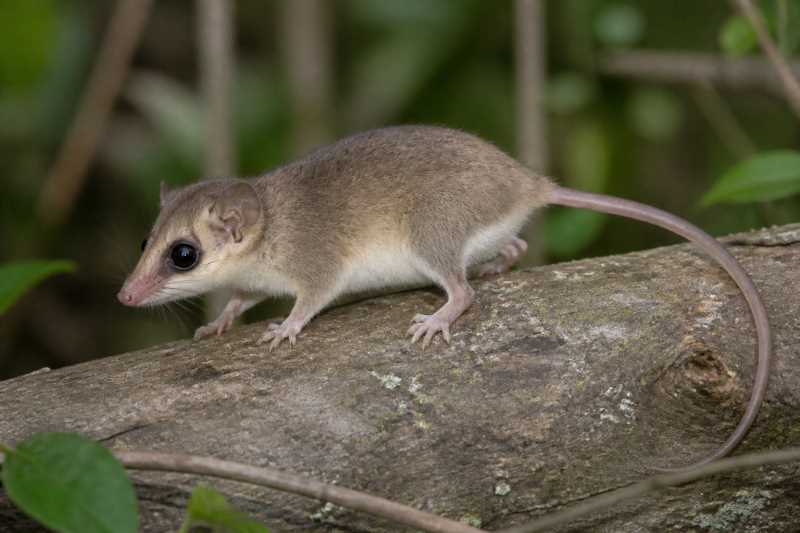
Agricola’s Opossum is a small marsupial, characterized by its diminutive size and distinct physical traits. Adult individuals typically measure around 10 to 15 centimeters in body length, with a tail length of approximately 12 to 18 centimeters, making the tail slightly longer than the body. The average weight ranges from 20 to 40 grams, indicative of its lightweight and agile nature.
The fur of Agricola’s Opossum is soft and dense, providing excellent insulation in its variable habitats. Its dorsal side is generally grayish-brown, while the ventral side is lighter, often displaying a whitish or creamy hue. The ears are relatively large and rounded, an adaptation that likely aids in acute hearing, essential for nocturnal foraging. Its eyes are prominent and adapted for low-light vision, a common trait among nocturnal mammals.
One of the most distinguishing features of Agricola’s Opossum is its prehensile tail. This tail is covered in fine fur at the base, transitioning to a more scaly texture towards the tip, enabling it to grasp branches and other objects, which is crucial for its arboreal lifestyle.
Range and Habitat
Agricola’s Opossum is native to South America, with confirmed populations primarily in Brazil. It inhabits a variety of ecosystems, including tropical and subtropical forests, grasslands, and savannas. These habitats offer the necessary resources such as food and shelter, although the species shows a preference for areas with dense understory vegetation.
The distribution of Agricola’s Opossum is somewhat fragmented, which is typical for species with specific habitat requirements. This opossum thrives in regions with abundant foliage, which provides both a rich food supply and protection from predators. The availability of tree hollows, leaf litter, and other natural features is crucial for nesting and breeding.
Behavior and Diet
Agricola’s Opossum is primarily nocturnal, spending most of its active hours during the night. This behavior helps it avoid the heat of the day and reduces the risk of predation. During the day, it rests in nests constructed from leaves and other plant materials, usually located in tree hollows or dense vegetation.
The diet of Agricola’s Opossum is omnivorous, consisting of insects, small vertebrates, fruits, and seeds. Its dietary habits reflect its opportunistic nature, as it adapts to the availability of food resources in its environment. Insects such as beetles and caterpillars form a significant part of its diet, providing essential proteins and nutrients.
Agricola’s Opossum has been observed to exhibit solitary behavior, with individuals typically foraging alone. However, during the breeding season, interactions between males and females increase as they seek mates and reproduce.
Identification Tips (Field Recognition Cues)
Identifying Agricola’s Opossum in the field requires careful observation of several key characteristics. Here are some tips to help recognize this species:
- Size and Shape: Look for a small marsupial with a body length of 10 to 15 centimeters and a prehensile tail longer than its body.
- Fur Coloration: Note the grayish-brown coloration on the back and the lighter, creamy underside.
- Ears and Eyes: Large, rounded ears and prominent eyes are distinctive features, aiding in its nocturnal lifestyle.
- Tail: Observe the tail, which is covered in fur at the base and scaly towards the tip, adept at gripping branches.
- Habitat: Check the habitat type, as Agricola’s Opossum is more likely to be found in areas with dense vegetation.
Conservation Status (With Threats and Protections)
As of the latest assessments, Agricola’s Opossum is classified as "Data Deficient" by the International Union for Conservation of Nature (IUCN). This status highlights the need for more comprehensive research to determine its population trends and threats accurately.
One of the primary threats facing Agricola’s Opossum is habitat loss due to deforestation and land conversion for agriculture. These activities reduce the availability of suitable habitats, fragmenting populations and limiting their access to resources. Additionally, climate change poses a long-term threat by altering the ecosystems on which this species depends.
Conservation efforts for Agricola’s Opossum focus on habitat preservation and the establishment of protected areas. By safeguarding the forests and savannas where this opossum resides, conservationists aim to mitigate the impact of human activities and ensure the species’ survival.
Frequently Asked Questions
What is the habitat preference of Agricola’s Opossum?
Agricola’s Opossum prefers areas with dense vegetation, such as tropical and subtropical forests, where it can find ample food and shelter.
How can I identify Agricola’s Opossum in the wild?
Look for a small marsupial with a body length of 10 to 15 cm, grayish-brown fur, large ears, and a prehensile tail longer than its body.
What does Agricola’s Opossum eat?
Agricola’s Opossum has an omnivorous diet, feeding on insects, small vertebrates, fruits, and seeds, adapting to available food resources.
Why is Agricola’s Opossum classified as Data Deficient?
The "Data Deficient" status indicates a lack of comprehensive data on its population trends, distribution, and threats, necessitating further research.
What are the conservation measures for Agricola’s Opossum?
Conservation measures include habitat preservation and the creation of protected areas to mitigate habitat loss and ensure the species’ survival.
Related posts


