The Grey-capped Tyrannulet: A Hidden Jewel of the Avian World
The Grey-capped Tyrannulet (Phyllomyias griseocapilla) is a small but captivating bird species that belongs to the Tyrannidae family, commonly known as tyrant flycatchers. This diminutive creature, while not as flamboyant as some of its avian relatives, is an intriguing subject of study for ornithologists and bird enthusiasts alike. Its understated elegance and unique behaviors make it a fascinating species worthy of attention.
Physical Characteristics
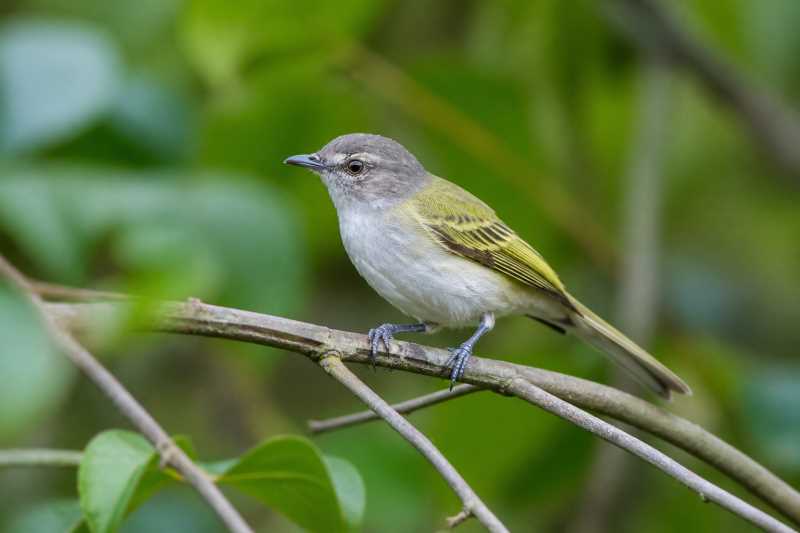
The Grey-capped Tyrannulet is easily identifiable by its distinctive grey cap, which contrasts with its otherwise olive-green plumage. Measuring approximately 11 to 12 centimeters in length and weighing around 8 to 10 grams, it is a petite bird with a slender build. Its wings and tail are relatively short, adapted for quick and agile flight through the dense forest canopy it inhabits. The bird’s bill is small and pointed, well-suited for its diet of insects and small arthropods.
Habitat and Distribution
This species is predominantly found in the montane forests of southeastern Brazil. It favors elevations ranging from 900 to 2,400 meters, where it can be seen flitting through the mid-story and canopy layers of the forest. The Grey-capped Tyrannulet is typically associated with humid, subtropical, and temperate forests, often thriving in areas with dense foliage that provides both food and protection from predators.
While its range is relatively restricted, this habitat specificity has not yet rendered the Grey-capped Tyrannulet as vulnerable or endangered. However, it does highlight the importance of conserving its natural environment, as deforestation and habitat fragmentation remain persistent threats throughout its range.
Behavior and Ecology
The Grey-capped Tyrannulet is a diurnal bird, most active during the early morning and late afternoon when it forages for food. Its diet consists mainly of insects, which it catches on the wing or gleans from foliage. This bird is often seen in mixed-species flocks, a behavior that offers increased protection against predators and enhances foraging efficiency.
The species is known for its energetic and acrobatic flight patterns, often darting through the trees with remarkable agility. Its vocalizations, though not as pronounced as those of some flycatchers, include a series of high-pitched, repetitive whistles and chirps. These calls play an essential role in communication, particularly during the breeding season.
Reproduction
The breeding season of the Grey-capped Tyrannulet typically coincides with the wet season, which varies depending on its geographical location. During this time, males engage in elaborate displays to attract females, often involving aerial acrobatics and vocal performances. The species is monogamous, with pairs forming strong bonds that may last for multiple breeding seasons.
Nesting usually occurs in dense foliage, where the female constructs a small, cup-shaped nest using twigs, moss, and other plant materials. The female lays a clutch of two to three eggs, which she incubates for approximately two weeks. Both parents participate in feeding the chicks, which fledge after about three weeks.
Conservation Status
Currently, the Grey-capped Tyrannulet is classified as Least Concern by the International Union for Conservation of Nature (IUCN). This status reflects its relatively stable population and wide distribution across suitable habitats. However, ongoing threats such as habitat destruction and climate change could impact its numbers in the future.
Conservation efforts are essential to ensure the long-term survival of the Grey-capped Tyrannulet. Protecting its natural habitat through the establishment of protected areas and sustainable land-use practices is crucial. Additionally, further research into its ecology and behavior can provide valuable insights into its conservation needs.
Conclusion
The Grey-capped Tyrannulet may not be the most conspicuous bird in the forest, but its unique characteristics and behaviors make it an important part of the avian community. Understanding and protecting this species is not only vital for its survival but also for maintaining the ecological balance of its habitat. As we continue to explore and appreciate the rich biodiversity of our planet, the Grey-capped Tyrannulet stands as a reminder of the delicate interconnections that sustain life in our natural world.
Related posts