The Enigmatic Darjeeling Woodpecker: A Jewel of the Eastern Himalayas
Nestled amidst the verdant forests of the Eastern Himalayas, the Darjeeling Woodpecker, scientifically known as Dendrocopos darjellensis, is a captivating avian species that continues to intrigue ornithologists and bird enthusiasts alike. This medium-sized woodpecker, characterized by its striking plumage and distinctive call, is not only a symbol of the rich biodiversity of the region but also plays a crucial role in the ecosystem.
Taxonomy and Physical Description
The Darjeeling Woodpecker belongs to the family Picidae, which encompasses a wide variety of woodpecker species. It was first described scientifically in the mid-19th century, with its nomenclature reflecting its geographic association with the Darjeeling region.
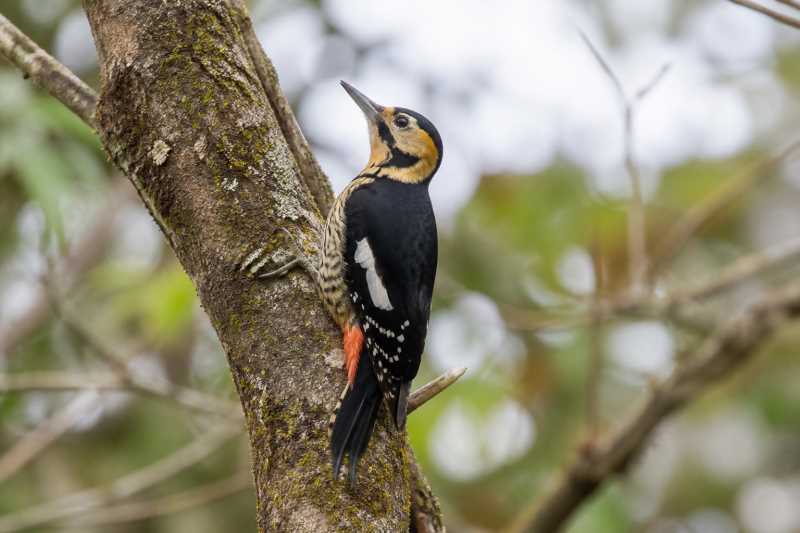
In terms of physical appearance, the Darjeeling Woodpecker is a medium-sized bird measuring approximately 23 to 25 centimeters in length. It exhibits sexual dimorphism, with males typically displaying more vivid coloration than females. The male boasts a distinctive red nape patch, which is absent in females. Both sexes have a striking black and white plumage, with a white belly and a barred black and white pattern on their wings and back. The bird’s head is adorned with a contrasting black cap and a white stripe running from the beak to the nape.
Habitat and Distribution
The Darjeeling Woodpecker is predominantly found in the temperate and subtropical forests of the Eastern Himalayas, spanning across parts of India, Nepal, Bhutan, and Tibet. It thrives in broadleaf and mixed forests, often at elevations ranging from 1,500 to 3,000 meters. The dense, undisturbed forest canopies provide an ideal habitat for foraging and nesting.
While the bird is primarily associated with the Darjeeling region, its range extends beyond, encompassing areas rich in biodiversity. The presence of mature trees is crucial for the species, as these provide both food sources and nesting opportunities.
Behavior and Ecology
The Darjeeling Woodpecker is an adept forager, employing its strong beak to tap into tree trunks, searching for insects and larvae hidden beneath the bark. This foraging behavior not only aids in pest control but also facilitates nutrient cycling within the forest ecosystem. The bird’s diet primarily consists of insects, although it may occasionally consume fruits and seeds.
A solitary and territorial bird, the Darjeeling Woodpecker is known for its distinctive drumming, a behavior used to communicate with potential mates and establish territory. During the breeding season, which typically occurs from March to June, males engage in elaborate displays to attract females. Nesting occurs in tree cavities, which the birds excavate themselves. A typical clutch consists of three to four eggs, with both parents sharing responsibilities for incubation and feeding the hatchlings.
Conservation Status and Threats
The Darjeeling Woodpecker is currently classified as a species of "Least Concern" by the International Union for Conservation of Nature (IUCN). However, like many species dependent on forest habitats, it faces threats from habitat loss and fragmentation due to deforestation, agricultural expansion, and urbanization.
Conservation efforts are crucial to ensure the survival of this species and the preservation of its habitat. Protected areas within its range, such as national parks and wildlife sanctuaries, play a pivotal role in safeguarding the forests that the Darjeeling Woodpecker calls home. Additionally, community-based conservation initiatives and sustainable forestry practices can contribute to maintaining the ecological balance in these regions.
The Role of the Darjeeling Woodpecker in Culture and Research
Beyond its ecological significance, the Darjeeling Woodpecker holds cultural importance in the regions it inhabits. It is often celebrated in folklore and local traditions, symbolizing resilience and adaptability. Moreover, the species serves as an important subject for scientific research, providing insights into avian behavior, adaptation, and the effects of environmental changes on forest ecosystems.
In conclusion, the Darjeeling Woodpecker is a remarkable species that embodies the rich natural heritage of the Eastern Himalayas. Its vibrant presence in the forested landscapes underscores the importance of conserving these ecosystems for future generations. Through continued research and conservation efforts, we can ensure that the Darjeeling Woodpecker, along with countless other species, continues to thrive in its natural habitat.
References
- BirdLife International. (2020). Dendrocopos darjellensis. The IUCN Red List of Threatened Species.
- Grimmett, R., Inskipp, T., & Inskipp, C. (2011). Birds of the Indian Subcontinent. Oxford University Press.
- Ali, S., & Ripley, S. D. (1987). Handbook of the Birds of India and Pakistan. Oxford University Press.
Related posts