An Insight into the Dusky Lory (Pseudeos fuscata)
The Dusky Lory, scientifically known as Pseudeos fuscata, is a captivating species of parrot that has intrigued ornithologists and bird enthusiasts alike. Native to the lowland regions of New Guinea and the nearby offshore islands, this vibrant bird is a testament to nature’s diversity and complexity. In this article, we will explore various aspects of the Dusky Lory, including its habitat, behavior, diet, and conservation status, providing a comprehensive understanding of this remarkable avian species.
Habitat and Distribution
The Dusky Lory is predominantly found in the lowland forests of New Guinea, including the surrounding small islands. Their habitat spans both primary and secondary forests, as well as mangroves and plantations. This adaptability to different environments has allowed them to thrive in a variety of landscapes. Typically, these birds are found at elevations below 1,000 meters, where the climate is humid and tropical, providing ideal conditions for their survival.
New Guinea, known for its rich biodiversity, offers a perfect setting for the Dusky Lory. The island’s dense forests and abundant fruit trees provide ample food sources, making it a haven for these lories. Additionally, the islands’ complex ecosystem supports a wide range of flora and fauna, contributing to a balanced environment where the Dusky Lory can flourish.
Physical Characteristics
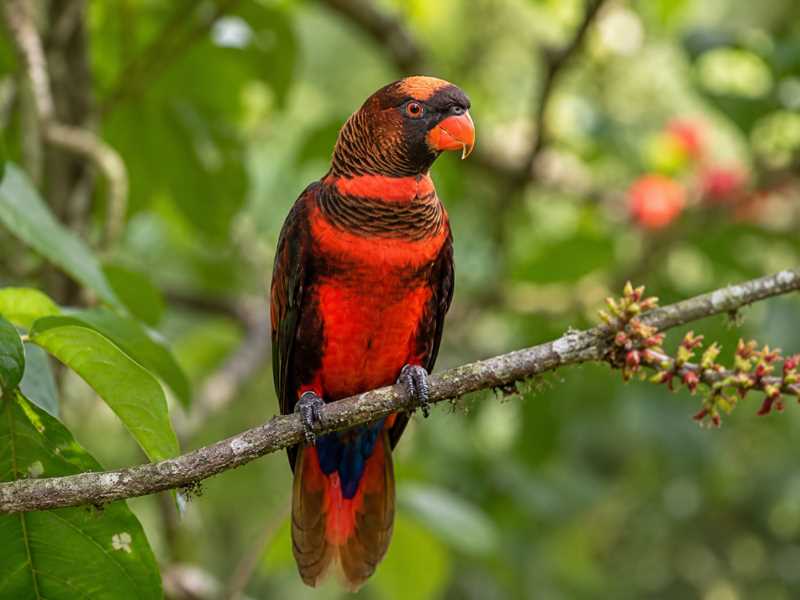
The Dusky Lory is a medium-sized parrot, measuring around 24 cm in length and weighing approximately 200 grams. Its plumage is predominantly a rich, dark brown or black, with vibrant orange and yellow markings around the face, thighs, and underwing coverts. This striking contrast in colors makes it one of the more visually appealing lories.
One of the most distinguishing features of the Dusky Lory is its short, rounded tail and a unique, brush-tipped tongue adapted for feeding on nectar and pollen. The beak is strong and curved, perfectly designed for accessing their primary food sources. Their zygodactyl feet, with two toes facing forward and two backward, enable them to grasp branches and navigate through the forest canopy with ease.
Behavior and Social Structure
Dusky Lories are highly social birds, often seen in noisy flocks of up to 20 individuals. Their social nature extends to their interactions within groups, where they engage in mutual preening and play, reinforcing social bonds. These lories are known for their playful behavior, often hanging upside down from branches and engaging in aerial acrobatics.
The vocalizations of the Dusky Lory are varied and include a series of high-pitched whistles and screeches, which they use for communication within flocks. These vocalizations play a crucial role in maintaining group cohesion and alerting others to potential threats.
Diet and Feeding Habits
The diet of the Dusky Lory is primarily nectarivorous, relying heavily on the nectar of various flowering plants. Their brush-tipped tongues are perfectly adapted to extract nectar from blossoms. In addition to nectar, they consume pollen, fruits, and seeds, making them important pollinators and seed dispersers in their ecosystems.
The lories’ feeding habits are influenced by the availability of flowering plants, and they often travel significant distances in search of food. This diet requires them to feed frequently, as nectar is a high-energy but low-protein food source. As a result, Dusky Lories are constantly on the move, visiting numerous feeding sites throughout the day.
Breeding and Lifespan
Breeding for the Dusky Lory typically occurs during the wet season when food is abundant. They are cavity nesters, often using hollows in trees to lay their eggs. The female usually lays two to three eggs, which she incubates for about 24 days. During this time, the male provides food and protection for the nesting site.
Once the chicks hatch, both parents are involved in feeding and caring for the young, which fledge after approximately 8 weeks. Dusky Lories have a lifespan of 10 to 20 years in the wild, though they can live longer in captivity with proper care.
Conservation Status and Threats
The Dusky Lory is currently classified as Least Concern by the International Union for Conservation of Nature (IUCN). However, like many species native to New Guinea, it faces threats from habitat destruction due to logging and agricultural expansion. Additionally, the pet trade poses a significant risk, as these colorful birds are often captured and sold illegally.
Conservation efforts are crucial to ensure the long-term survival of the Dusky Lory. Protecting their natural habitats and regulating the pet trade are essential steps in preserving this species. Education and awareness campaigns can also play a vital role in reducing demand for wild-caught lories and promoting sustainable practices.
Conclusion
The Dusky Lory is an extraordinary bird that embodies the vibrant and dynamic ecosystems of New Guinea. Its colorful plumage, playful nature, and important ecological role make it a species worth preserving. By understanding and addressing the challenges faced by the Dusky Lory, we can contribute to the conservation of this beautiful parrot and the rich biodiversity of its habitat.
In conclusion, the Dusky Lory is not just a captivating avian species but also an integral part of its ecosystem. Through concerted conservation efforts and increased awareness, we can ensure that future generations continue to marvel at the beauty and vitality of the Dusky Lory in the wild.
Related posts