The Enigmatic Coral-billed Ground Cuckoo: A Detailed Exploration
The Coral-billed Ground Cuckoo (Carpococcyx renauldi) is a captivating avian species that continues to intrigue ornithologists and bird enthusiasts alike. Known for its striking appearance and elusive behavior, this bird is a member of the Cuculidae family and is found predominantly in the dense forests of Southeast Asia. This article delves into the unique characteristics, habitat, behavior, and conservation status of the Coral-billed Ground Cuckoo, providing a comprehensive overview of this extraordinary species.
Physical Characteristics
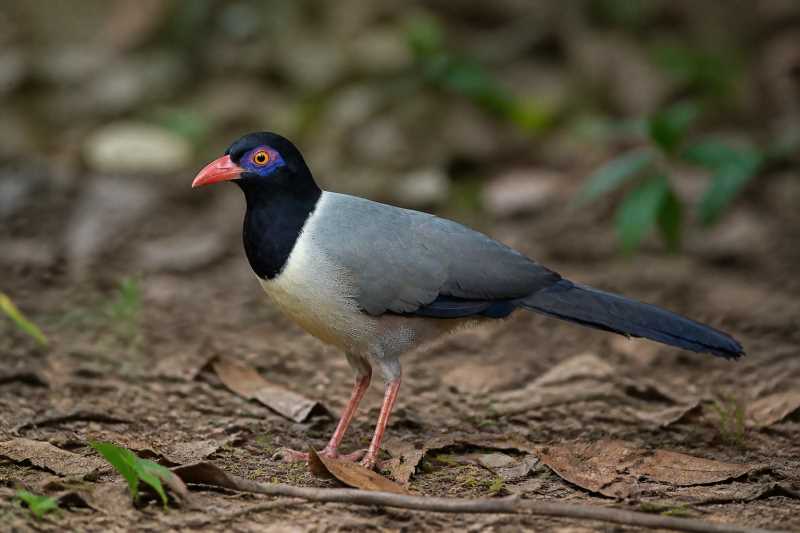
The Coral-billed Ground Cuckoo is a medium-sized bird, measuring approximately 50 to 60 centimeters in length. Its most distinctive feature is its vibrant coral-colored bill, which contrasts beautifully with its dark plumage. The bird’s upperparts are predominantly dark green to black with a metallic sheen, while its underparts are lighter, ranging from gray to white. The long tail is often held upright, and its strong legs and feet are adapted for terrestrial movement.
The bird’s eyes are surrounded by a bare patch of blue skin, which adds to its striking appearance. Males and females are similar in appearance, making it difficult to distinguish between the sexes in the field.
Habitat and Distribution
Native to Southeast Asia, the Coral-billed Ground Cuckoo is primarily found in the forests of Thailand, Cambodia, Laos, and Vietnam. It inhabits lowland and montane forests, preferring dense, humid environments that offer ample cover and foraging opportunities. These birds are typically found at elevations ranging from sea level to about 1,200 meters.
Their preference for dense forest habitats makes them challenging to observe, as they are adept at remaining hidden among the underbrush. This elusive nature has contributed to the limited knowledge about their population size and distribution.
Behavior and Diet
The Coral-billed Ground Cuckoo is primarily terrestrial, spending much of its time foraging on the forest floor. It feeds on a diverse diet, including insects, small vertebrates, fruits, and seeds. Its strong legs and feet are well-suited for scratching and digging in leaf litter to uncover food.
These birds are known for their solitary nature, although they may occasionally be observed in pairs during the breeding season. They are generally silent, but when vocalizing, they produce a series of low, resonant calls that can carry over long distances.
The breeding behavior of the Coral-billed Ground Cuckoo is not well-documented, but it is believed that they nest on the ground, laying a small clutch of eggs that both parents help to incubate and rear.
Conservation Status
The Coral-billed Ground Cuckoo is currently listed as Near Threatened on the IUCN Red List. The primary threat to this species is habitat loss due to deforestation and land conversion for agriculture and development. The fragmentation of their forest habitats has made it increasingly difficult for these birds to find suitable territories and resources.
Conservation efforts are essential to ensure the survival of the Coral-billed Ground Cuckoo. Protecting and restoring their natural habitats is critical, as is conducting further research to better understand their ecology and behavior. Raising awareness about the importance of conserving Southeast Asia’s unique avian biodiversity can also contribute to the protection of this and other threatened species.
Conclusion
The Coral-billed Ground Cuckoo is a remarkable bird that embodies the rich biodiversity of Southeast Asia’s forests. Its striking appearance and secretive nature make it a fascinating subject of study, yet much remains to be learned about its ecology and behavior. As threats to its habitat continue to grow, concerted conservation efforts are necessary to protect this enigmatic species for future generations.
By increasing our understanding of the Coral-billed Ground Cuckoo and advocating for the preservation of its habitats, we can help ensure that this unique bird continues to thrive in the wild. As we learn more about this extraordinary species, we gain a deeper appreciation for the intricate web of life that exists within the world’s forests and the critical role each species plays in maintaining ecological balance.
Related posts