The Nubian Bustard: A Majestic Avian of the African Savannahs
The Nubian Bustard (Neotis nuba) is a remarkable bird species that captivates ornithologists and bird enthusiasts alike with its distinctive appearance and fascinating behaviors. Native to the arid and semi-arid regions of North Africa, this bird plays a critical role in the ecosystems it inhabits. Let us delve deeper into the world of the Nubian Bustard, exploring its habitat, behavior, and conservation status.
Habitat and Distribution
The Nubian Bustard is primarily found in the Sahel and Sudan savannah zones, extending across countries such as Sudan, Chad, Niger, and northern Nigeria. These regions are characterized by open grasslands, sparse woodlands, and semi-desert environments, which provide the ideal habitat for the bustard. The bird thrives in areas with a mix of grasses and scattered shrubs, where it can forage for food and find cover from predators.
The Nubian Bustard’s choice of habitat is closely linked to its diet and breeding habits. It prefers regions with little human disturbance, where it can find an abundance of insects, small vertebrates, and plant matter, which form the bulk of its diet. The bird’s adaptability to arid conditions is a testament to its evolutionary success in these challenging environments.
Physical Characteristics and Behavior
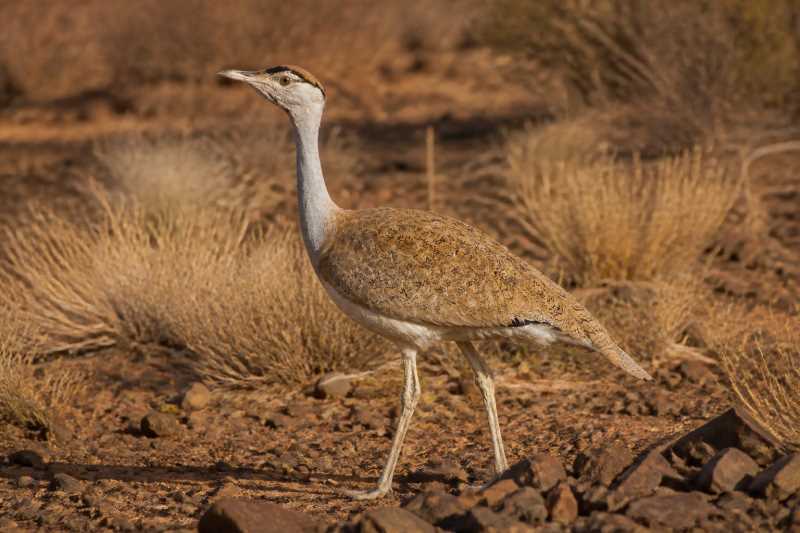
The Nubian Bustard is a large and striking bird, with males reaching up to 80 cm in length and weighing between 3 to 5 kg. Females are generally smaller but share the same elegant plumage. The bird is characterized by its long neck and legs, a robust body, and a wingspan that can exceed 180 cm. Its plumage is predominantly sandy brown with intricate patterns and markings that provide excellent camouflage against the dry grasslands.
One of the most remarkable features of the Nubian Bustard is its courtship display. During the breeding season, males engage in elaborate displays to attract females. These displays involve puffing up their chest feathers, spreading their wings, and making deep booming calls that can be heard over long distances. This courtship ritual is not only a spectacle to behold but also an important part of the species’ reproductive success.
The Nubian Bustard is primarily ground-dwelling, relying on its strong legs to traverse the open landscapes. It is a nomadic species, often moving in response to the availability of food and water. This nomadic behavior is crucial for its survival in the unpredictable climates of its native regions.
Diet and Foraging
The diet of the Nubian Bustard is diverse, reflecting its omnivorous feeding habits. It predominantly feeds on insects, such as grasshoppers and beetles, which are abundant in its habitat. However, it also consumes small mammals, reptiles, and a variety of plant materials, including seeds and fruits. This varied diet enables the bird to make the most of the resources available in its arid environment.
Foraging typically occurs during the cooler parts of the day, such as early morning and late afternoon. The bird uses its keen eyesight to spot prey and its strong beak to capture and consume it. The Nubian Bustard’s foraging behavior is an essential part of its ecological role, as it helps to control insect populations and disperse plant seeds.
Conservation Status and Threats
The Nubian Bustard is currently classified as Near Threatened by the International Union for Conservation of Nature (IUCN). This status highlights the challenges the species faces due to habitat loss, hunting, and human encroachment. The conversion of grasslands into agricultural fields and the development of infrastructure pose significant threats to its natural habitat.
Hunting is another major concern for the Nubian Bustard. In some regions, the bird is hunted for its meat and feathers, which are considered valuable by local communities. This unsustainable hunting pressure has contributed to population declines in certain areas.
Conservation efforts are crucial to ensure the survival of the Nubian Bustard. Initiatives focusing on habitat protection, sustainable land-use practices, and community engagement are essential to mitigate the threats facing this species. By raising awareness and promoting conservation action, we can help secure a future for the Nubian Bustard and the ecosystems it inhabits.
Conclusion
The Nubian Bustard is a magnificent bird that embodies the beauty and resilience of the African savannahs. Its unique adaptations and behaviors make it a fascinating subject of study for scientists and nature lovers alike. However, the challenges it faces underscore the need for concerted conservation efforts to preserve its habitat and ensure its continued survival. The Nubian Bustard is not just a symbol of the wild, open landscapes of Africa, but also a reminder of our responsibility to protect the natural world.
Related posts