Ludwig’s Bustard: A Majestic Bird of the African Plains
Ludwig’s Bustard (Neotis ludwigii) stands as a symbol of the vast, open landscapes of southern Africa. This remarkable bird, named after the 19th-century German explorer Baron Charles von Ludwig, is both a marvel of avian adaptation and a species of significant conservation concern. With its striking appearance and elusive nature, Ludwig’s Bustard captures the intrigue of ornithologists and nature enthusiasts alike.
Physical Characteristics
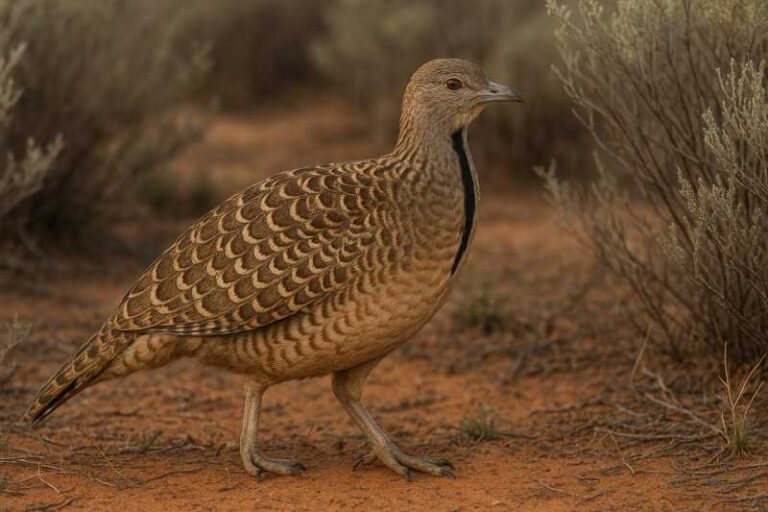
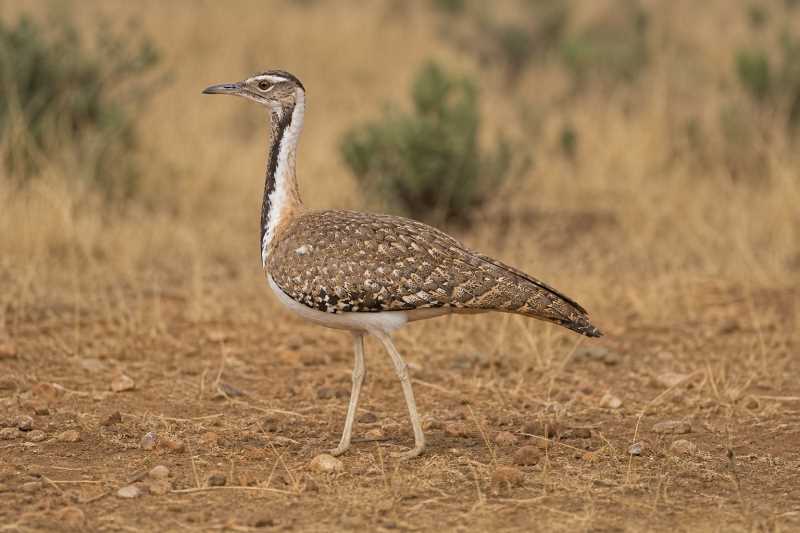
Ludwig’s Bustard is one of the larger members of the bustard family, measuring up to 1 meter in length and weighing between 3 to 7 kilograms. Males are generally larger than females, a common trait among bustard species. The bird’s plumage is a sophisticated blend of browns, blacks, and whites, providing excellent camouflage against the arid landscapes it inhabits.
The bustard’s head is particularly striking, adorned with a white face and a distinctive black crown, which contrasts sharply with its pale neck and breast. Its long, powerful legs facilitate its terrestrial lifestyle, while its broad wings enable strong, sustained flight. In flight, Ludwig’s Bustard is a sight to behold, with its broad wings displaying a pattern of black and white that is both beautiful and functional.
Habitat and Distribution
Ludwig’s Bustard is primarily found in the arid and semi-arid regions of southern Africa, including parts of Namibia, Botswana, and South Africa. These birds prefer open landscapes such as grasslands, savannas, and semi-deserts, where they can forage for food while remaining vigilant for predators.
The birds are nomadic, often moving in response to seasonal rains and the availability of food. This nomadic behavior makes tracking and studying Ludwig’s Bustard particularly challenging, as their movements are influenced by unpredictable environmental factors.
Diet and Feeding Behavior
As omnivores, Ludwig’s Bustards have a varied diet that includes insects, small vertebrates, seeds, and plant material. Their foraging behavior is largely opportunistic, with a preference for grasshoppers and other large insects during the breeding season when protein-rich food is essential for raising chicks.
The birds use their keen eyesight to spot prey from a distance, then employ a stealthy approach to capture it. Their feeding strategy is well-adapted to their environment, allowing them to take advantage of the sparse resources available in their habitats.
Breeding and Reproduction
Ludwig’s Bustard is a ground-nesting bird, with breeding typically occurring during or after the rainy season when food is most abundant. Males are polygamous and engage in elaborate courtship displays to attract females. These displays often involve puffing up their plumage, strutting, and vocalizing to demonstrate their fitness as mates.
Once a female selects a mate, she lays a clutch of 1 to 2 eggs in a simple scrape on the ground. The female is solely responsible for incubating the eggs and caring for the young. Chicks are precocial, meaning they are relatively mature and mobile shortly after hatching, an adaptation that helps them evade predators.
Conservation Status
Ludwig’s Bustard is currently classified as Endangered on the IUCN Red List. The primary threats to its survival are habitat loss, collision with power lines, and hunting. Habitat degradation due to agricultural expansion and infrastructure development continues to reduce the available space for these birds to live and breed.
Collisions with power lines are particularly concerning, as bustards are low-flying birds and are often unable to avoid these obstacles. Conservation efforts are underway to address this issue, including the installation of bird diverters on power lines to make them more visible to flying birds.
Conservation Efforts
Efforts to conserve Ludwig’s Bustard focus on habitat protection, research, and community engagement. Protecting large areas of suitable habitat is crucial for maintaining the species’ population. Conservationists are also working with local communities to raise awareness about the importance of preserving these birds and their habitats.
Research is ongoing to better understand the species’ ecology and movements, which will inform future conservation strategies. Collaborative efforts between governments, NGOs, and local communities are essential to ensure the long-term survival of Ludwig’s Bustard.
Conclusion
Ludwig’s Bustard is a magnificent bird that embodies the beauty and fragility of southern Africa’s ecosystems. While it faces significant challenges, concerted conservation efforts provide hope for its future. By increasing our understanding and appreciation of this remarkable species, we can work towards a world where Ludwig’s Bustard continues to grace the African plains for generations to come.
Related posts