Gould’s Inca: A Jewel of the Andean Highlands
In the intricate web of biodiversity that envelops our planet, few creatures capture the imagination as vividly as hummingbirds. Among these avian jewels, Gould’s Inca (Coeligena inca) shines with a unique luminescence that mirrors the vibrant landscapes of the Andes. This species, named in honor of the renowned British ornithologist John Gould, is a testament to the evolutionary artistry that has sculpted life in one of Earth’s most formidable yet breathtaking environments.
Habitat and Distribution
Gould’s Inca is primarily found in the cloud forests of the Andes, specifically within Colombia and Ecuador. These high-altitude habitats, ranging from 2,500 to 3,600 meters above sea level, offer a perfect blend of cool temperatures and rich floral diversity. The dense foliage and frequent mist provide an ideal setting for this species, which thrives in the understory of these montane forests.
The Andean cloud forests are characterized by their persistent cloud cover at the canopy level, creating a unique microclimate that supports a wide array of flora and fauna. Within this verdant tapestry, Gould’s Inca plays a vital role as a pollinator, facilitating the reproduction of various flowering plants that are adapted to the specific conditions of their environment.
Physical Characteristics
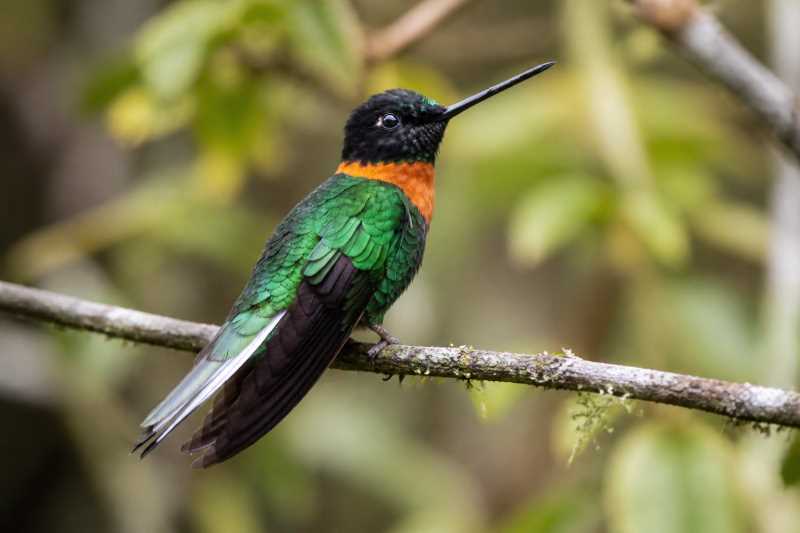
Gould’s Inca is a medium-sized hummingbird, measuring approximately 12 to 13 centimeters in length. Its plumage is a striking interplay of deep iridescent greens and blues, with a distinctive white patch on the upper breast that sets it apart from other species. The bill is long and slightly curved, perfectly adapted for accessing nectar from tubular flowers.
The iridescent feathers of Gould’s Inca are not merely for show; they serve a critical function in communication and mate attraction. The bird’s spectacular coloration is the result of microscopic platelets in the feathers that refract light, creating the illusion of color. This phenomenon, known as structural coloration, is common among hummingbirds and plays a pivotal role in their social and reproductive behavior.
Behavior and Diet
Like many hummingbirds, Gould’s Inca is highly territorial, particularly around rich sources of nectar. It exhibits aggressive behavior towards intruders, often engaging in aerial chases to defend its feeding grounds. These territorial displays are not only a means of securing food but also a demonstration of fitness to potential mates.
The diet of Gould’s Inca is primarily composed of nectar from a variety of flowering plants such as fuchsias and bromeliads. These flowers have evolved in tandem with hummingbirds, developing bright colors and specific shapes that facilitate pollination. In addition to nectar, Gould’s Inca consumes small insects and spiders, which provide essential proteins and nutrients.
Reproduction and Lifespan
Breeding in Gould’s Inca generally coincides with the abundance of flowering plants, ensuring ample food supply for raising young. The female is solely responsible for nest building, incubation, and caring for the chicks. Nests are typically constructed in sheltered locations, using plant fibers and spider silk to create a secure and resilient structure.
The typical clutch consists of two eggs, which the female incubates for approximately 16 to 19 days. Upon hatching, the chicks are altricial, meaning they are born blind and featherless, requiring intensive care and feeding until they fledge. The fledging period lasts about three weeks, during which the young birds develop the skills necessary for independent survival.
Conservation Status
Currently, Gould’s Inca is not considered to be at immediate risk of extinction, classified as Least Concern by the International Union for Conservation of Nature (IUCN). However, like many species that inhabit the delicate ecosystems of the Andes, it faces potential threats from habitat loss due to deforestation, agriculture, and climate change.
Efforts to conserve the cloud forests are crucial not only for Gould’s Inca but for the myriad species that share this habitat. Conservation initiatives focus on protecting large swathes of forest, promoting sustainable land use practices, and engaging local communities in biodiversity preservation.
Conclusion
Gould’s Inca, with its resplendent plumage and vital ecological role, embodies the rich natural heritage of the Andean highlands. This species serves as a reminder of the intricate connections that sustain life on our planet and the importance of preserving these connections for future generations. As we continue to uncover the mysteries of the natural world, Gould’s Inca stands as a symbol of the beauty and complexity that nature offers to those who take the time to look.
In the grand tapestry of life, Gould’s Inca is a shimmering thread, weaving together the stories of evolution, adaptation, and survival. Its presence in the cloud forests is not just a spectacle to behold but a call to action for conservationists and nature lovers alike, urging us to protect the fragile ecosystems that are home to such extraordinary creatures.
Related posts