The Enigmatic Beauty of the Black-crested Coquette: A Jewel of the Rainforest
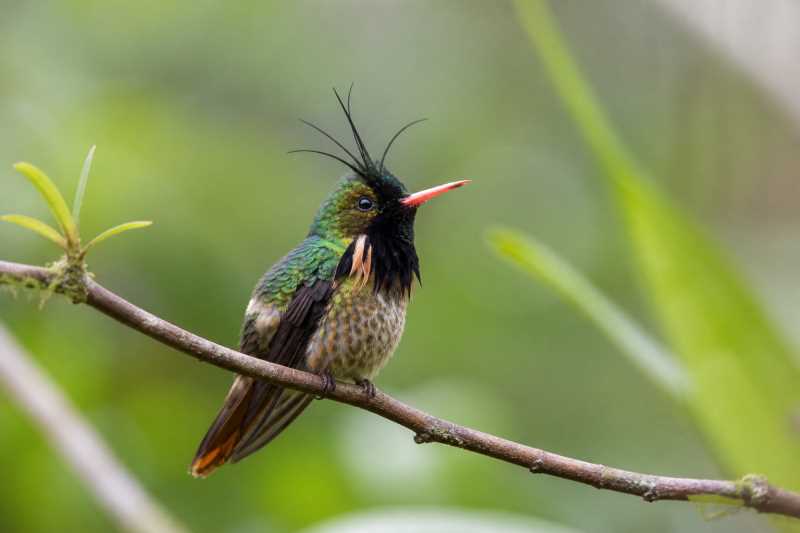
The Black-crested Coquette (Lophornis helenae) stands as a testament to nature’s unmatched artistry. This diminutive hummingbird, with its striking plumage and unique behavioral traits, captivates the hearts of bird enthusiasts and ornithologists alike. Found primarily in the lush rainforests of Central America, the Black-crested Coquette offers a glimpse into the rich biodiversity that these ecosystems support.
Habitat and Distribution
The Black-crested Coquette is predominantly found in the tropical lowland and montane forests of Costa Rica and Panama. These regions provide the ideal environment for the species, characterized by dense foliage, abundant flowering plants, and a stable climate. The coquette thrives in these habitats, darting through the trees with agility and grace, often spotted in the understory or at the forest edge where flowers are plentiful.
Physical Characteristics
One cannot discuss the Black-crested Coquette without highlighting its exquisite appearance. Averaging just 7–8 centimeters in length, it is one of the smaller members of the hummingbird family. The male Black-crested Coquette is particularly notable for its iridescent green body and the striking black crest that gives the species its name. The crest is adorned with elongated, dark feathers that stand erect, adding to the bird’s charismatic appeal. In contrast, the female lacks the crest but is no less beautiful, with a more subdued green and white plumage that provides excellent camouflage against predators.
Feeding and Behavior
The Black-crested Coquette is a nectarivore, relying heavily on the nectar of various flowering plants. Its role as a pollinator is crucial to the health of its ecosystem, facilitating the reproduction of many plant species. The bird’s feeding behavior is characterized by rapid flapping of its wings, allowing it to hover mid-air as it sips nectar. This energy-intensive activity necessitates a high metabolic rate, which the coquette meets by visiting numerous flowers throughout the day.
In addition to nectar, the Black-crested Coquette supplements its diet with small insects, which provide essential proteins for growth and maintenance. This dietary flexibility is particularly important during the breeding season, when nutritional demands increase.
Breeding and Reproduction
The breeding habits of the Black-crested Coquette are as fascinating as its physical characteristics. The males engage in elaborate courtship displays, showcasing their vibrant plumage and aerial acrobatics to attract females. These displays often involve rapid dives and intricate flight patterns, designed to highlight the male’s vigor and genetic fitness.
Once a pair bonds, the female takes on the responsibility of nest building and incubation. The nest, typically constructed from plant fibers and spider silk, is a marvel of avian architecture. It is strategically positioned on a tree branch, often camouflaged with lichen to blend seamlessly with the surroundings. The female lays one to two eggs, which she incubates for approximately two weeks before they hatch.
Conservation Status
Currently, the Black-crested Coquette is not considered to be at significant risk of extinction. However, like many rainforest dwellers, it faces threats from habitat loss and environmental changes. Deforestation, driven by agricultural expansion and urban development, poses a significant challenge to its survival. Conservation efforts aimed at preserving the rainforest habitats are crucial for the continued existence of this and many other species.
The Importance of Conservation
Protecting the Black-crested Coquette goes beyond preserving a single species; it is about maintaining the intricate web of life that supports entire ecosystems. The bird’s role as a pollinator underscores the interconnectedness of species within the rainforest. Conservation initiatives must prioritize habitat preservation, sustainable land use policies, and community engagement to ensure a harmonious coexistence between humans and nature.
Conclusion
The Black-crested Coquette is a remarkable example of nature’s splendor. Its vibrant presence in the rainforests of Central America highlights the importance of biodiversity and the need for concerted conservation efforts. By understanding and appreciating the life of the Black-crested Coquette, we take a step toward safeguarding the rich natural heritage of our planet for future generations.
Related posts