Plumed Guineafowl: A Fascinating Avian Wonder of Africa
The Plumed Guineafowl, scientifically known as Guttera plumifera, is a captivating bird species that graces the lush forests of Central Africa. With its distinctive appearance and intriguing behaviors, this bird is a subject of interest for ornithologists and bird enthusiasts alike. In this article, we explore the unique characteristics, habitat, behavior, and conservation status of the Plumed Guineafowl, shedding light on why this bird is an essential component of Africa’s biodiversity.
Distinctive Characteristics
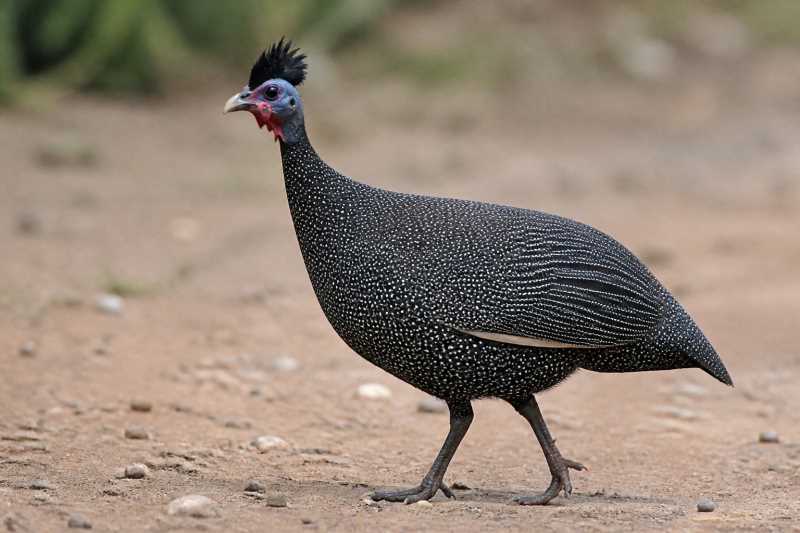
The Plumed Guineafowl is renowned for its striking appearance, which sets it apart from other guineafowl species. One of its most notable features is the crest on its head, comprising a series of elongated feathers that form a plume-like structure. This crest gives the bird its name and adds to its allure. The plumage of the Plumed Guineafowl is predominantly dark with a glossy sheen, interspersed with fine white spots that provide excellent camouflage in the dappled forest light.
Adult Plumed Guineafowl typically weigh between 1.2 to 1.5 kilograms and measure about 50 to 56 centimeters in length. Their robust bodies, coupled with strong legs, make them well-adapted for foraging on the forest floor. The legs are equipped with sharp claws that aid in digging for food, while their beaks are perfectly suited for picking insects and seeds.
Habitat and Distribution
The Plumed Guineafowl is endemic to Central Africa, with a distribution range that includes countries such as Cameroon, the Democratic Republic of the Congo, Gabon, and the Central African Republic. These birds prefer dense, humid forests where they can find ample cover and food resources. They thrive in both primary and secondary forests, often venturing into open clearings and forest edges to forage.
Their preference for dense forest habitats makes them elusive and difficult to study in the wild. However, their presence is often indicated by their distinctive calls, which resonate through the forest canopy. The preservation of their natural habitat is crucial for their survival, as deforestation and habitat fragmentation pose significant threats to their populations.
Behavior and Social Structure
Plumed Guineafowl are highly social birds, often found in small family groups or larger flocks. These groups, known as coveys, can consist of up to 20 individuals, although smaller groups are more common. Within these groups, the birds exhibit a well-defined social hierarchy, with dominant individuals leading the flock during foraging and roosting activities.
Their diet primarily consists of insects, seeds, and small fruits, which they forage for on the forest floor. The birds communicate with each other using a series of vocalizations, including clucks, whistles, and calls that serve various social functions, such as signaling alarm or maintaining group cohesion.
Breeding in Plumed Guineafowl is closely tied to the rainy season, which ensures an abundance of food for their offspring. Nests are typically constructed on the ground, hidden among dense vegetation to protect them from predators. Females lay between 6 to 10 eggs, which they incubate for about 23 to 28 days. Once hatched, the chicks are precocial, meaning they are relatively mature and mobile shortly after birth, allowing them to follow their parents in search of food.
Conservation Status
The Plumed Guineafowl is currently listed as a species of "Least Concern" by the International Union for Conservation of Nature (IUCN). However, this status does not imply that the species is free from threats. Habitat destruction due to logging, agricultural expansion, and human settlement continues to impact their populations negatively.
Conservation efforts are vital to ensure the long-term survival of the Plumed Guineafowl. Protecting their habitat through the establishment of reserves and promoting sustainable land-use practices are essential steps in conserving this unique species. Additionally, raising awareness about the ecological importance of guineafowl can foster community support for conservation initiatives.
Conclusion
The Plumed Guineafowl is a remarkable bird that embodies the diverse and vibrant wildlife of Central Africa. Its unique appearance, social behavior, and ecological role make it a valuable component of the region’s biodiversity. By understanding and addressing the challenges this species faces, we can contribute to the preservation of Africa’s natural heritage for future generations.
In summary, the Plumed Guineafowl is not just a bird of captivating beauty but also a vital player in the complex ecosystems it inhabits. Conservation efforts and habitat protection are crucial to ensuring that this fascinating avian wonder continues to thrive in the wild.
Related posts