Introduction
The Blue Sheep, scientifically known as Pseudois nayaur, is a remarkable mammal that inhabits the rugged mountainous terrains of Central Asia. Often referred to as Bharal in its native regions, the Blue Sheep is a fascinating subject for wildlife enthusiasts and researchers alike due to its unique adaptations and ecological significance. This article delves into various aspects of the Blue Sheep, offering detailed insights into its physical characteristics, habitat, behavior, and conservation status.
Physical Description
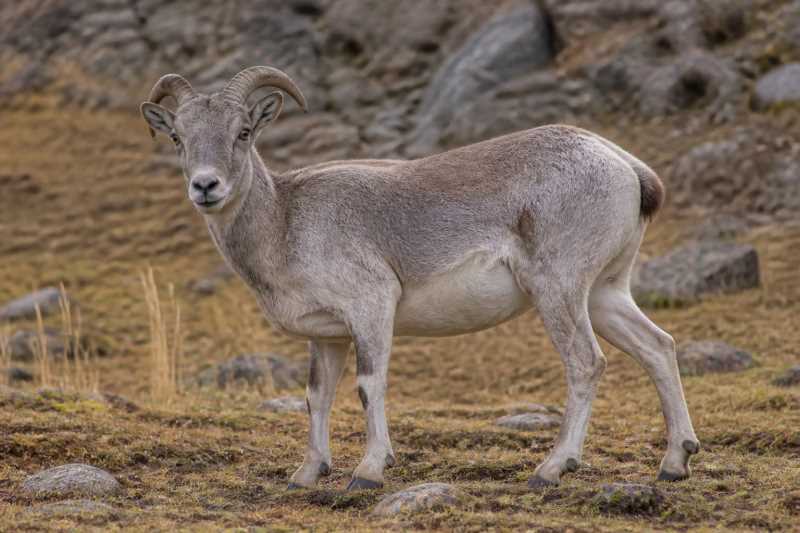
The Blue Sheep is aptly named for its bluish-gray coat, which provides excellent camouflage against the rocky slopes it inhabits. Adult males typically weigh between 60 to 75 kilograms, while females are slightly lighter, ranging from 35 to 55 kilograms. Both sexes possess horns, but the males’ horns are more prominent, curving gracefully backward, which can grow up to 80 centimeters in length.
The body structure of the Blue Sheep is robust and well-suited for climbing steep and rocky terrains. Their hooves are specially adapted to grip the rocky surfaces, allowing them to navigate their rugged environment with agility and precision. The pelage is dense and woolly, providing insulation against the cold temperatures of their high-altitude habitats.
Range and Habitat
The Blue Sheep occupies a vast range across the mountainous regions of Central Asia, including the Himalayas, the Tibetan Plateau, and parts of northern India, Nepal, Bhutan, and Pakistan. They typically reside at elevations ranging from 3,000 to 5,500 meters, where they can be found on alpine meadows and rocky outcrops.
Their habitat selection is influenced by the availability of food and the need for safety from predators. Blue Sheep prefer areas with sparse vegetation, which offer both grazing opportunities and unobstructed views to detect approaching threats. These animals are highly adapted to living in extreme environments, where they face harsh weather conditions and limited resources.
Behavior and Diet
Blue Sheep are social animals, often found in herds that can range from a few individuals to over a hundred. These herds are typically segregated by sex, with females and their young forming groups, while males either remain solitary or form smaller bachelor groups.
Their diet primarily consists of grasses, herbs, and shrubs. Being ruminants, Blue Sheep have a specialized digestive system that allows them to efficiently extract nutrients from fibrous plant materials. During the harsh winter months, they rely on their ability to dig through snow to access the underlying vegetation.
Blue Sheep are crepuscular, meaning they are most active during the early morning and late afternoon. This behavior helps them avoid the intense heat of the day and reduces the risk of predation.
Identification Tips (Field Recognition Cues)
Identifying Blue Sheep in the wild requires attention to specific features:
- Coat Color: Look for the characteristic bluish-gray coloration which blends with rocky surroundings.
- Horn Shape: Males have distinctive backward-curving horns, while females have shorter, straighter horns.
- Social Structure: Observe the herd structure; females and young are often in larger groups, while males are solitary or in small groups.
- Habitat: Spot them in high-altitude, rocky terrains, often on slopes or near cliffs.
Conservation Status (With Threats and Protections)
The International Union for Conservation of Nature (IUCN) currently classifies the Blue Sheep as a species of Least Concern. However, they face several threats that could impact their populations in the future. Habitat loss due to human encroachment, competition with livestock for grazing resources, and poaching for their horns and meat are significant concerns.
Conservation efforts are in place in several countries within their range, focusing on habitat protection and anti-poaching measures. Community-based conservation programs have also been implemented to promote the coexistence of local communities and Blue Sheep populations, ensuring these unique animals continue to thrive in their natural habitats.
Frequently Asked Questions
Why is this species unique?
The Blue Sheep is unique due to its remarkable adaptations to high-altitude environments. Their ability to navigate steep, rocky terrains with ease, combined with their social structure and distinctive bluish-gray coat, make them a fascinating subject for study in the world of mammalogy.
What are the main threats to Blue Sheep?
The primary threats to Blue Sheep include habitat loss, competition with livestock, and poaching. These factors can lead to reduced food availability and increased mortality, potentially impacting population numbers if not managed effectively.
How can Blue Sheep be protected?
Protection of Blue Sheep involves habitat conservation, anti-poaching efforts, and community engagement. By raising awareness and implementing sustainable practices, we can ensure the survival of this species for future generations.
Where can Blue Sheep be found?
Blue Sheep are found across the mountainous regions of Central Asia, including the Himalayas, Tibetan Plateau, and parts of northern India, Nepal, Bhutan, and Pakistan. They thrive in alpine meadows and rocky outcrops at elevations between 3,000 to 5,500 meters.
Related posts