Introduction
Merriam’s Pocket Mouse (Perognathus merriami) is a fascinating, small rodent that inhabits a variety of arid and semi-arid environments across the southwestern United States and northern Mexico. Named after the American zoologist Clinton Hart Merriam, this species is an integral part of the desert ecosystem. Its ability to survive in harsh conditions and its unique adaptations make it a subject of interest for both scientists and nature enthusiasts.
Pocket mice, named for their fur-lined cheek pouches used to carry food, play a vital role in seed dispersion and soil aeration, contributing to the ecological health of their habitats. Understanding their natural history, behavior, and conservation status provides insights into the broader environmental challenges faced by desert ecosystems.
Physical Description
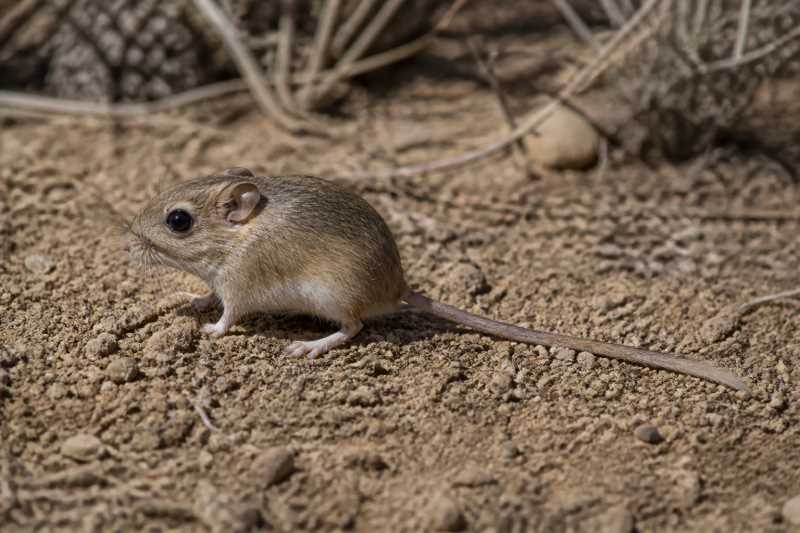
Merriam’s Pocket Mouse is a diminutive rodent, typically measuring between 110 and 140 mm in total length, including its tail. The tail itself can account for nearly half of this length. Weighing around 7 to 14 grams, this species exhibits sexual dimorphism, with males generally being slightly larger than females.
The coat of Perognathus merriami is soft and silky, with a coloration that varies from pale brown to grayish-buff, providing excellent camouflage against sandy and rocky substrates. The underbelly is usually white or cream, creating a stark contrast with the darker dorsal side. Their hind legs are notably strong, adapted for jumping, and they possess long, delicate whiskers that aid in navigation and foraging, particularly during nocturnal activities.
Range and Habitat
Merriam’s Pocket Mouse is primarily found in the southwestern United States, including Arizona, New Mexico, and parts of Texas, extending southward into northern Mexico. Its range encompasses a variety of desert and semi-arid regions, often characterized by sparse vegetation, including creosote bush, mesquite, and cactus.
This species prefers sandy or gravelly soils where it can easily burrow. Burrows serve as refuges from predators and extreme temperatures, as well as storage sites for seeds and other food items. The distribution of this pocket mouse is closely tied to the availability of these soil types and the presence of suitable cover.
Behavior and Diet
Merriam’s Pocket Mouse is nocturnal, spending daylight hours in its burrow to escape the desert heat and emerging at night to forage. Its diet consists primarily of seeds, which are collected and stored in its cheek pouches. During times of scarcity, these stored seeds provide a vital energy reserve. In addition to seeds, the diet may also include small insects and green vegetation.
The species is known for its ability to conserve water, deriving moisture from its food rather than relying on direct water sources. This adaptation is crucial for survival in its arid habitat. Socially, Perognathus merriami is generally solitary, with individuals maintaining separate burrows and overlapping home ranges primarily for mating purposes.
Identification Tips (Field Recognition Cues)
Identifying Merriam’s Pocket Mouse in the field requires careful observation of several key characteristics:
- Size and Shape: Look for a small rodent with a relatively large head and long tail. The body is slender and streamlined.
- Coloration: Note the pale brown to grayish-buff dorsal fur and white underbelly, which help it blend into its sandy surroundings.
- Tail: The tail is long and bicolored, with a darker top and lighter underside, often with a tuft of hair at the tip.
- Cheek Pouches: Although not always visible, the cheek pouches are a distinctive feature, used for carrying seeds.
- Behavior: Active primarily at night. Observing tracks or burrows in sandy areas can also indicate their presence.
Conservation Status (With Threats and Protections)
Currently, Merriam’s Pocket Mouse is not considered endangered, categorized as a species of Least Concern by the International Union for Conservation of Nature (IUCN). However, like many desert-dwelling species, it faces threats from habitat loss due to urbanization, agriculture, and climate change, which can alter and reduce suitable habitats.
Conservation efforts focus on habitat preservation and management, ensuring that the ecosystems these mice depend upon remain intact and functional. Protected areas and wildlife reserves within its range provide some safeguard against habitat encroachment.
Ongoing research into the effects of climate change on desert habitats is crucial, as alterations in temperature and precipitation patterns could have significant impacts on the availability of food and burrowing conditions for this species.
Frequently Asked Questions
1. What do Merriam’s Pocket Mice eat?
Merriam’s Pocket Mice primarily consume seeds, which they gather and store in their cheek pouches. They also eat small insects and green vegetation when available, which supplement their diet and provide necessary moisture.
2. How do Merriam’s Pocket Mice survive without drinking water?
These mice are remarkably adapted to their arid environments, obtaining moisture from the food they eat. Their kidneys are highly efficient at conserving water, allowing them to thrive without direct water sources.
3. Where can Merriam’s Pocket Mice be found?
They are found in the southwestern United States and northern Mexico, inhabiting desert and semi-arid regions. Their presence is closely tied to specific soil types that allow for easy burrowing.
4. What role do Merriam’s Pocket Mice play in the ecosystem?
Merriam’s Pocket Mice contribute to seed dispersion and soil health. By storing seeds, they inadvertently aid in plant propagation, while their burrowing activity enhances soil aeration.
5. Are Merriam’s Pocket Mice endangered?
Currently, they are not considered endangered, but they do face threats from habitat destruction and climate change, necessitating continued conservation efforts.
Related posts