Introduction
Hose’s Pygmy Flying Squirrel, scientifically known as Petaurillus hosei, is one of the lesser-studied yet fascinating members of the rodent family. This diminutive creature is notable for its gliding ability, a characteristic that aligns it with the group of mammals known as flying squirrels. Unlike its larger relatives, Hose’s Pygmy Flying Squirrel is elusive, making it a subject of intrigue for mammalogists and wildlife enthusiasts alike. In this article, we will delve into various aspects of this species, including its physical description, range and habitat, behavior and diet, and its conservation status.
Physical Description
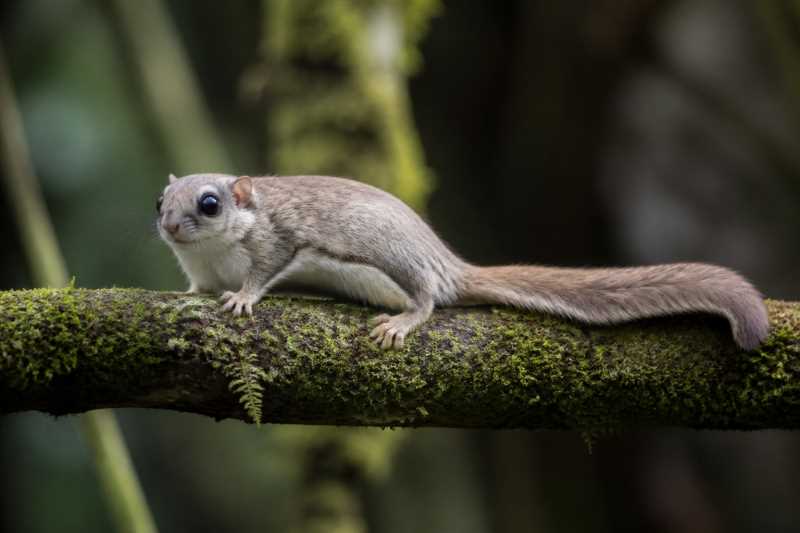
Hose’s Pygmy Flying Squirrel is one of the smallest flying squirrels, measuring a mere 7 to 9 centimeters in body length, with an additional tail length of approximately 6 to 8 centimeters. It typically weighs between 15 to 20 grams, highlighting its petite size. The fur is soft and dense, providing insulation against the cool temperatures of its montane forest habitat. The dorsal side is generally a greyish-brown, which aids in camouflage among tree bark and foliage, while the ventral side is lighter, often a whitish or pale grey.
One of the most distinctive features of Hose’s Pygmy Flying Squirrel is its patagium, a membrane of skin that stretches from its wrist to ankle, enabling it to glide between trees. This adaptation is crucial for its arboreal lifestyle, allowing it to escape predators and move efficiently through the forest canopy. Additionally, it has large, expressive eyes that are well-adapted for nocturnal activity, providing enhanced vision in low-light conditions.
Range and Habitat
Hose’s Pygmy Flying Squirrel is endemic to the island of Borneo, specifically found in Malaysian and Indonesian territories. Its range is limited to montane forests, particularly in regions with elevations ranging from 900 to 1,800 meters. These forests offer a complex canopy structure, which is essential for the squirrel’s gliding locomotion. The dense foliage and abundant tree cover provide both shelter and a rich source of food.
Within these montane ecosystems, the squirrel prefers areas with a high density of dipterocarp and oak trees, which not only supply food but also serve as nesting sites. The habitat is characterized by high humidity and moderate temperatures, conditions that are conducive to the growth of the diverse flora that sustains the squirrel.
Behavior and Diet
Hose’s Pygmy Flying Squirrel is primarily nocturnal, spending its nights foraging for food and its days resting in tree hollows or nests made of leaves and twigs. This nocturnal lifestyle is complemented by its excellent night vision and acute sense of hearing, both of which are advantageous for detecting predators and locating food in the dark.
Its diet primarily consists of fruits, seeds, and young leaves, but it may also consume small insects and other invertebrates, especially when plant resources are scarce. The squirrel’s feeding habits play a vital role in seed dispersal, contributing to the health and regeneration of its forest habitat.
Socially, Hose’s Pygmy Flying Squirrel is relatively solitary, with individuals typically maintaining territories that they mark with scent glands. However, there is some evidence of social interaction during the breeding season, which aligns with increased food availability.
Identification Tips (Field Recognition Cues)
Identifying Hose’s Pygmy Flying Squirrel in its natural habitat can be challenging due to its small size and elusive nature. However, certain cues can aid in its identification:
- Size and Shape: Look for a very small squirrel with a body length of 7 to 9 cm and a tail that is almost as long as its body.
- Coloration: Note the greyish-brown dorsal fur and lighter ventral side, which help it blend into the forest environment.
- Patagium: The skin membrane used for gliding is a key identifier, though it is more noticeable during gliding.
- Habitat: Focus on montane forest areas at elevations of 900 to 1,800 meters where these squirrels are most likely to be found.
- Behavior: Observe nocturnal activity and listen for the rustling of leaves at night, which can indicate their presence.
Conservation Status (With Threats and Protections)
Hose’s Pygmy Flying Squirrel is currently categorized as Data Deficient by the International Union for Conservation of Nature (IUCN). This classification reflects the limited information available about its population trends and ecology. The primary threats to its existence include habitat loss due to logging, agricultural expansion, and climate change, which alters the montane ecosystems it relies on.
Conservation efforts are hampered by the lack of comprehensive data, yet protecting its habitat is crucial. Efforts to conserve montane forests in Borneo, particularly through the establishment of protected areas and sustainable forestry practices, are vital. Raising awareness and conducting further research are also essential to developing effective conservation strategies for this species.
Frequently Asked Questions
1. What is the natural habitat of Hose’s Pygmy Flying Squirrel?
Hose’s Pygmy Flying Squirrel inhabits montane forests at elevations of 900 to 1,800 meters on the island of Borneo. These forests provide the complex canopy structure necessary for its gliding abilities and offer a rich source of food and shelter.
2. How does Hose’s Pygmy Flying Squirrel glide?
The squirrel glides using a patagium, a skin membrane that extends from its wrists to its ankles. This adaptation allows it to move efficiently between trees in search of food and to escape predators.
3. What are the main threats to Hose’s Pygmy Flying Squirrel?
The main threats include habitat loss due to deforestation and agricultural activities, as well as climate change, which affects its montane forest ecosystem.
4. Why is Hose’s Pygmy Flying Squirrel considered Data Deficient?
It is classified as Data Deficient by the IUCN because there is insufficient information on its population size, distribution, and ecology to assess its risk of extinction accurately.
5. How can we help protect Hose’s Pygmy Flying Squirrel?
Protection efforts include preserving its montane forest habitat through sustainable practices and the establishment of protected areas. Additionally, further research and public awareness are essential for its conservation.
Related posts